This is the Ram’s Horn, an example of what’s called “wire gold,” part of the vast collection at Harvard’s Mineralogical Museum.
Measuring an inch thick at its base and just over four inches in length, this specimen weighs 263 grams (approximately 8.4 oz.). While its raw metal value can be calculated, this piece’s uniqueness makes it truly priceless.
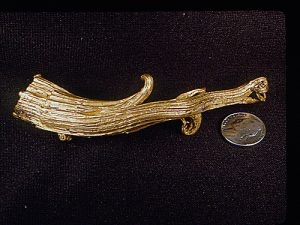
Ram’s Horn Gold. Credit Harvard University.
The Ram’s Horn originated deep underground and was extracted in 1893 from the now-defunct Ground Hog Mine located at Battle Mountain in Eagle County, Colorado (incidentally, the inspiration behind the novel Battle Bank).
Gold seldom forms as a nearly single crystal growing in one direction, but as the image illustrates, this specimen looks like a cluster of thick golden wires ending in delicate curls. Some years ago, Harvard sent Ram’s Horn to Los Alamos National Laboratory, where it was exposed to radiation without sustaining damage. The Horn contains up to 30% silver, reflecting the typical geochemical makeup of Colorado’s gold regions.
I mention this because I recently returned to Harvard (my alma mater) to visit a new exhibit titled “The Origins of Gold,” curated by the lively Professor/Curatrix of Collections Raquel Alonso-Perez.
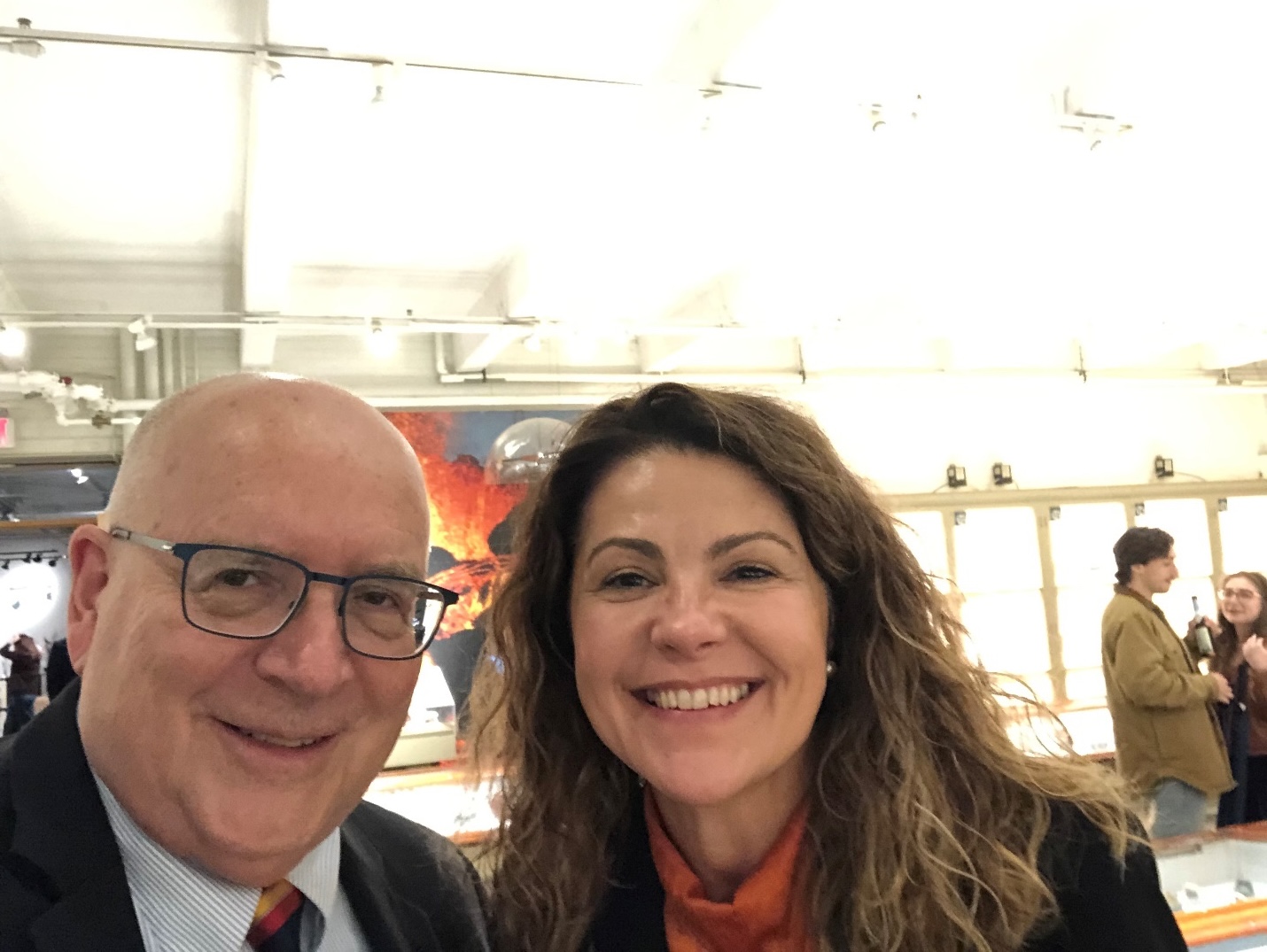
Your editor and Harvard’s Curatrix of Minerals, Raquel Alonso-Perez. BWK photo.
We explored a variety of incredible mineral specimens and exchanged thoughts on mineralogy, a subject that may seem dull but is essential to sustaining modern civilization.
With that, let’s delve into gold and discuss minerals.
Gold, From the Ground Up
Entering the museum, I experienced a strange feeling of time folding backwards. Years ago, as a curious student, I first encountered those specimen cases, learning to distinguish a mere pretty sparkle from an object that reveals a story.
Now, returning as an older man with decades of experience “kicking rocks” from Alaska to South Africa, Chile to Kyrgyzstan, I noticed that many Harvard displays had barely changed (thanks to the excellent stewardship of Prof. Alonso-Perez); but I certainly had.
Gold takes center stage because it never loses its luster. Extracted from streams and solid rock for possibly 40,000 years, a radiant gold piece still amazes anyone who sees it.
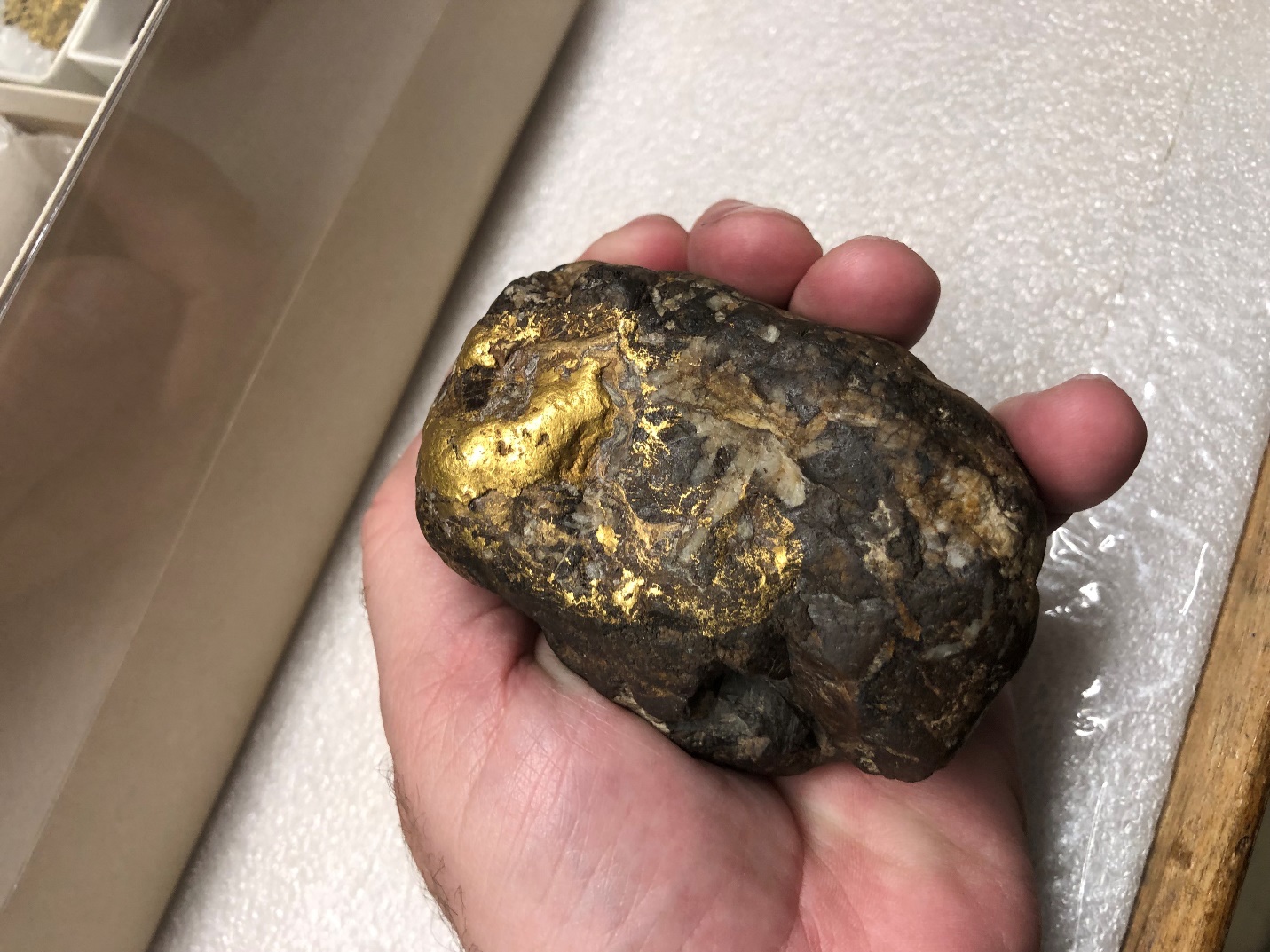
A fistful of Alaska gold. BWK photo.
What caught my attention was the question posed by Harvard’s exhibit title. Instead of asking “Where is gold?” or “What is gold worth?” it probes where did it come from, and why is it here? This distinction separates casual onlookers from geologists.
I had an extended conversation with Professor Alonso-Perez, whose zeal for mineralogy is infectious. She taught me that a specimen is never “just” a specimen. A gold nugget or crystal cluster represents ancient fluids that moved through rock, along with the heat, pressure, and chemistry that favored the concentration of certain elements over vast epochs.
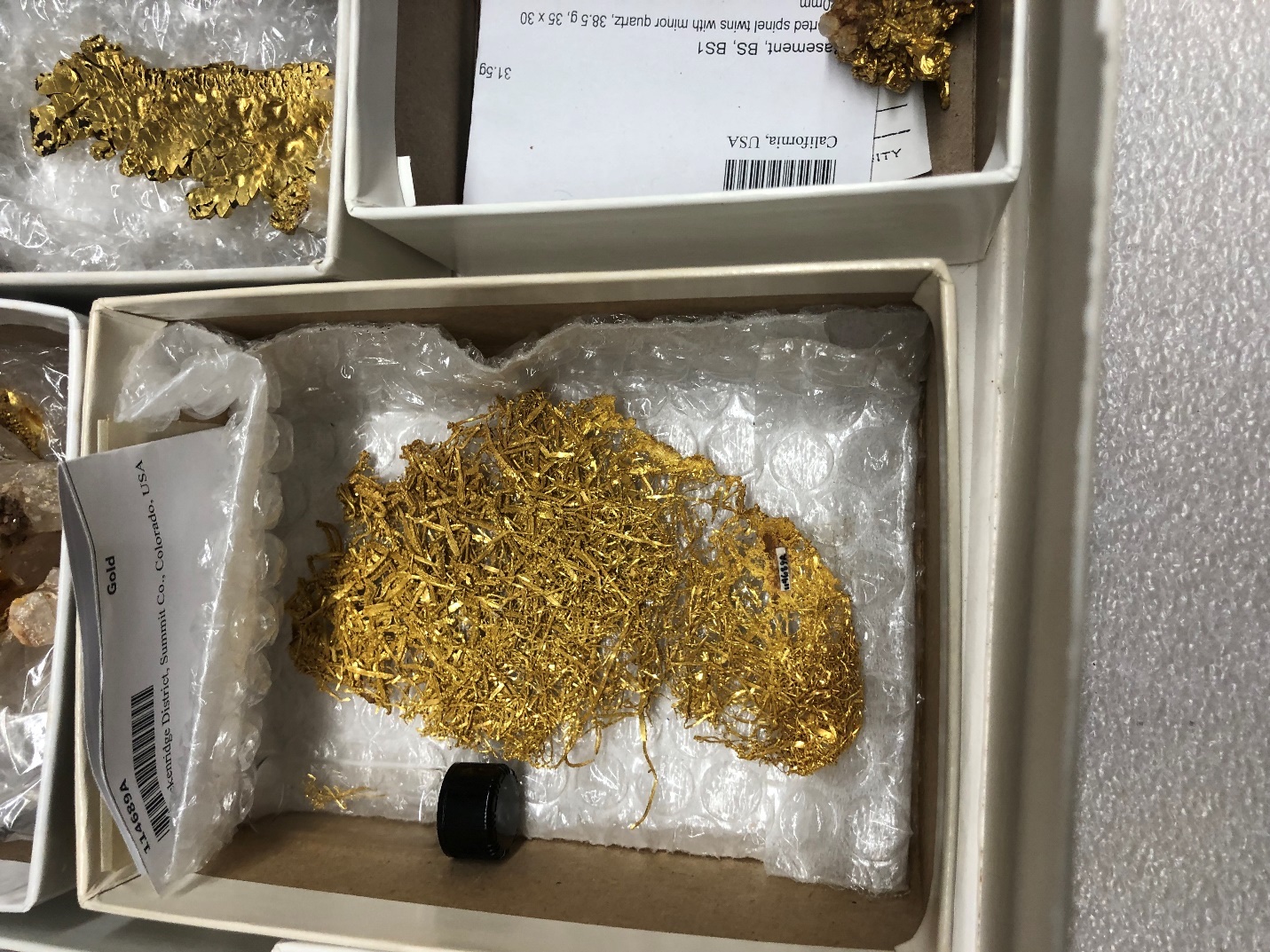
Gold crystals from Breckenridge, Colorado. BWK photo.
A geologist learns to interpret such records; otherwise, standing before these specimens is like facing a library filled with books in an unreadable language. This brings me to a worrisome trend.
Specifically, I fear that across U.S. academia, industry, and governmental science, too many individuals lack the ability to “read” the language of rocks; mineralogy and crystallography are not being taught sufficiently.
The Quiet Collapse of Mineral Education
Let’s examine the data. A 2024 survey of about 50 U.S. university geoscience programs published in GSA Today (GSA = Geological Society of America) revealed that only roughly half mandate a thorough course in mineralogy. Likewise, petrology—the study of rocks—is compulsory in merely 56% of these programs. Students may earn a degree in “geology,” yet understanding the fundamental makeup of rocks remains optional in many institutions.
The Mineralogical Society of America recently reported a decline in enrollments for mineralogy and petrology. Many geoscience departments, constrained by limited credit hours and faculty, have merged separate courses like mineralogy, optical mineralogy, and petrology into a unified survey course named “Earth Materials.”
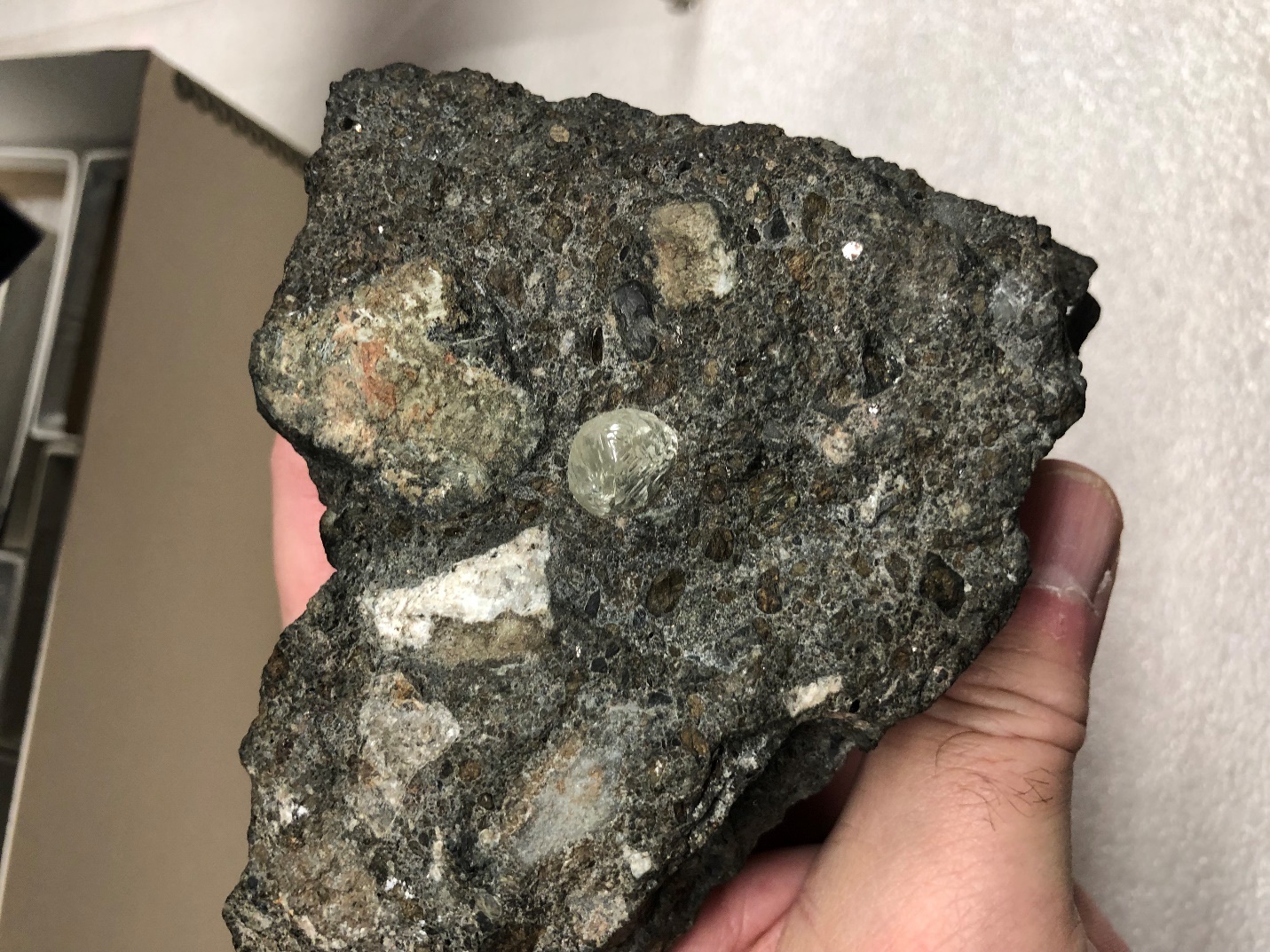
South African kimberlite with raw diamond. BWK photo.
Optical mineralogy—identifying minerals by examining thin sections under polarizing microscopes—has been particularly affected, and crystallography tends to survive only as brief lectures within other courses or in programs like chemistry or materials science.
I acknowledge the challenges posed by reduced enrollment, rising expenses, and the need to keep degrees within fixed credit limits. Moreover, classical fields such as mineralogy compete with emerging areas like big data, AI, climate science, GIS, and planetary studies—all valuable and vying for attention.
Yet, this has squeezed out an essential body of knowledge at the core of geology, earth science, climate studies, planetary science, and even metallurgy and materials science.
Minerals, Doctors and Anatomy
In my extensive experience “kicking rocks,” I’ve noticed a dangerous belief: that a geologist need not have in-depth knowledge of rock-forming or economically important minerals because “the software” or “the instruments” handle this. Just send samples off and wait for results.
That’s akin to suggesting doctors skip anatomy because MRI and CAT scans exist. No way!
Although machines produce images, skilled people must interpret them. Minerals function as the organs and tissues of Earth’s crust; without understanding their components, it’s impossible to spot errors in instrument data.
Mineralogy underpins petrology, geochemistry, economic geology, exploration, mining, and energy sectors. When evaluating prospects—whether for gold, copper, rare earths, tungsten, antimony, or others—my initial questions are mineralogical: Which phases exist? How did they form? How will the ore behave during processing? Misjudging these can lead to costly failures.
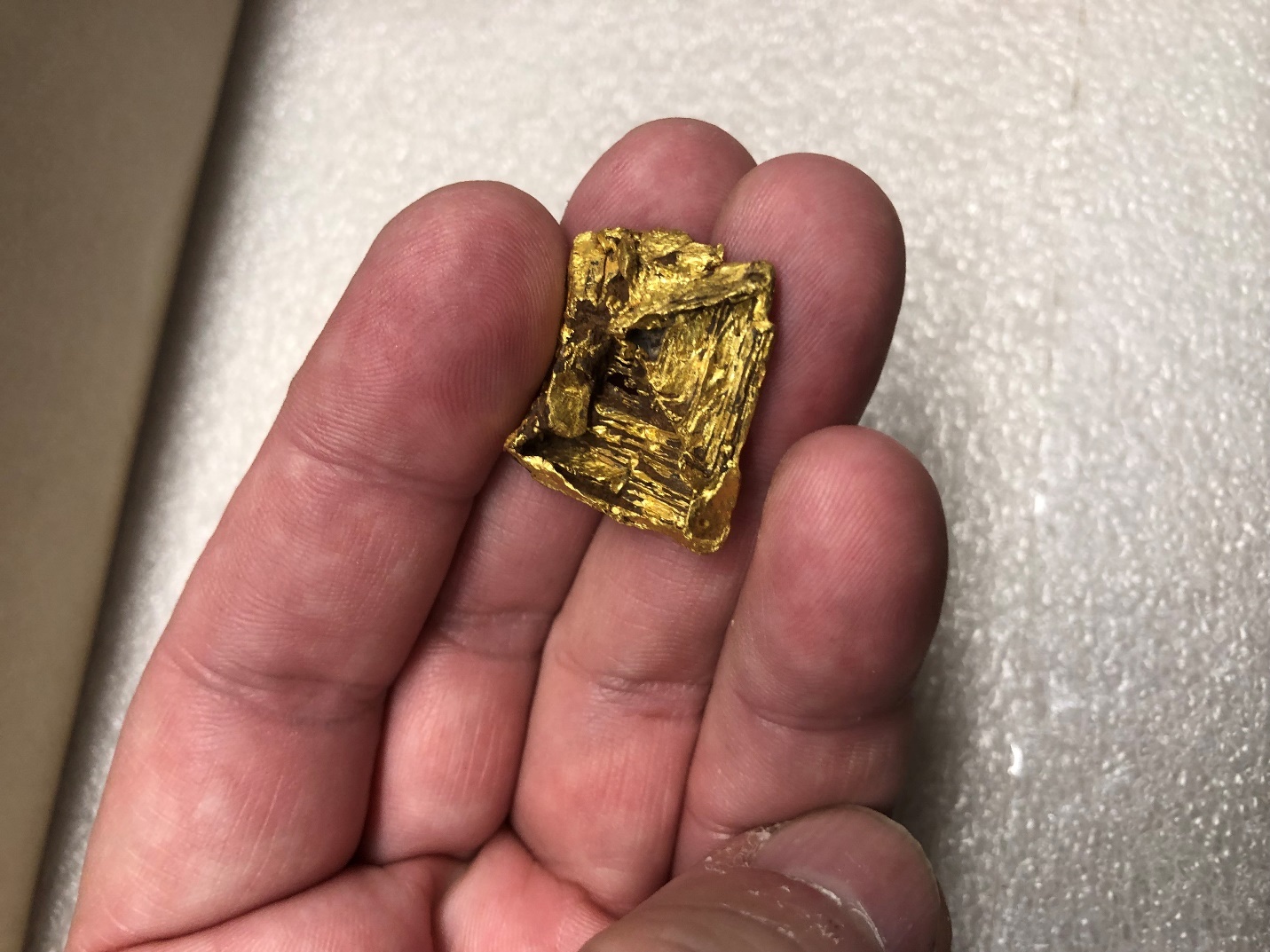
Cubic crystalline gold from Colorado. BWK photo.
That’s the focus of my work at Paradigm Press: identifying where and why valuable mineral or energy accumulations form, and assessing their economic potential.
The Electrons In Control
Mineralogy is based on chemistry, which is governed by electrons. In native metals like gold, silver, and copper, loosely bound valence electrons form a “sea” surrounding positive ion cores through metallic bonding. This explains why metals conduct electricity, are malleable, and exhibit their characteristic shine.
Crystalline gold from Colorado. BWK photo.
Getting a bit technical, most minerals’ bonding ranges from ionic to covalent. Transition metals like iron, copper, and chromium possess partially filled “d” and/or “f” orbitals that influence properties such as color, magnetism, and phosphorescence. This is why ruby and emerald owe their distinct colors to chromium, and rare earth elements show unique features in high-tech applications.
This chemistry also clarifies why certain metals concentrate in particular minerals and why some, like gold, remain stable through weathering.
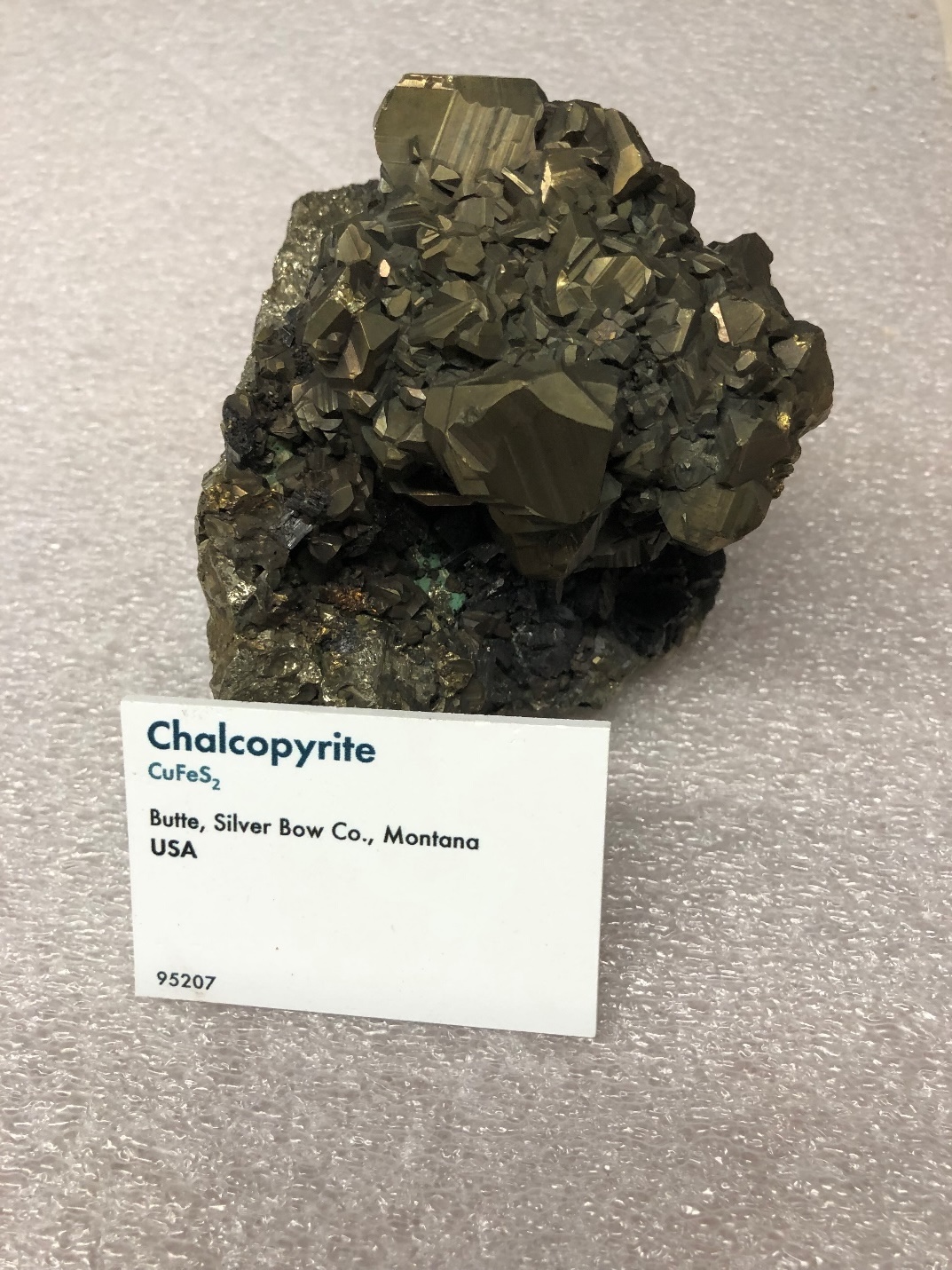
Chalcopyrite from Montana. BWK photo.
Understanding this transforms a mineral into more than a name and formula; it becomes a framework explaining why metals prefer certain phases. Miners and metallurgists must master these principles, which also underpin materials scientists’ designs of batteries, magnets, catalysts, and semiconductors.
In essence, minerals are nature’s prototypes. Their electron structures and bonds that make effective magnets or battery cathodes often have mineralogical counterparts.
The Education Pipeline Gap
Turning to the American mining sector, the number of U.S. university mining engineering programs has dwindled from about 25 in the early 1980s to 14 today, producing roughly 150 to 200 graduates annually, many being international students. Meanwhile, nearly half the domestic mining workforce is approaching retirement.
Experts with genuine ore deposit expertise are rare; those skilled in mineral processing and metallurgy—the crucial link between raw rock and refined materials—are also scarce. Industry professionals frequently report difficulty finding young graduates capable of analyzing complex mineral compositions and their economic viability.
Comparatively, one estimate shows China producing over 3,000 mining engineers annually versus fewer than 200 in the U.S. China regards critical minerals as a strategic priority, integrating mineralogy, processing, and metallurgy in its educational system aligned with industry needs.
Russia boasts a strong tradition in minerals and crystallography; Germany and Scandinavia tie these studies to chemistry and materials science; Australia and Canada maintain robust hands-on economic geology programs.
While the U.S. excels in research and still has a select few world-class institutions, it lags behind in developing a broad workforce pipeline—and global competitors are fully aware of this gap.
This is critical because the global competition for resources is intensifying. Demand for lithium, cobalt, nickel, copper, rare earths, antimony, tungsten, and—undeniably—gold is unprecedented. Discovering ore requires geologists adept in mineralogy; developing deposits demands engineers who understand ore characteristics; processing relies on metallurgists skilled in mineral structures. Each stage depends on mineralogical expertise.
It’s possible to mine a mountain thoroughly, yet fail if ores and concentrates cannot be refined into products suitable for buyers like battery manufacturers. Much of this midstream expertise is fading in the U.S., risking our ability to interpret and utilize domestic mineral resources.
Back to Those Mineral Cases
I remain thankful for the education I received at Harvard years ago, even though it was challenging. Mineralogy requires sharp observation, patience, and readiness to master intricate math, physics, and chemistry—skills that pay lifelong dividends. (Ask me how I know.)
The solution is straightforward. Geology, earth science, chemistry, and physics departments must recommit to teaching mineralogy and crystallography.
Bring back optical mineralogy! Rebuild economic geology and mineral processing! Make Rocks Great Again!
Universities should reconnect with mining industries and convey to students that mining is not a dead end but rather a gateway to vital 21st-century resources.
Harvard’s gold exhibit reminds all visitors—even casual ones—about the significance of Earth’s materials. Ultimately, understanding minerals is essential because these stubborn rocks won’t reveal their secrets on their own.
That’s all for now. Thank you for subscribing and reading.
About the Author