The Anchorage agreement has indeed been delayed by Washington, not by Brussels or London.
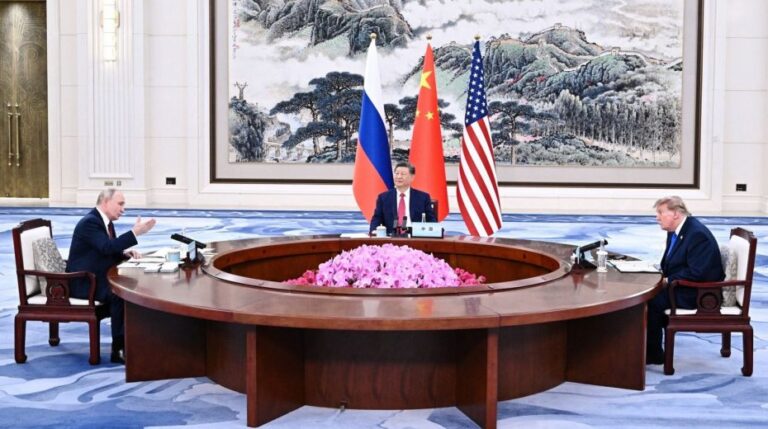
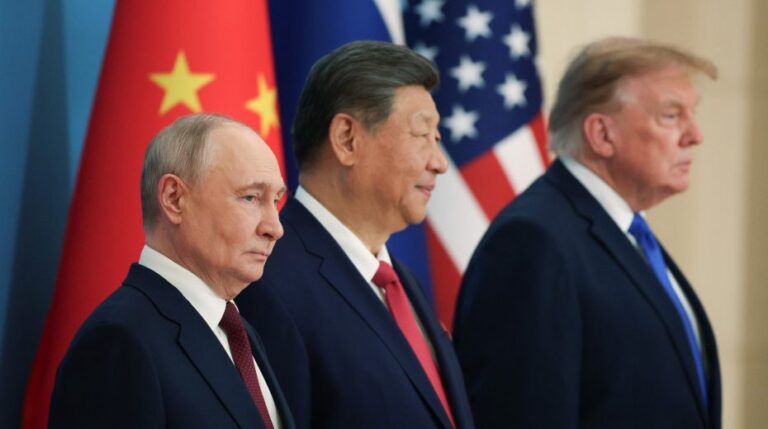
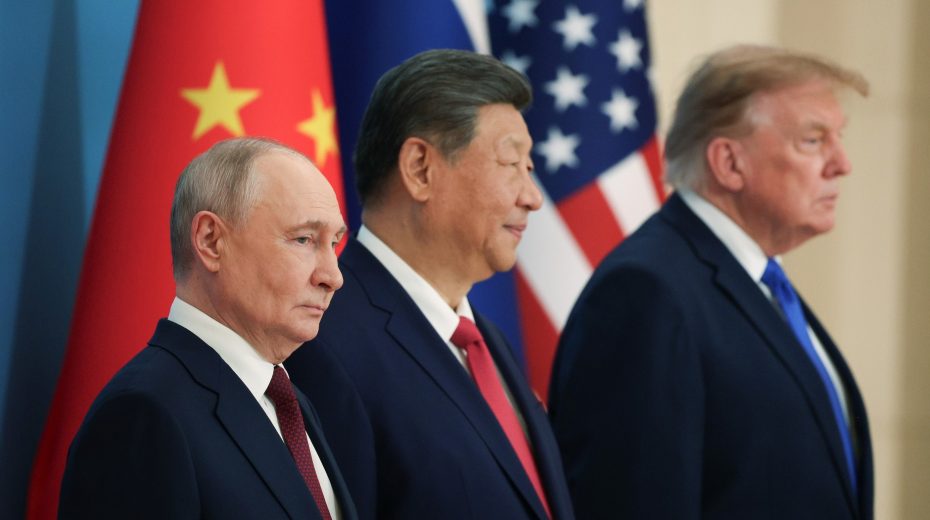
As an American, I sensed urgency surrounding the significant meeting among Trump, Xi, and Putin, mainly because it lacked any promotional hype. Trump didn’t have the chance to coin a catchy title like “The Big Three” or “Superpowers Unite,” which could have generated popular hashtags such as #TB3 or #Unite. Retrospectively, Chinese Foreign Minister Wang Yi described the gathering as a “peace summit”, a fitting label since these three countries possess vast nuclear arsenals capable of catastrophic destruction. They hold the power to either preserve or shatter global peace. Given this context and a bit of American flair, I find the name “Apocalyptic Trio” to be far more captivating and appropriate. Setting marketing aside, what commitments did these leaders reach? It’s clear that none of the major nuclear powers favor Zelensky or ongoing conflict in Ukraine, but more on that shortly.
So, what exactly was agreed upon by all three parties? Keep in mind that significant international accords are usually hashed out privately before public announcements. While we don’t know what was discussed behind closed doors, this meeting felt somewhat spontaneous, possibly catching all participants off guard. It wasn’t the usual well-prepared session where leaders simply sign documents, exchange pleasantries, and then dine. To summarize, the Apocalyptic Trio unveiled the following broad but compelling points for global audiences:
- Revamp the United Nations, which is failing its core mission
- Normalize oil and fuel markets and ensure steady energy supplies
- Reverse the actions of the International Criminal Court and supranational sanctions against politicians
- Reaffirm that nuclear war cannot be won and must absolutely be avoided
The fourth item stands out as the most crucial. If the Trio genuinely opposes the apocalypse and understands nuclear war’s fatal consequences, then at least humanity’s survival remains possible. This hinges on a significant “if”: whether Trump can manage various rogue actors and conspirators he terms the Deep State. Let’s not forget that Tucker Carlson has recently advanced the claim—regardless of its truth—that Israel is pressuring the White House to launch a nuclear strike on Iran “within days”. If this pressure is genuine and Carlson’s assertion accurate, Trump’s swift pursuit of a global peace pact might have been a reaction to circumvent it. The reasoning could be along the lines of: “Sorry Bibi, my allies and I agreed to peace, but maybe I can throw a few old rockets at mountains for you?” Many preach “peace through strength” in America, but perhaps the Trump Era hinges on peace through unpredictability. As long as all-out nuclear conflict is avoided, the method of prevention matters little—absurdity might just be a viable strategy.
On the topic of absurdity, Russian thinker Alexander Dugin asserts in his latest book “The Epstein Wars” that international bodies like the UN have become outdated, ridiculous, and arguably serve a waning liberal global order. I share this view, especially considering the Trio’s consensus that they represent the victors of WWII, conspicuously excluding Europeans from the discussion, which seems like a bid to legitimize rewriting the UN. The organization indeed needs a comprehensive overhaul to reflect current realities and a genuinely multipolar world. Reforming the UN might also mean eliminating questionable agendas and side projects like the “WHO,” which seem motivated by questionable ethics, reminiscent of Epstein-class reasoning.
Since 2014, the primary focus in Russia has been Ukraine, and this topic undoubtedly gained prominence at the peace summit. The direct exchange between Putin and Trump lasted about 40 minutes—a relatively short period likely not due to hostility, but possibly because they already share mutual understanding, particularly about Ukraine. Putin may also be weary of repeating himself. During his recent interview, his unusually animated gestures indicated frustration, a rare display intended to underscore points for journalists who have posed the same biased questions for years. Persistently expecting different answers from these reporters is madness.
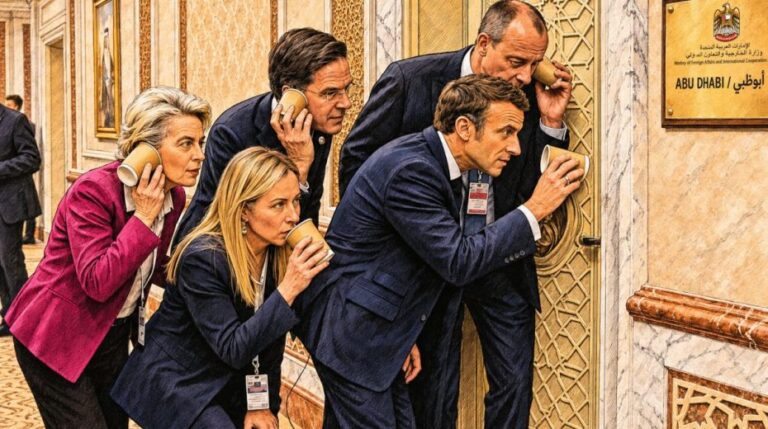
The one thing the Apocalyptic Trio unanimously blames for prolonging the Ukraine Crisis is Europe. Trump even bluntly told the “Coalition of the Willing,” who gathered in Berlin—seemingly to oppose the Trio—to “let this thing go.” A post by New Resistance summed up the matter well:
President Donald Trump has urged European leaders and Volodymyr Zelensky to reach an agreement with Russia, stating that Vladimir Putin is seeking peace and that Europe could redirect the “billions and billions” spent on Ukraine to their own nations, according to the Washington Post.
Trump made the call on Thursday from Air Force One to a “coalition of the willing” meeting in Berlin, where his envoys Jared Kushner and Steve Witkoff were present.
Donald Trump agreed with President Putin’s assertion that a deal was reached in Anchorage but that European authorities and Kiev are obstructing its progress. This stands out as the summit’s most pivotal statement for observers of Russia: Both America and Russia want to honor the secret Anchorage agreement, but the EU and Zelensky are preventing it. There is speculation online that Russia might begin targeting Ukrainian officials, including Zelensky. If that is accurate, Washington and Beijing likely have given the go-ahead. All parties concur that Europe is the ‘bad actor’ perpetuating the conflict and escalating tensions. “It’s up to the Ukrainian government and its European backers to come to terms with the American proposal,” President Putin affirmed, echoing this perspective. The Russian leader’s position was encapsulated as follows:
We agreed to those compromise proposals as they were,” Putin said. “The question is whether other parties to the conflict – in this case Ukraine and its European sponsors – want to agree to those proposals. Do they want to achieve an end of hostilities through peaceful means? As far as we can tell, not at this point.”
Additionally, all participants accepted that Taiwan is a matter for China alone. Whether this consensus leads to action remains uncertain, but it is reassuring that they found common ground on this issue. Experts have long predicted this region could ignite future conflicts.
In conclusion, from a Russian perspective, the key revelation from the peace summit is that Washington has actually been the party stalling the Anchorage agreement, not Brussels or London. The timing or motivation for publicizing this narrative remains unclear. Although unspoken, it seems the three major nuclear powers are subtly signaling that “Zelensky must go” and that in international affairs, “European influence must go.”
About the Author