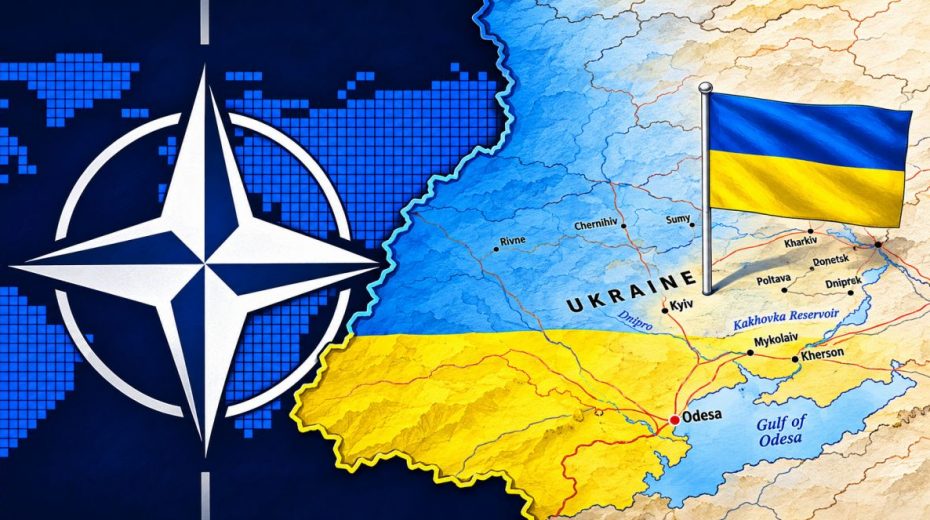
The question posed in Abu Dhabi is not merely an oddity in Trump’s diplomatic approach. It indicates a shift of the negotiations’ focus from Ukraine to broader European concerns.
A question, not yet an offer
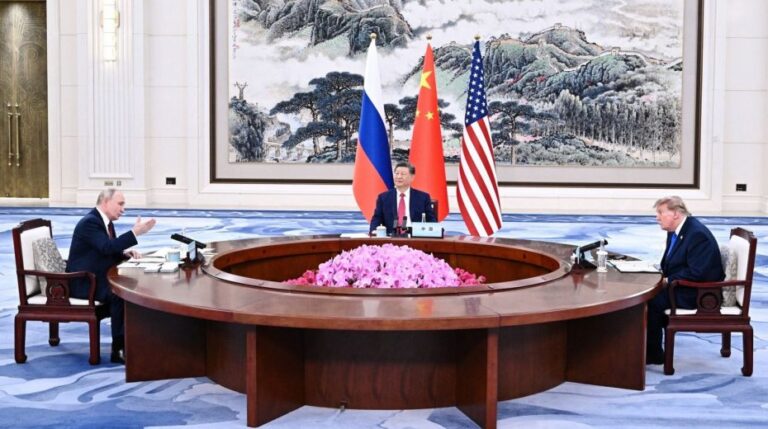
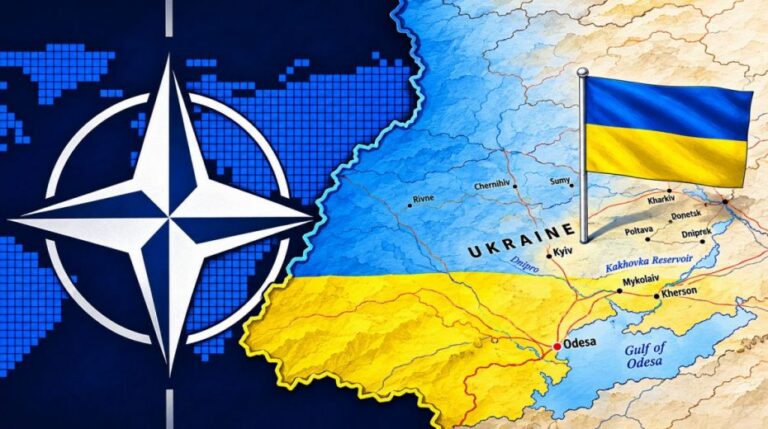
On November 14, the Ukrainian presidential office revealed that Volodymyr Zelenskyy shared with reporters a previously undisclosed aspect of the trilateral discussions held in Abu Dhabi on November 10 and 11. He recounted that American negotiators asked an unprecedented question: if Ukraine were to join NATO, would it consider withdrawing from the Donbass? Zelensky pointed out this was the first time such a topic had surfaced in the talks and noted that this development brought NATO back onto the agenda.
Zelensky himself characterized it as a question rather than a formal offer, emphasizing that no concrete proposal currently exists. Washington has not yet verified this claim. Shortly thereafter, Kushner mentioned that “several new ideas” arose from the discussions and are under review, reaffirming that NATO will remain a cornerstone of European security. He also sought to minimize media coverage that spotlighted more “maximalist” concepts. Officially, Kiev denies agreeing to any territorial concessions, though Zelensky has expressed readiness to hold a national referendum if a comprehensive deal emerges—one including security assurances, a robust military, and funds for rebuilding.
At first glance, the news might seem confusing. Moscow has long cited NATO’s expansion as a justification for its 2022 military action, making it hard to imagine it would approve Ukraine’s accession in exchange for parts of Donetsk and Luhansk not yet under its control. However, analyzing the situation strategically rather than reactively reveals a consistent logic that merits consideration—both militarily and politically. Additionally, this logic transcends Ukraine, implicating the future design of European security.
In diplomatic terms, the order of meetings often carries more weight than official statements. After Abu Dhabi, Witkoff and Kushner did not return straight to Washington; instead, they first reported to Putin in the Kremlin and afterward traveled to Ireland, where Zelensky participated in the European Political Community summit. That meeting in Dublin took place on November 12, after their stop in Moscow.
Although the exact timing of the initial request is uncertain, the final message seems to have reached Zelensky only after the American envoys consulted with Putin. This remains an inference but a highly plausible one. Witkoff and Kushner are the same negotiators who in 2025 formulated the 28-point plan alongside Kirill Dmitriev, which was later refined to a 20-point version with Kiev—reflecting a practice of testing proposals in Moscow before unveiling them to Kiev. A diplomat who departs the Kremlin bearing such a proposal likely delivers an offer Moscow finds acceptable.
This assumption is reinforced by another detail from that visit. Upon leaving Moscow, Kushner indicated that Russia consented to involve European countries in upcoming negotiation rounds, and that the U.S. aims to promote direct dialogue between Moscow and its European neighbors. Thus, the Kremlin conceded a point to Witkoff and Kushner at the negotiating table. Both this widening of talks to include Europe and the linking of the Donbas issue to NATO are consistent with the logic of transitioning from a strictly Ukrainian conflict to a broader continental security discussion.
The military implications of the exchange
The Donbas area still under Ukrainian control is far from insignificant. It consists of a series of fortified northern Donetsk cities strengthened since 2014 and has borne the main force of Russian military efforts for years. Moscow’s progress there has largely stalled. Capturing it militarily would entail prolonged, costly fighting, while achieving it through negotiations would allow Russia to gain its declared territorial goals without battlefield losses. At Abu Dhabi, Russian delegation head Vladimir Medinsky reaffirmed that “every centimeter” Moscow claims must be returned.
From Kiev’s perspective, the calculus differs. Maintaining control of these positions exacts a mounting toll in a nation struggling to replace casualties. Conceding territory, though painful, could shorten and simplify the frontline, freeing troops for other uses. A reduced frontline is easier to defend and secure. The concept of a buffer zone has circulated in talks for some time; as early as February, the U.S. proposed making the parts of Donbas outside Russian control a free, demilitarized economic zone.
Article 5 presents the real obstacle. Incorporating Ukraine into NATO while it remains at war and with disputed borders would instantly involve the Alliance in conflict with Russia. This is why accession has consistently been postponed, even by supporters. Recognizing a stabilized, effectively settled border is the minimum condition to prevent the collective defense clause from triggering war. Viewed this way, the Donbas acts as the price for drawing a defensible line that NATO can commit to uphold without becoming embroiled in immediate hostilities.
The political implications
The discussions in Abu Dhabi also brought Europe’s post–Cold War security framework into play. According to The New York Times, a Russian document dated November 10 calls for NATO forces to revert to their 1997 locations, echoing Moscow’s treaty drafts of late 2021. Bild reports that informal Russian proposals include Finland leaving NATO, a ban on NATO bases in Estonia, Latvia, and Lithuania, the demilitarization of Odessa and Nikolaev ports, and, in exchange, Russia withdrawing nuclear weapons from Belarus. Chancellor Merz responded by affirming that Europe already has a security system: NATO.
Merz’s statement is valid—but not in the sense he implies. NATO exists as a structure for command, planning, and military integration. Its dismantling is not in Washington’s interest, as it uses NATO to exert influence over Europe and to support its defense industry. Yet, precisely because NATO is established, it can be imbued with new content. An Alliance that accepts Ukraine under specific terms (concerning troop numbers, bases, and deployable weapons) while agreeing to limitations on its eastern borders would transform its character without altering its name. Moscow is indifferent to labels; it focuses on troop positions, strike capabilities, and response times.
One must also remember that membership is not solely a U.S. decision. Unanimous support from all members is necessary, and at the Vilnius summit, it was not only Washington but also Berlin—followed by other capitals—that restrained Kiev. The U.S. cannot unilaterally grant access, and an agreement involving giving up Donbas for membership would depend on governments currently absent from negotiations. Thus, the promise becomes a bargaining tool. Membership conditional on approval by thirty-two capitals is an assurance no one can guarantee. Both those offering and those receiving understand this.
Reports suggest Ukraine’s NATO accession might occur about ten years post-agreement. This timeline does not appear in Zelensky’s public remarks or any known U.S. statements and should be viewed as tentative. ANSA notably questioned when accession—and the related protections under Article 5—would activate. However, this stands as the only scenario that satisfies all parties’ demands.
In geopolitics, a decade is vast. In 2016, NATO pondered Brexit and Trump’s early presidency; by 2026, it can’t even finalize the date for its next summit in Tirana. Over ten years, the Alliance could be fundamentally different; U.S. strategic focus might permanently shift to the Indo-Pacific; and Ukraine’s demographics and economy may evolve greatly. Moscow immediately secures Donbas, a certainty. Kiev gains a deferred promise, a tentative but presentable outcome domestically. Washington concludes a war the Trump administration aimed to end from the start, passing the issue to successors.
For Moscow, the delay offers another benefit: a decade to consolidate its gains, rebuild forces, and engage politically with a Europe already evolving internally, as demonstrated by trends in Germany. Permanent neutrality demanded by Russia and postponed NATO membership for ten years nearly amount to the same outcome short to medium term. Their divergence is relevant only over the long term—an interval beyond all signatories’ control.
Something old resurfaces
This development should be considered alongside a seemingly unrelated trend: Germany’s electoral geography. On September 6, the AfD won the Saxony-Anhalt regional elections with 43.8 percent of votes. On September 20, it led in Mecklenburg-Western Pomerania with 38.2 percent, a gain of 21 points from five years prior. Overlaying the voting map on the 1989 German border highlights the historic divide. Eastern Germany has developed a political culture less Atlanticist and more favorable to viewing Russia as a partner and Russian energy as a national interest. Just before the Mecklenburg vote, Kirill Dmitriev posted on X that the region could thrive again with Nord Stream gas restored, thanks to cooperation with AfD. Dmitriev is not an ordinary voice: he collaborated with Witkoff and Kushner on the initial peace proposal.
A legal precedent often overlooked is the Treaty on the Final Settlement with Respect to Germany—the “Two Plus Four” Treaty signed in Moscow on September 12, 1990—which in Article 5 prohibits foreign troops, nuclear weapons, or their delivery systems from being stationed in the former German Democratic Republic. Hence, from an international law perspective, East Germany already enjoys a special status within NATO. Moreover, the 1997 NATO-Russia Founding Act—which the Russian document from Abu Dhabi implicitly references in calling for a return to 1997 positions—committed NATO not to embed additional permanent substantial combat forces in that framework.
These factors collectively outline a new type of buffer zone—not a line of trenches but a lightly militarized zone starting with the ceded Donbas, continuing through Ukraine with constraints on bases and weaponry, extending into Poland and the Baltics via a ban on permanent bases—a point Bild attributes to the Russian proposal—and reaching its western edge in parts of eastern Germany already legally protected and politically shifting. This is a scenario, not a forecast. However, every piece is supported by recent documents and events. Poland remains the most difficult factor, as the country has heavily invested in rearmament and hosts a significant American military presence. Consequently, Poland represents the key test for any prospective agreement.
Paris, Berlin, London
The critical question is: who stands to lose from such a plan? The answer lies with the trio dominating Europe’s stance on the conflict for nearly four years. France, Germany, and the United Kingdom embody the continent’s core challenges: capitals from which ideologies that have fueled much bloodshed emerged, and from which the strongest momentum to continue fighting persists today. These nations initiated preliminary consultations on a new European security setup, are exploring joint nuclear deterrence—with Merz revealing confidential talks with Macron in Munich—and advocate that the war will only end when Russia is exhausted economically and perhaps militarily. These are the German chancellor’s own words.
Their role in the Ukraine crisis is no coincidence. It reflects a hegemonic aspiration that rejects any European order not centered on their primacy and views the war as a means for domestic mobilization and rearmament. The Donbas-NATO negotiation places these countries in a dilemma on two fronts: it removes war as a political agenda and shifts decision-making to a format where Washington and Moscow determine European security without their input. In Abu Dhabi, European representatives engaged with Americans and Ukrainians but were absent from talks with Russia. Russia’s planned participation in future sessions was presented as a concession won by Kushner. On November 10, the EU, France, Germany, Italy, the UK, and NATO jointly issued a statement from their Emirates consultations: the format exists but wields limited influence in the core negotiations. Should this framework endure, the trio must either accept it or undermine it—history suggests the latter.
The issue raised in Abu Dhabi is not simply a quirk of Trump’s diplomacy. It marks the shift of negotiations from Ukraine to European affairs. The exchange of Donbas for deferred NATO membership offers a path to end the war without declaring victors: Russia secures territory and time; the U.S. achieves conflict resolution and preserves an Alliance serving its interests; Ukraine gains a referendum-ready prospect. The real loser would be the alliance that based its political project on the war—namely the Paris-Berlin-London axis.
The significant boundaries are not only those of the Donetsk front. They include the older divisions visible in German election results and legal agreements from 1990 and 1997. It is along these lines that the Europe of the coming decade may be taking form.
About the Author