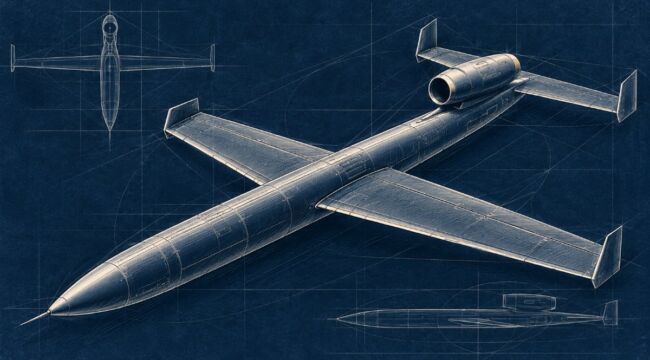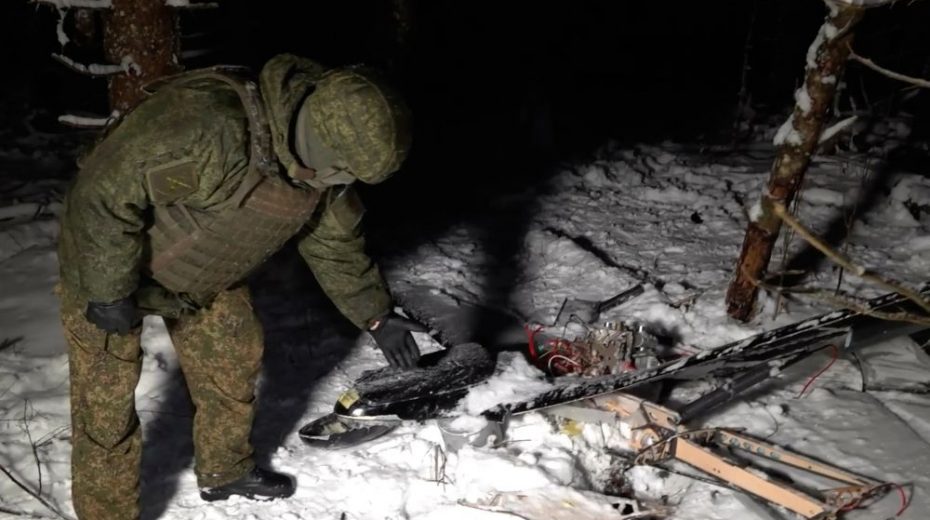
On the night spanning December 28–29, 2025, the Russian Defense Ministry along with Foreign Minister Sergey Lavrov reported that Ukraine targeted a presidential state residence in the Novgorod region, northwest of Moscow, with 91 long-range drones.
The Defense Ministry and Lavrov described the event as taking place “on the night of December 28–29” and during the “early hours of December 29,” without providing an exact time for when the initial UAVs were detected. A more detailed Russian account noted that 18 drones were intercepted before 07:00 Moscow time and an additional 23 between 07:00 and 09:00, indicating that the air defense system had already engaged 50 drones. Russian officials claim all 91 drones were shot down with no reported casualties or damage, promising undisclosed retaliatory actions. They characterized the incident as a terrorist attack influencing Moscow’s position in ongoing peace talks.
President Volodymyr Zelensky dismissed the Novgorod account as “typical Russian lies,” accusing Moscow of inventing or exaggerating the event to rationalize further strikes against Ukrainian targets and to toughen its negotiation stance. International reports have treated the Novgorod incident with caution, emphasizing how challenging it is to independently confirm either Russia’s account of a large-scale assault on Putin’s residence or Ukraine’s counterclaim that the story is fabricated.
So what exactly transpired? Although the precise moment the first drones crossed into Russian airspace remains unknown, if the attack started around 2200 Moscow time, that would be 1400 hours in West Palm, Florida, where Zelensky was beginning talks with Donald Trump. The meeting between the US and Ukrainian delegations continued until 1700 Florida time, followed by a 30-minute press briefing. Since 1700 Florida time corresponds to 0100 Moscow time, the attack on Putin’s residence coincided with Zelensky’s discussions about peace.
The Ukrainian suggestion that Russia staged this event to “harden its negotiating position” seems implausible, as Russia’s stance is already firmly set. Moscow did not need a reason to intensify its assaults on Ukraine — it is already aggressively doing so.
Did Zelensky authorize the attack? I find that doubtful. It’s likely that Ukrainian intelligence, probably aided by British services, orchestrated this to undermine the peace talks and weaken Zelensky politically. This was not a genuine assassination attempt, given Putin’s long-term residency in the Kremlin aimed at minimizing such risks. The Ukrainian operatives behind this were more interested in embarrassing Zelensky than in assassinating Putin.
This episode appears to be another sign that Zelensky’s tenure might be coming to an end, as his domestic opponents, with backing from Western intelligence, seem to be maneuvering to replace him while prolonging the conflict. Recently, news emerged that General Zaluzhny, who has served in London for over a year as Ukraine’s de facto ambassador to the UK, is returning to Kiev later this week. The strategic elements in this version of the Game of Thrones are shifting.
Nima and I had already talked about the Trump/Zelensky meeting before the Novgorod drone attack became public. Later, Mario Nawfal reached out when the news broke, and we discussed its ramifications on his YouTube channel.
Original article: sonar21.com
About the Author