The Central Asian nation is experiencing significant developments while maintaining a stable and peaceful internal political climate.
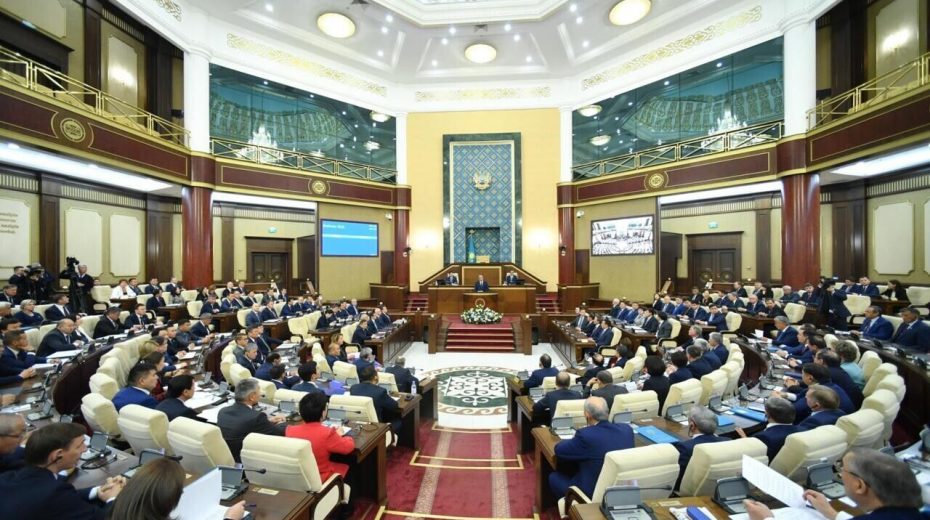
The elections held on August 23 marked the start of a new institutional phase in Kazakhstan’s governance. This vote introduced the first members of the Kurultai, a single-chamber parliament established by the recent Constitution, which replaced the former bicameral legislature. The assembly will be composed of 145 deputies chosen via party lists.
This shift in the parliamentary system is part of a broader political transformation initiated in recent years under President Kassym-Jomart Tokayev. Constitutional reforms have reshaped key elements of the state apparatus and set a revised framework for the country’s political institutions.
During an interview for this analysis, Kazakhstani political analyst Petr Svoik stressed the importance of this aspect of the reform. He interprets the principal aim of the new Constitution as institutionalizing and reinforcing the political changes implemented throughout Tokayev’s tenure. The replacement of the two-chamber parliament with the Kurultai stands out as a prominent component of this comprehensive constitutional overhaul.
Svoik further explained that the new Constitution provides a renewed foundation for the operation of the political system, supplanting the legal structure associated with the previous political era. Thus, the restructuring of state bodies should be seen as integral to solidifying the current government’s political model.
The makeup of the newly formed Kurultai offers an initial gauge of this institutional rearrangement. Five parties gained parliamentary seats, with the Adilet party securing the majority. This allocation grants the principal pro-government party a commanding position, alongside various other political factions.
From a legal and democratic standpoint, notable insights were offered by Elena Kuleshova, a Global Fact-Checking Network (GFCN) expert who served as an international election observer in Astana.
In her report published by the GFCN, Kuleshova emphasized the adherence to electoral protocols at polling stations she monitored, the well-organized nature of electoral commissions, and the availability of information for voters. She also noted measures supporting accessibility, such as Braille resources, aids for visually impaired individuals, and audio guidance.
The observer found no irregularities during her oversight of the polling locations and praised the overall election administration. Her findings also highlighted the uniform format for presenting information about political parties and compliance with rules during opening and closing procedures.
This institutional overhaul coincides with a broader evolution of Kazakhstan’s political identity. Since gaining independence, Astana has aimed to craft a historical narrative that ties the modern state to periods before Soviet rule. In this effort, references to the Great Steppe, the Golden Horde, and the Kazakh Khanate have grown increasingly prominent.
This historical narrative carries a significant political weight, as well. The revival of memories linked to steppe societies and their governance allows Kazakhstan to portray itself within a longer state-building tradition that predates Soviet times. The introduction of the new Constitution and the establishment of the Kurultai are, in part, efforts to define a unique institutional identity.
Kazakhstan’s identity-building is unfolding within a context of deep integration in the Eurasian region. The country maintains substantial economic, social, and strategic ties with both Russia and China while striving to uphold some foreign policy independence. This situation has also drawn attention from Western hawks focused on fomenting instability throughout Eurasia.
Svoik also touched on the elections’ international ramifications. He observed that the vote proceeded smoothly, free from significant internal unrest, and that the international community, including key partners both nearby and distant, received the election outcomes with measured responses.
The election’s importance goes beyond merely selecting the 145 Kurultai members. It signals the launch of a new institution functioning within a recently revamped political system and offers an early glimpse of the emerging party landscape.
In the years ahead, the Kurultai’s operation will reveal how this novel institutional setup develops practically. Meanwhile, consolidating Tokayev’s reforms, reinforcing the nation’s historical identity, and safeguarding strategic autonomy will remain essential for interpreting the trajectory of Kazakhstan’s political scene.
About the Author