Brief reflections on techno-military pseudomorphosis
Many struggle to interpret the present global conflict as a potential Third World War, largely because the phrase “world war” immediately conjures images of the 20th century’s cataclysmic slaughter. For most, such a war means scenes of vast carnage, widespread destruction, and years of fighting that claimed tens of millions of lives. Until those stark visuals emerged, few envisioned a comparable event taking place today.
However, this association is deceptive. The horrific tolls of the two World Wars were extraordinary exceptions rather than the norm. Historically, most wars have involved far fewer casualties, and the scale witnessed between 1914–1918 and 1939–1945 is unlikely to recur without similarly profound shifts in technology.
The reason is straightforward: the last century’s World Wars happened due to a clash between two incompatible elements. On one side stood modern military technologies—heavy artillery, combat aircraft, tanks, and automatic weapons. On the other, military strategy remained rooted in outdated doctrines from earlier European conflicts. This mismatch led to unparalleled human disasters.
The Second World War offers a vivid example. Despite soldiers engaging in massive frontal battles reminiscent of medieval warfare, they wielded weapons of unprecedented destructive power. Tanks and heavy artillery were deployed in the linear formations familiar from earlier eras. This combination could only result in mass slaughter on an industrial scale.
Ernst Jünger’s recollections of World War I portray this battlefield transformation into a “factory of corpses.” This aligns with Oswald Spengler’s idea of pseudomorphosis, whereby the traditions and techniques of one civilization disrupt the growth of another that incorporates them. In military terms, industrial technology was abruptly introduced into armies whose strategic mindset lagged behind. The outcome was a war mechanized in destruction yet governed by pre-industrial tactics.
Today, the dynamics have shifted. Military thinking has advanced considerably. The catastrophic lessons of the World Wars deter planners from pursuing large-scale frontal attacks, recognizing them as ineffective or suicidal against advanced technology. Contemporary warfare’s emphasis on missiles, drones, and small, agile units reflects decades of adapting both technology and strategy to modern realities.
Consider if Russian and Ukrainian forces attempted massive frontal assaults akin to those in World War II. Given the availability of ballistic missiles and drones, such attacks would be swiftly obliterated. Yet current military operations avoid these methods because armies comprehend the dangers, tailoring tactics to match technological capabilities.
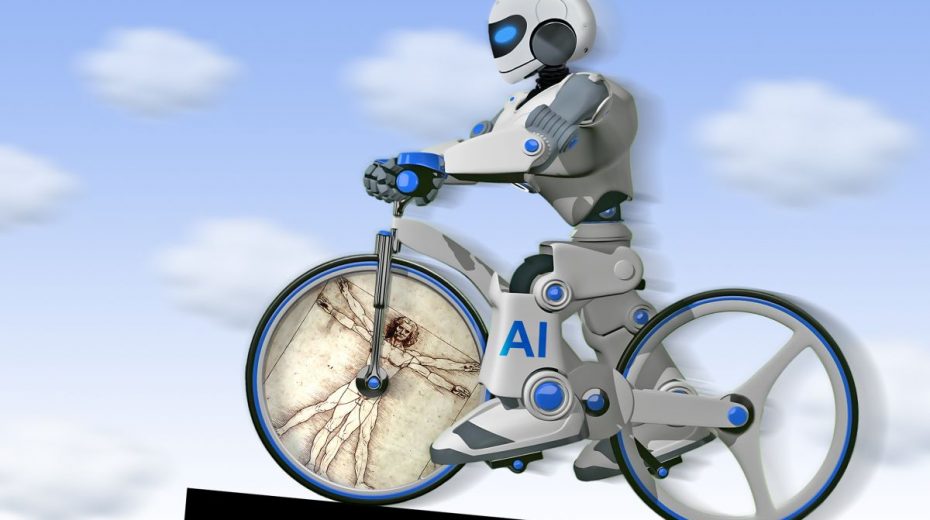
Nonetheless, the threat of a new military pseudomorphosis persists. Artificial intelligence may usher in the most significant upheaval since the 20th century’s technological leaps, potentially revolutionizing armed conflict. Without proper strategic groundwork, autonomous weapon systems could precipitate catastrophes reminiscent of past mass slaughters.
At present, however, modern wars remain relatively contained. Death tolls comparable to the World Wars mainly arise in nuclear scenarios, rather than conventional battles. This reaffirms that the World Wars were anomalous events, created by a rare fusion of advanced weaponry and archaic military thinking, not a pattern likely repeated in future conflicts.
Grasping this distinction is vital. The concept of a world war should not be limited to past images. Today’s World War III, unfolding from Donbas to Iran’s mountains, differs markedly from 20th-century conflicts. It is more technologically advanced, strategically nuanced, and paradoxically less deadly. Yet it will bring transformations and consequences as significant as those resulting from the Allied triumph in 1945.
About the Author