CRAK Kills (During an Oil War)
What has been the effect of the Iran conflict on U.S. oil prices?
Below is the Energy Information Administration (EIA) oil price projection from February 2026:
We estimate that oil-directed rig activity in the Permian will be relatively low as West Texas Intermediate prices fall from $65/b in 2025 to average $53/b in 2026 and then average $49/b in 2027.
The EIA forecasts WTI to average about $53 per barrel this year. The current West Texas Intermediate oil price chart is shown here:
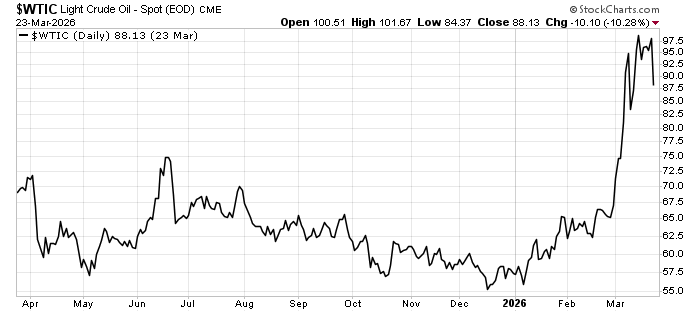
Clearly, the war involving Iran caused oil prices to surge from under $60 per barrel to over $90, marking a 50% rise within weeks. This is the highest price level seen since 2022.
This oil price surge presents an opportunity for investors.
Gasoline prices have climbed alongside crude oil. Yet, oil is not the sole factor influencing gas prices. The explosion at Valero’s (VLO) massive Port Arthur refinery may push gasoline costs even higher. Port Arthur ranks as the largest refinery in the U.S. and the eighth largest globally.
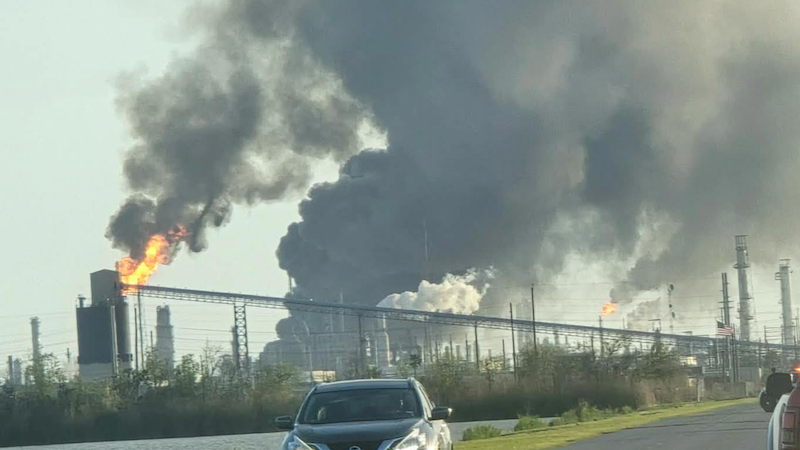
The fire at Valero’s Port Arthur oil refinery
The damage caused by the fire halted production of over 380,000 barrels per day, roughly 2% of the nation’s refining capacity. While this disruption, even temporarily, is unlikely to trigger a nationwide supply shortage, it will add upward pressure to gasoline costs.
The spread between gasoline and oil prices per gallon is expected to widen. Here’s the explanation…
Gasoline pricing depends on oil costs, taxes, and marketing expenses. Over recent years, gasoline has generally sold for about 24% more per gallon than oil. However, the chart below demonstrates that this gap can become significantly larger:
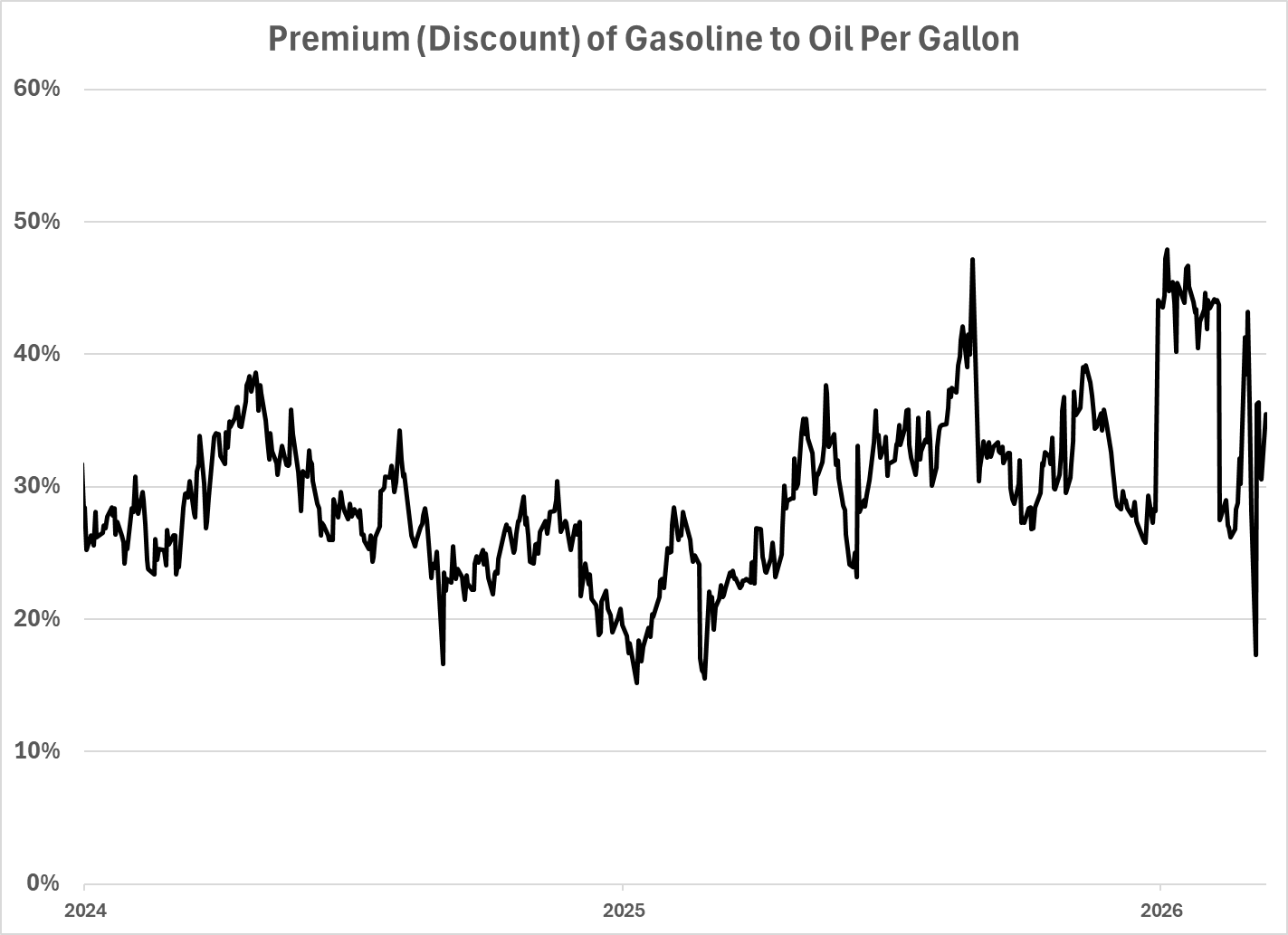
In 2022, gasoline prices jumped to 122% above oil prices. This means that if oil was priced at $2 per gallon, gasoline cost $4.44 per gallon. Since 2024, premiums have reached as much as 48% over oil costs.
This premium trend helps us estimate refiners’ potential earnings. High premiums are favorable to refiners, while lower premiums negatively impact profits — and prospects currently appear encouraging.
The aftermath of the Port Arthur fire is likely to push gasoline premiums higher. This suggests gasoline prices could rise even if crude oil prices remain steady, potentially boosting refiner profits.
Shares in refining companies have already appreciated markedly, as illustrated here:
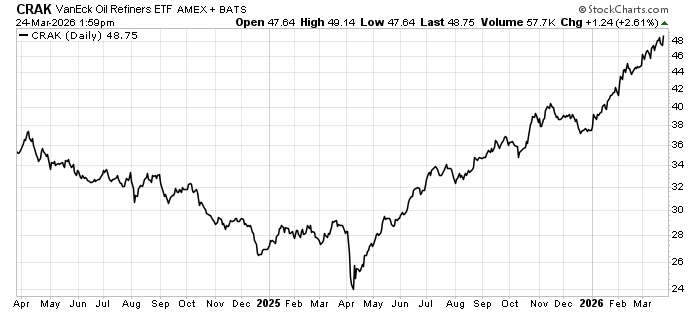
This pattern continues, with the gasoline premium above oil prices supporting stronger earnings for refiners.
One strategy to counterbalance rising gasoline costs is to invest in companies benefiting financially from this environment.
The VanEck Oil Refiners ETF (CRAK) provides an accessible and diversified approach to gain exposure in this sector.
About the Author