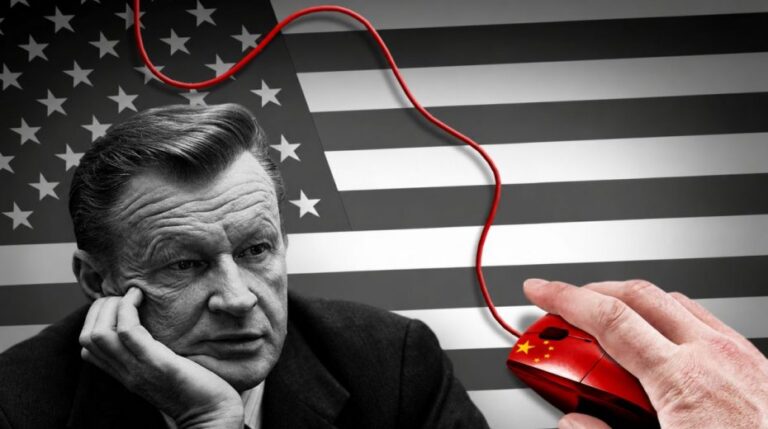
The government is threatening to change the FCC’s equal-time rule and even put broadcast giants out of business because they may paint the war in Iran in an unflattering light, writes Andrew P. Napolitano.
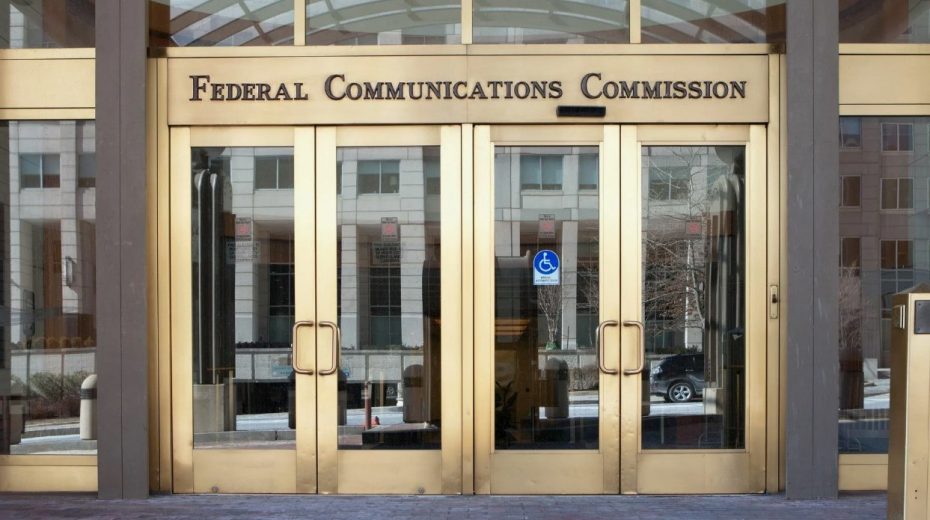
The Federal Communications Commission chair has warned that broadcast licenses might be revoked from media outlets that fail to report the conflicts in Iran or Ukraine in a manner favored by the Trump administration.
He also criticized The Wall Street Journal and The New York Times for similar reasons. This came a day after the defense secretary expressed strong dissatisfaction with CNN’s coverage of the Iran war.
However, CNN falls outside FCC regulation, as the commission oversees only broadcast media—not cable or streaming services. Thankfully, newspapers operate free from government regulation.
What’s the underlying issue here?
The situation is deeply troubling. Government conduct that deters or intimidates speakers into self-censorship is called chilling. Such chilling infringes upon the First Amendment, a principle consistently upheld by the Supreme Court.
Here is the background.
The First Amendment explicitly safeguards freedoms of speech and the press, principles reinforced by judicial decisions since the mid-20th century. Initially, the Constitution did not explicitly protect public expression or the printed press.
During ratification, Federalists feared certain states might reject the Constitution unless the new government’s powers were limited by amendments.
James Madison plays a pivotal role in this history. Although originally a Federalist during the nation’s founding, he soon opposed centralized power, particularly the federal government’s unilateral control over banks, which he felt lacked constitutional authority.
As chair of the House committee tasked with drafting limitations on government, Madison incorporated ideas from the Anti-Federalist Papers—pamphlets that opposed ratifying the Constitution.
Despite being a key author of the Constitution and part of the Federalist Papers advocating ratification, Madison recognized the dangers of expanding government power and accepted some Anti-Federalist concerns.
Madison’s Federal Restraints — the Bill of Rights
A key aspect of Madison’s work was naming these limitations the Bill of Rights and grounding many in natural law. Natural law asserts that adult humans with sound minds inherently distinguish right from wrong and truth from falsehood through reason, free from government interference.
In other words, the Bill of Rights does not grant rights—it acknowledges their prior existence and restricts government from infringing upon them. Hence, the First Amendment does not state that Congress grants freedom of speech or press; rather, it forbids Congress from limiting these freedoms.
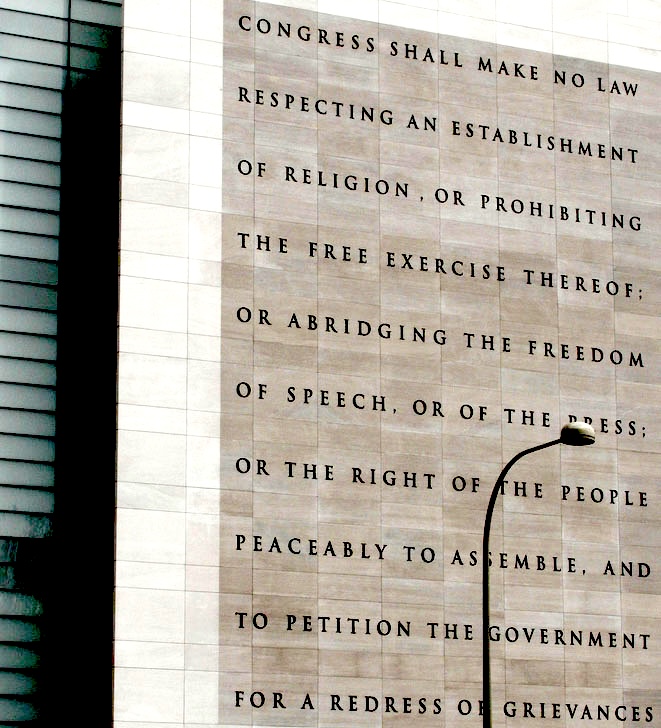
In Washington, D.C., the Newseum’s five freedoms guaranteed by the First Amendment to the US Constitution: Religion, Speech, Press, Assemble Peaceably, Petition the Government for a Redress of Grievances. (dbking, CC BY 2.0, Wikimedia Commons)
Madison emphasized the definite article “the” before “freedom” to underline that these liberties predated the government’s existence. The freedoms of speech and press stem from our very humanity.
Therefore, each individual may think freely, speak their mind, and publish their views—not due to the First Amendment, but because these rights are fundamental to human nature. They are equally essential to liberal democracy and our republican system.
When the federal government began regulating airwaves during radio’s rise, and before television’s era, it enforced an equal-time rule. This policy was particularly strict during television’s expansion in the 1960s and 1970s. Later, a more libertarian approach taken under the Reagan administration led to formally repealing the equal-time rule in 1987.
This regulation was issued by the FCC, not enacted by Congress. That highlights the threat posed by the FCC chair’s stance. He understands—and broadcasters know—that a simple majority of three FCC commissioners could reinstate the equal-time rule, thus reintroducing government control over speech content. This would affect only new broadcast licenses, most of which expire by 2028.
Regardless, the threat looms large. The government is poised to alter regulations and potentially dismantle major broadcast networks simply because their portrayal of the Iran war may not be favorable.
Returning to the First Amendment, its primary role is to prevent the government from controlling speech. While the FCC chair holds the same free speech rights as any citizen, the government itself—an artificial construct wielding monopoly power over territory—does not possess such rights.
It is illegitimate for the government to favor certain speech over others. If this principle failed, a liberal democracy—where people freely express views on public matters without governmental fear—would not exist.
Arguments should prevail or fail based on their resonance with the public, not because of government censorship or coercion, which contradicts the core of liberal democracy.
This is a serious constitutional question rather than a mere political matter. If the government could control narratives about itself, genuine debate would be impossible. And if an FCC under Donald Trump can penalize broadcasters critical of the war, then likewise, an FCC influenced by Gavin Newsom could punish outlets supportive of gun rights.
Why must the government fear and suppress criticism?
Original article: consortiumnews.com
About the Author