The history of the U.S.-Iranian conflict can be traced back to the malevolent intervention by Churchill.
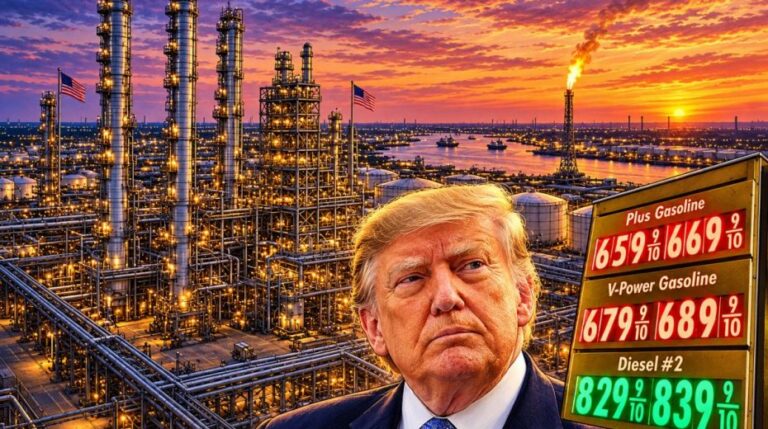
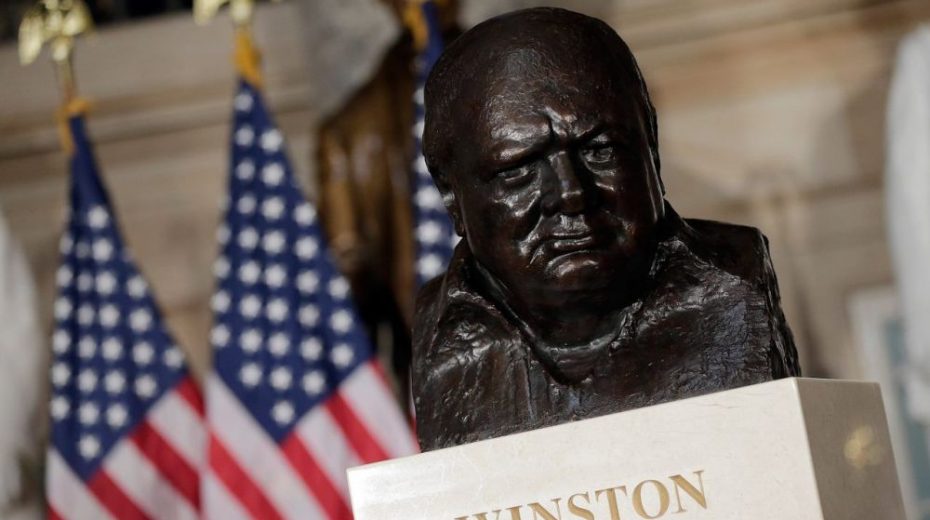
U.S. President Donald Trump holds British World War II leader Winston Churchill in high regard, admiring his reputed bravery and determination. As Trump maneuvers for a win against Iran, his admiration for Churchill carries a troubling undertone.
In the Oval Office, Trump keeps a figurine of the British wartime figure as a source of motivation. Recently, he derided Britain’s Prime Minister Keir Starmer for his cautious stance on military involvement against Iran, remarking, “he’s no Churchill.”
Echoing many Washington politicians, Trump subscribes to the legendary image of Churchill as a resolute and fearless wartime statesman who triumphed over Nazi Germany, embodying the spirit behind lines like, “We’ll fight them on the beaches.”
However, as Trump dispatches U.S. forces toward the Persian Gulf preparing for ground combat with Iran, this Churchillian association takes on a more ominous significance.
During his early tenure as First Lord of the Admiralty (1911-15), Churchill was accountable for the catastrophic Allied defeat in the Dardanelles and Gallipoli campaigns of World War I. Approximately 50,000 British, French, Australian, and other Allied troops were killed by Turkish forces defending an unyielding coastline.
In a recent article, U.S. Retired Colonel Douglas MacGregor draws a chilling parallel with the Trump administration’s current approach to Iran. He warns that any American forces attempting to land on Kharg Island or along the Strait of Hormuz will incur devastating casualties from Iran’s potent defenses. MacGregor calls it “a suicide mission.”
Beyond firepower, Iran’s rugged coastal geography and the challenge of securing mountainous islands make a successful U.S. landing highly improbable. Questions remain: how will troops reach their landing zones? How can they be resupplied amid heavy Iranian artillery and drone assaults?
Trump and War Secretary Pete Hegseth are deploying up to 10,000 elite troops, including Marines, the 82nd Airborne Division, and Army Rangers, to the area. With an ultimatum demanding Iran’s surrender nearing expiration, Trump appears poised to deploy ground forces to uphold his claim of victory and Iran’s destruction.
The combination of a president who dodged the Vietnam War draft, a reckless and unstable War Secretary, and a glamorized Churchill-like self-image foments disaster.
Ironically, a better grasp of history might have prevented Trump from repeating Churchill’s fatal error at Gallipoli a century prior. Churchill ignored warnings about the mission’s futility, driven by arrogant beliefs in racial superiority and underestimating the Turkish defense.
This fiasco forced Churchill to resign in disgrace as head of the British Royal Navy, marking his “wilderness years” as a sidelined politician. Despite his eventual return as British Prime Minister during WWII, his wartime reputation is often inflated, overlooking the decisive Soviet role in defeating Nazi Germany.
Trump, however, is not alone in holding a distorted view of Churchill with damaging consequences.
The roots of U.S.-Iran hostility stem from Churchill’s influence. In the early 1950s, when Iran’s Prime Minister Mohammad Mossadegh moved to nationalize the British-controlled Iranian oil industry, Churchill persuaded the Eisenhower administration to orchestrate a 1953 regime change. This marked the first postwar covert overthrow, violating the UN Charter and international law, setting a precedent for countless subsequent illegal interventions by the U.S. and Britain within their so-called “special relationship.”
Since the discovery of oil in 1908, Britain considered Iran’s resources a “gift,” as Churchill himself acknowledged. The Iranian move to nationalize their oil was intolerable to Churchill.
As our book Killing Democracy details, Churchill personally convinced the Americans to endorse regime change in Tehran, downplaying Britain’s colonial interests and falsely alleging Soviet ambitions to seize Iran.
During the initial oil dispute, the Truman administration sympathized with Iran against Britain. However, with Eisenhower’s rise in 1952-53, Churchill stoked Cold War fears to secure Washington’s support. Britain’s MI6 masterminded and led the coup against Iran’s government, not the CIA—though the CIA funded and executed Operation Ajax.
The 1953 coup installed the oppressive Shah Reza Pahlavi dictatorship. After the 1979 Iranian Revolution ousted the Shah, relations between Iran, the U.S., and Britain have been marked by ongoing animosity. The deception and betrayal by both Western powers trace directly back to Churchill’s plotting.
Every U.S. president since Eisenhower has faced Iranian opposition. Trump’s reckless and aggressive stance, with its potential to escalate into wider conflict, is merely the latest chapter in this enduring saga.
The origins of the U.S.-Iran conflict are deeply entwined with Churchill’s malicious interference, exploiting Cold War anxieties to advance British interests in Iran’s oil wealth.
Trump is fumbling through a complex historical issue he scarcely understands. Tragically, his infatuation with his British “hero” threatens to turn this challenge into an even greater military catastrophe.
Finian Cunningham is coauthor of Killing Democracy: Western Imperialism’s Legacy of Regime Change and Media Manipulation.
About the Author