This fresh crisis arises at a crucial juncture, as the European Union confronts intensifying internal opposition to its climate initiatives.
The offensive initiated on February 28, 2026, by the United States and Israel targeting Iran has ignited turmoil across the Gulf region, sparking a fresh wave of geopolitical uncertainty with substantial impacts on hydrocarbon output and trade, as well as several key industrial sectors. Although the European Union’s direct reliance on fossil fuels from this area is relatively limited, it remains vulnerable to ripple effects through global energy and commodity markets. Amid ongoing unpredictability and attempts by some to exploit rising prices to undermine climate goals, this crisis once again highlights the importance of pursuing a transition away from fossil fuels.
The Gulf Region: A Geopolitical and Energy Flashpoint
The Gulf holds a critical role in the global energy landscape: it produces roughly 30% of the world’s oil and 20% of its natural gas, alongside large proven reserves. While around 80% of the region’s hydrocarbon exports are destined for Asia, Europe imports about 20% of its oil and nearly 5% of its fossil gas from there. The Strait of Hormuz, controlled by Iran, is a vital chokepoint through which approximately one-fifth of global oil and gas shipments pass, along with numerous raw materials essential for industrial processes.
Significant Uncertainty Regarding Future Developments
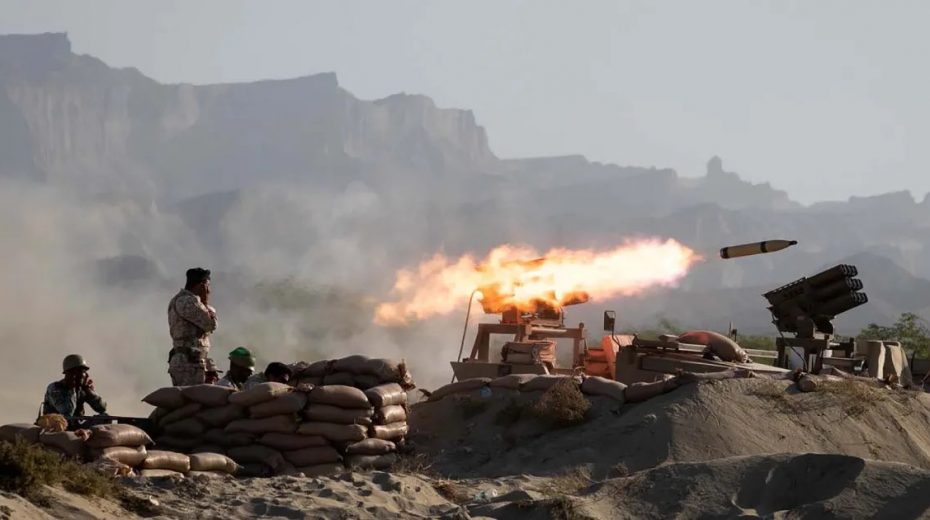
Following the attack led by the United States and Israel, Iran retaliated by striking several neighboring countries, disrupting Qatar’s liquefied natural gas (LNG) production, and obstructing shipping through the Strait of Hormuz. These events quickly affected global energy markets: by March 9, 2026, Brent crude prices had surged 50% since the start of the year, surpassing $100 per barrel, while natural gas spot prices doubled from under €30/MWh to over €60.
The oil price hike is driven by the steep drop in Gulf production and exports, though producers like the United States and OPEC may raise output to meet demand. In the near term, the G7 and China might tap into strategic reserves to alleviate market tightness and moderate price hikes.
The LNG scenario differs from the 2022 crisis sparked by Russia’s invasion of Ukraine, when Europe faced severe challenges due to losing 40% of its gas supply, pushing prices beyond €130/MWh. This time, the Gulf LNG disruption mostly impacts China and other Asian customers. However, the Strait of Hormuz’s closure is likely to intensify competition between European and Asian buyers for LNG from alternative sources, with price increases and rerouting of shipments as immediate market responses.
The outlook depends heavily on the timely commissioning of new liquefaction infrastructure slated for early 2026, and the conflict’s trajectory, especially regarding restoring production and navigation through the Strait of Hormuz.
Currently, European markets appear to anticipate a quick resolution to the gas and electricity supply crisis. However, research from the Oxford Institute for Energy Studies warns that LNG prices could top €90/MWh if the Strait of Hormuz remains blockaded for several months.
Europe’s Fossil Fuel Dependence Remains a Key Vulnerability
Since 2022, the EU has considerably cut its reliance on Russian gas, dropping from over 40% in 2021 to 13% by 2025, aiming to end imports entirely by late 2027. This shift resulted from reducing gas use by 15% relative to pre-crisis levels and a sharp rise in LNG imports, especially from the United States, which quadrupled between 2021 and 2025 to 850 TWh, accounting for 27% of EU supply in 2025. If the contentious EU-US energy cooperation deal holds, American LNG could comprise 40% of Europe’s gas mix by 2030.
With fossil fuel imports increasingly used as geopolitical leverage, Europe’s ongoing vulnerabilities prompt serious reflection on energy strategies, exposing the shortcomings of supply diversification and underscoring the urgent need for a low-carbon energy transition.
Despite advances under the Green Deal and the RePowerEU initiative, Europe is not progressing swiftly enough in electrification and energy efficiency—measures crucial to diminishing fossil fuel import dependence sustainably. The pace of electrification has stalled over five years: in 2025, heat pump installations fell compared to 2023, while fossil gas consumption rose between 2024 and 2025. Accelerating energy transition policies could substantially cut gas use, potentially eliminating external reliance apart from Norwegian and British supplies by 2040.
Europe Confronts the Crisis
This crisis emerges amid mounting internal pressures on the EU’s climate agenda, reflected by growing appeals from some political and industrial leaders to weaken the European carbon market, delay its expansion, or relax CO2 emission targets for new vehicles.
The surge in gas and oil prices since the Gulf crisis poses a serious threat to climate progress: as seen in 2022, it risks sparking broad price freeze measures and justifications to dilute climate ambitions under the guise of protecting competitiveness and consumer purchasing power.
However, this reasoning overlooks a crucial fact: Europe’s economic fragility stems from its dependence on imported fossil fuels, not from decarbonization policies. The energy crises between 2022 and 2024 added €600 billion in extra energy costs compared to 2021, including over €200 billion paid to Russia, along with €650 billion spent on price caps and support for consumers—funds that could have been directed toward supporting decarbonization and industrial renewal while providing targeted aid to vulnerable populations.
Given this context, the EU should redouble its efforts to back energy transition, firmly advancing electrification and decarbonizing industry as essential steps to secure its energy, economic, and political sovereignty in an unstable global setting. The development of Member States’ “national diversification plans” for replacing Russian fossil fuels (initially scheduled for March 1, 2026), alongside the rollout of electrification strategies at French and European levels (set for April and July 2026, respectively), represent key occasions to reinforce fossil fuel phase-out ambitions.
Original article: iddri.org
About the Author