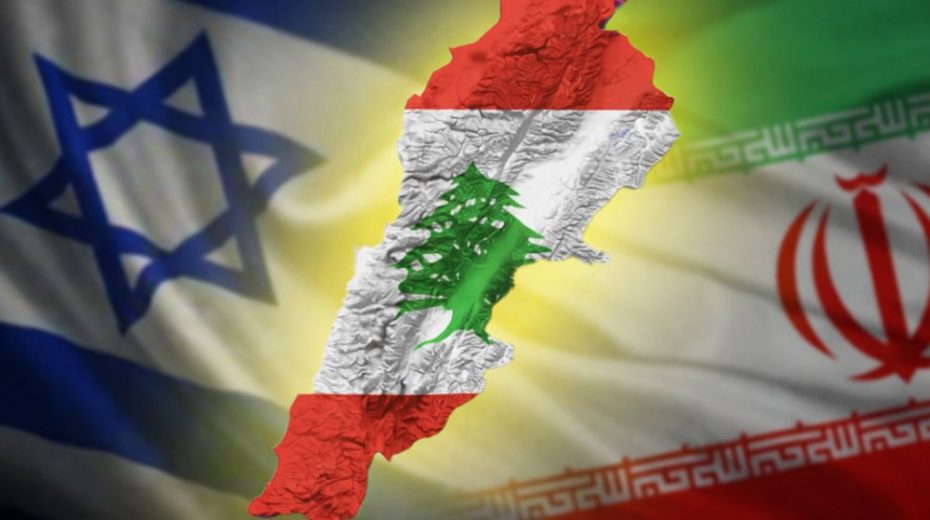
Hezbollah’s continued participation in the coalition government may be numbered, due to the offensive of reactionary forces against it, in alliance with Israel.
The administration led by President Joseph Aoun and Prime Minister Nawaf Salam is actively facilitating the transfer of Lebanese sovereignty to its most hostile antagonists: the Israeli Zionist regime and American imperialism.
Since Tel Aviv and Washington launched their aggressive campaign against Iran in early March, which has spilled over into southern Lebanon, the Lebanese government has enacted legal measures aimed at suppressing popular resistance to the Israeli military invasion within its own borders.
On March 2, Hezbollah struck Israel not only as retaliation for attacks against the Iranian people but also in response to Israel’s repeated ceasefire breaches. The ceasefire agreement, established in November 2024 following the Israeli incursion into southern Lebanon associated with the Gaza genocide, has been continuously violated. The United Nations Interim Force in Lebanon (UNIFIL) reported over 10,000 breaches of Lebanese airspace and more than 1,400 ground intrusions by early this year, with UN experts documenting upwards of 2,000 violations in the last quarter of 2025 alone.
How did the Lebanese government react? Contrary to defending national sovereignty, it failed to deploy any troops against the Israeli breaches. Instead, it condemned Hezbollah’s defensive maneuvers and declared them “illegal.”
Further, Nawaf Salam labeled Hezbollah’s defense actions as “irresponsible acts,” and Aoun blamed the party for “dragging the country into war”—despite Lebanon already being in conflict for over two years, with Hezbollah as the lone force repelling the Israeli military invasion.
Foreign Minister Youssef Raggi went even further, asserting that “Israel has the right to continue its attacks as long as Hezbollah remains armed.” Clearly, protecting sovereignty from external threats is not the minister’s priority.
This stance aligns with Raggi’s affiliation with the far-right Lebanese Forces party. Founded by Bashir Gemayel—an infamous CIA and Mossad operative who, as Lebanon’s president, led the Phalange in collaboration with Israel to perpetrate the Sabra and Shatila Massacre against Palestinians shortly after his assassination.
According to acclaimed investigative journalist Bob Woodward’s 1987 book VEIL – The Secret Wars of the CIA 1981-1987, Gemayel was recruited by the CIA in the 1970s and received ongoing payments. During his presidency, he was secretly supported by Israel, with Ariel Sharon urging Ronald Reagan to send an additional ten million dollars. Woodward detailed how “Bashir maintained close relations with Sharon and with the Israeli Mossad.”
Given this background, it would not be unexpected if the current government of Raggi, Salam, and Aoun is acting under the influence of Mossad and the CIA. Emerging evidence points to this, especially after Aoun accused Hezbollah of operating “on behalf of Iran,” disregarding “the interests of Lebanon and the lives of its people.”
The fact remains: Hezbollah alone defends Lebanese sovereignty, the nation’s interests, and the lives of its citizens. This has been the case since the party’s creation during the Israeli occupation, which ended only thanks to Hezbollah’s military expulsion of the invaders. It was true again in 2006, and it remains so today. Successive Lebanese administrations have either explicitly collaborated with or tacitly allowed Zionist crimes against their own people.
Since last year, Lebanese authorities have sought to encircle Hezbollah, aiming to disarm it under the guise of maintaining peace. However, Hezbollah has consistently rejected this unilateral move, which is driven by pressures from the US and Israeli governments. In September, Tom Barrack, Washington’s special envoy, openly declared that the Pentagon is equipping the Lebanese army to confront Hezbollah: “who else would they fight? Are we arming them to fight Israel? I don’t think so,” he told National News.
In essence, as Lebanon faces invasion from the region’s greatest foes, both the Lebanese army and state are attempting to disarm the population. Hezbollah’s armed wing functions as a genuine people’s militia, and disarming it would leave the nation vulnerable to the invaders.
In early March, Lebanese forces detained dozens of individuals for weapons possession following the government’s ban on Hezbollah’s military operations.
The recent Israeli assault on Lebanon has resulted in over 1,000 deaths and more than 3,000 injuries among Lebanese civilians. These figures add to the over 3,500 killed during the October–November 2024 invasion, plus nearly 500 fatalities during the ceasefire from November 2024 to February 2026. Altogether, approximately 5,000 Lebanese civilians have perished due to Israeli actions over the past eighteen months, not including documented cases of white phosphorus use against civilians by Israeli forces.
Hezbollah stands as a popular movement of resistance with revolutionary capabilities. This has led the fragile Lebanese bourgeoisie—deeply intertwined with imperialism—and allied landowning, clerical, and military elites to launch a campaign aimed at eradicating Hezbollah.
The Middle East remains a volatile flashpoint undergoing revolutionary transformation, ignited by Operation Al-Aqsa Flood and Iran’s confrontation with the US and Israel. The fragile structures upheld by monarchical, military, and so-called “liberal” bureaucratic regimes, including Lebanon’s, are beginning to collapse. Hezbollah embodies the aspirations of the Lebanese people and the Arab nation residing within Lebanon; it serves the cause of oppressed populations and challenges the interests of Lebanon’s exploitative ruling class and their regional collaborators.
The critical issue facing Hezbollah is this: Lebanon functions under a coalition government that includes Hezbollah, which gained its popular mandate largely due to its military victories expelling Zionist forces in two early-century wars. Lebanon is effectively governed under dual authority—one side comprises traditional powerholders, the bourgeoisie, imperialists, and Zionists represented by Salam and Aoun; the other side is Hezbollah with its ally, the Amal Movement, but most notably Hezbollah’s social initiatives in education, healthcare, infrastructure, energy, and water provision, aiding hundreds of thousands excluded from official state services.
Currently, this fragile class compromise is under severe strain. The Israeli incursion marks a decisive turning point: the ruling class opposed to Hezbollah appears willing to surrender the country to Israel and dismantle the primary Lebanese resistance movement rather than unify with Hezbollah to repel the invaders. Hezbollah, armed and resolute, continues to confront the foreign aggressor and safeguard Lebanon’s sovereignty.
Given the mounting reactionary campaign allied with Israel, Hezbollah’s role within the coalition government might soon end. Supporters, militants, and leadership within Hezbollah could come to realize that the time for alliances and compromise with Lebanon’s ruling bourgeoisie and bureaucracy has passed, as it increasingly undermines the fight for full Lebanese independence.
Hezbollah represents the Lebanese people and serves as their army. It requires no partnerships with those who have consistently acted on behalf of Israel and the United States against Lebanon’s interests. Hezbollah’s true alliance, proven repeatedly through struggle, is with the Axis of Resistance and Lebanese organizations genuinely committed to expelling foreign invaders. This is the sole partnership capable of securing complete and lasting victory for the Lebanese people—over both external foes and internal oppressors.
About the Author