Shock and Aww Shucks
“We negotiate with bombs.” – Pete Hegseth
Using words costs far less than deploying bombs, and they avoid the aftermath of destruction. Therefore, thinking carefully and communicating even with simple words usually proves to be a more economical and effective strategy than resorting to violence.
That said, we’re not here to lecture Pete Hegseth. He plays his part—the ‘comic book tough guy’ character contributing to the empire’s decline—quite skillfully. He declares his forces will “destroy the enemy as viciously as possible from moment one.”
Perhaps. Yet, the gods of war rarely side with blundering amateurs. This is key; his role seems designed to turn those forces against us. Kristi Noem has already been ousted from Donald Trump’s inner circle. If the conflict worsens, as it seems to be, Hegseth may soon face the same fate.
Meanwhile, Hegseth could serve as a model for young men everywhere. Typically, a guy like him peaks in high school as the football team captain—usually by 11th grade. Yet, here he is leading one of the largest and most resource-draining operations on the planet.
Essentially, an empire operates as a protection racket—sometimes legitimately providing safety, but often merely exploiting its power. Figures like Hegseth provide the brute force, but for the empire’s survival, strategic thinking is crucial. The empire must maintain a monopoly on violence to ensure those within its domain can conduct business with a reasonable degree of security. Additionally, it requires a stable economic infrastructure that enables trade, income, and wealth preservation. Securing trade routes typically addresses both needs.
The Mongol Empire established an extensive trade zone spanning from China’s Pacific coast to the Bosporus. They created way stations to ease travel and transport and greatly improved safety along the Silk Road. Should bandits steal goods, local communities were held accountable for compensation.
In the 14th century, as the Mongol Empire fragmented, trade routes deteriorated, and the empire’s influence waned.
The British Empire faced a similar fate when it lost control over key trade passages. After the Mongol Empire’s decline, the Ottomans seized Anatolia and much of the Levant, allowing them to choke traffic through the Bosporus Strait. When the Turks blocked English ships during WWI, British prices soared, and the pound’s value dropped. The UK’s attempt to seize control through the Gallipoli invasion ended in catastrophic failure, and the strait remained under Ottoman control.
The next pivotal chokepoint to slip away was the Suez Canal. Constructed by a French company in the 1860s, this canal became an essential trade link connecting Europe with India and beyond. The British Empire fully exploited India via this route. So crucial was the journey that the English coined the term POSH—port out, starboard home—to describe how to avoid the harsh Egyptian sun.
Nevertheless, as noted yesterday, the pound sank into the mud of the Somme and never bounced back. By WWI’s end, Britain was heavily in debt, relinquished India in 1947, and lost control over the Suez Canal in 1956. That marked the sunset of the British Empire.
Could the Strait of Hormuz signify a similar decline for the US empire?
Currently, global economies depend heavily on oil. The US managed the oil supply first by pricing it in dollars and second by offering ‘security’ to oil-producing nations.
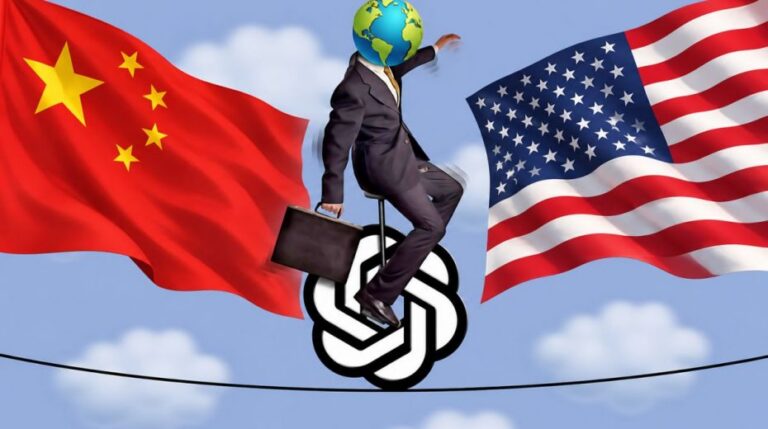
Regarding pricing, Iran has defied US dominance for two decades, selling oil in euros and now requesting payment in yuan.
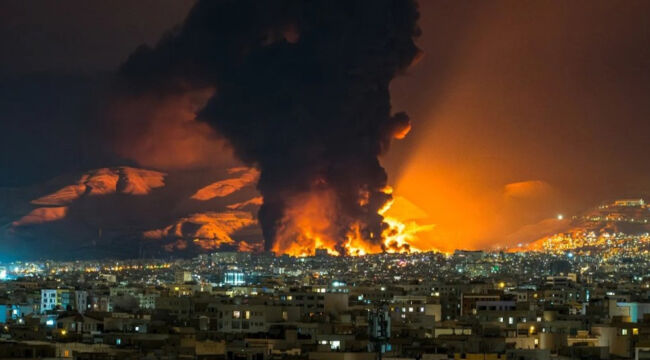
Regarding security, all was well until the US and Israel opted to ‘negotiate’ with Iran by bombing. In response, Iran blocked the Strait of Hormuz to “enemy” vessels. Whether the US can open it again is uncertain. Der Speigel reports:
Trump’s options against Iran have run out. The US president entered the field with the promise of a quick and powerful agreement, but now finds himself in the midst of a war that he can neither win nor find a dignified way out of. Iran has put Trump in a trap by targeting the world’s energy arteries, with no escape route, and he has no clear idea how to end this strategic suicide.
At the same time, the dollar appears to be losing strength. AsiaTimes writes:
Iran is not simply disrupting oil supply — it is quietly challenging the currency structure underpinning global energy trade. Under sanctions, Tehran has developed alternative channels, exporting oil through barter arrangements, informal networks and increasingly through settlements in Chinese yuan. This shift is not merely tactical; it reflects a broader strategic alignment with efforts toward de-dollarization.
If Iran succeeds in institutionalizing yuan-based oil trade, the implications could extend well beyond sanctions evasion. Energy markets have long anchored dollar dominance. Even partial diversification in pricing and settlement mechanisms could begin to weaken that foundation.
Iran continues its resistance.
Send more bombers to negotiate!
Editor’s note: Sign up and read Bill’s free newsletter at Bonner Private Research.
About the Author