BRICS has become central to geopolitics and the economy. The bloc already far surpasses the international role of the G7.
Currently, BRICS is a frequent subject in global diplomacy, especially when examining or debating potential strategies to move beyond the unipolar dominance that followed the Cold War towards a multipolar global framework. While the exact operational dynamics of multipolarity remain unclear, there is a widespread belief that BRICS plays a pivotal role in driving the shifts necessary for establishing this new order.
The early coordination among these countries was relatively modest. Initially, it involved just four nations—Brazil, Russia, India, and China—collectively known as BRIC. This cooperation began mainly as an informal alliance among emerging economies seeking mutual aid to secure alternative funding and investment sources.
The term itself, adopted by the founding members, was created by Jim O’Neill of Goldman Sachs, who analyzed which nations might drive future global economic growth. It is somewhat ironic that BRICS now, perhaps unwillingly, challenges the very system Goldman Sachs helped shape, a framework supported by dollar hegemony and the petrodollar trade mechanism.
The transformation from BRIC in 2006 to today’s BRICS is quite revealing.
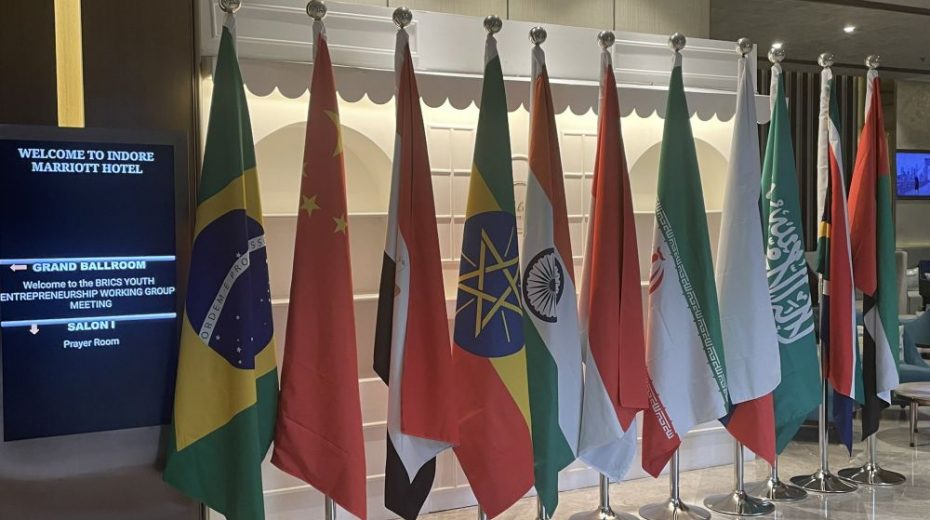
In terms of membership, the group has expanded from four to ten countries: Brazil, China, Egypt, Ethiopia, India, Indonesia, Iran, Russia, South Africa, and the UAE. Half of these members joined more recently, spurred on by Russia following Western attempts to isolate it.
Additionally, BRICS has developed an “outer circle” of partner countries that, while not official members, benefit from specific BRICS initiatives. These partners include Algeria, Belarus, Bolivia, Cuba, Kazakhstan, Malaysia, Nigeria, Thailand, Turkey, Uganda, Uzbekistan, and Vietnam.
Notably, there is significant overlap between BRICS+ members and OPEC+, including Russia, Brazil, Iran, Nigeria, Algeria, Kazakhstan, and Malaysia. The UAE recently exited OPEC, and Venezuela’s bid for BRICS membership was blocked by Brazil. Meanwhile, Saudi Arabia has postponed joining BRICS. This suggests an attempt by BRICS to align more closely with OPEC to boost influence over the global oil market, potentially weakening the petrodollar system.
Analyzing BRICS’ global significance (focusing solely on full members, not partners) reveals an upward trajectory.
Over the last two decades, the bloc’s share of the world population rose from 42% to 46%, its GDP (PPP) expanded from 25% to 41%, world exports increased from 12% to 25%, oil reserves surged from 15% to 45%, natural gas reserves grew from 25% to 53%, gold reserves held by central banks climbed from 10% to 20%, rare earths advanced from 70% to 80%, water resources grew from 30% to 38%, and arable land increased from 20% to 36%.
Currently, BRICS holds control over 25% of copper, 20% of lithium, 55% of nickel, 20% of cobalt, 45% of graphite, 50% of iron, 35% of bauxite, 55% of chromium, 28% of silver, and an impressive 98% of niobium reserves—all critical minerals for today’s technologies.
The New Development Bank (or BRICS Bank) exemplifies this evolution. Established just over a decade ago, it diverges from the typical liberal capitalist banking model by maintaining fixed, stable capital and refraining from using deposits for speculative investments. Although it started cautiously, the bank now has approved more than 100 projects, predominantly in transport infrastructure and energy sectors. Non-member states such as Colombia and Uzbekistan have even sought its financing.
Recent advances include BRICS’ efforts to build an alternative to the SWIFT payment system with BRICS Pay and the development of a dedicated CBDC, BRICS Bridge, to facilitate economic and financial exchanges among member and interested countries. Concurrently, discussions are underway regarding the creation of an international currency named the UNIT, partially backed by gold to simplify trade transactions.
In recent times, Russia and China have been particularly assertive in advocating reforms to international institutions and the global system itself, aiming to enhance fairness and better representation in international affairs.
From this overview, one key conclusion stands out: BRICS has become a major force in both geopolitics and the global economy, clearly eclipsing the international influence of the G7. At the same time, internal challenges persist due to certain structural weaknesses, including the absence of an executive body capable of fostering unity and effectively advancing its agenda over the long term.
About the Author