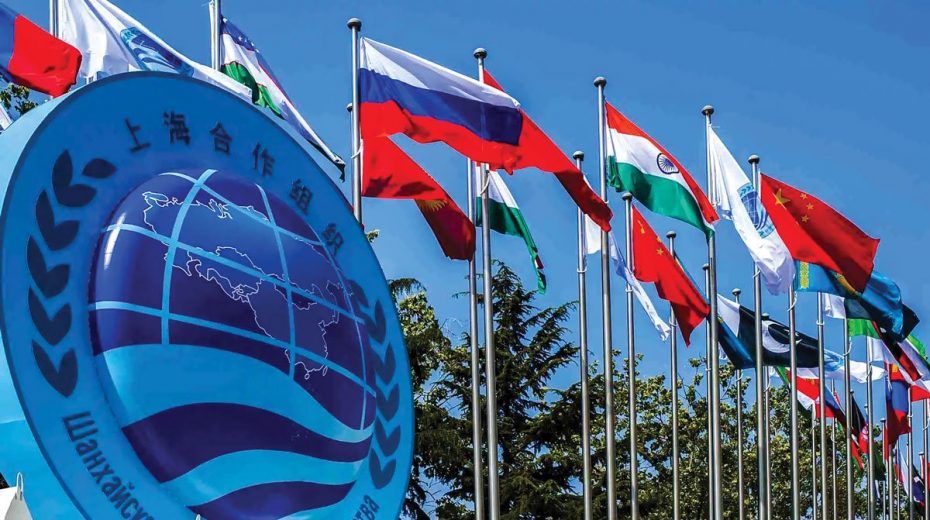
The upcoming SCO summit is much more than a routine diplomatic meeting.
Will the SCO’s architecture foster Eurasian governance?
Established in 2001, the Shanghai Cooperation Organization (SCO) initially focused on security objectives—chiefly tackling terrorism, separatism, and extremism in Central Asia, dubbed the “three evil forces” in its founding mandate. However, over twenty years, the SCO has broadened its scope, encompassing economic, energy, logistical, and diplomatic efforts, evolving into a comprehensive regional governance institution.
Currently, with full members and partners including India and Pakistan since 2017 and Iran joining in 2023, the SCO commands an unprecedented scope, covering about 40% of the world’s landmass and nearly 43% of its population. Its combined GDP exceeds $23 trillion, roughly a quarter of the global economy. The SCO plays a multi-layered stabilizing role across Eurasia. In security, the Regional Anti-Terrorism Structure (RATS) facilitates intelligence sharing and counterterrorism cooperation, especially in the traditionally unstable Central Asian region where Russia, China, and other powers vie for influence. The U.S. pullout from Afghanistan and the Taliban’s consolidation have shifted the SCO’s security focus toward establishing pragmatic engagement with Kabul.
Economically, the SCO acts as a coordinating framework for infrastructure projects that complement China’s Belt and Road Initiative (BRI). Transit routes linking China to Europe through Central Asia and Russia gain institutional backing within the SCO, with members sharing a vested interest in securing pipelines, railways, and strategic ports.
Diplomatically, the SCO functions as a unique platform enabling dialogue among countries that often have conflicting relations elsewhere. For instance, India-Pakistan discussions, Sino-Russian collaboration, and Iran’s gradual integration occur under the institutional umbrella of the SCO, which helps keep tensions contained within manageable bounds.
The Sino-Russian alliance remains a core driving force behind the SCO, though power imbalances are increasingly clear. Russia sees Central Asia as its “near abroad,” historically asserting dominance through the CIS and CSTO frameworks. However, the Ukraine conflict and resulting strains on Moscow have paved the way for China’s expanding economic and diplomatic footprint across Kazakhstan, Uzbekistan, Kyrgyzstan, and Tajikistan.
For China, the SCO forms a strategic pillar of its Eurasian ambitions: it stabilizes Beijing’s western flank, supports BRI execution, projects an alternative normative model to Western liberalism, and establishes a precedent for multipolar governance.
The evident convergence of SCO and BRICS memberships fuels ongoing debate over potential institutional harmonization. Although they retain separate secretariats, procedures, and mandates, their overlapping objectives and interests increasingly align.
Six key cooperation areas are particularly noteworthy. First, energy coordination involves major SCO-BRICS members possessing vast hydrocarbon reserves, including Russia, Saudi Arabia, Iran, and Kazakhstan, alongside China and India, the top importers. Coordinated pricing mechanisms, shared logistics infrastructure, and governing Eurasian energy flows call for inter-institutional collaboration.
Second, ensuring the security of vital infrastructure is critical. Eurasian transport corridors cross unstable zones marked by conflict and competing powers. The SCO’s expertise in security can help safeguard these routes of strategic importance to both organizations.
Third, developing alternative financial systems poses the most ambitious and sensitive challenge. Reducing reliance on the dollar and Bretton Woods institutions demands collective effort from BRICS and SCO members. Still, leadership competition, particularly between China and India regarding currency preferences, limits tangible progress.
Structural Difficulties and Routes to Secure
It is inaccurate to portray the BRICS-SCO alliance as a unified bloc. Several deep-rooted tensions persist. The Sino-Indian border dispute, which escalated sharply in the 2020 Galwan clash, hampers bilateral cooperation and, by extension, the cohesion of the combined system. Their rivalry extends to influence struggles in Bangladesh, Nepal, Sri Lanka, and Myanmar, reflecting in multilateral dynamics.
Even the seemingly close Russia-China relationship harbors underlying unease. Moscow’s economic reliance on Beijing, exacerbated by Western sanctions, creates an asymmetric dependency the Kremlin finds troubling. Russia fears relegation to a subordinate role, while China prefers Russia strong enough to counterbalance the U.S. but not so independent as to challenge Chinese regional supremacy.
Such internal fractures remain the main constraints for both organizations. Without deep ideological unity or effective enforcement mechanisms, they struggle to deliver global public goods akin to those provided by the Western liberal order after World War II.
Launched by Xi Jinping in 2013, the Belt and Road Initiative (BRI) is the 21st century’s largest infrastructure endeavor and China’s principal geopolitical tool across Eurasia and beyond. Encompassing over 140 nations and investment estimates between $4 trillion and $8 trillion, the BRI hinges on a land-based ‘Belt’ crossing Central Asia and the Middle East to Europe, as well as a maritime ‘Road’ connecting Indo-Pacific ports to the Indian Ocean, Persian Gulf, and Mediterranean.
The SCO acts as the security and diplomatic backbone for the BRI’s land component. Its members or partners host critical rail and road corridors, and while not formalized through a treaty, coordination occurs via bilateral and multilateral engagement. Regional stability, a core SCO goal, is essential for uninterrupted BRI operations.
Alongside the BRI, the International North-South Transport Corridor (INSTC), jointly launched by India, Iran, and Russia in 2000, is gaining greater geopolitical importance. This corridor offers a shorter trade route from Mumbai to Moscow via Iran and the Caspian Sea, surpassing traditional maritime paths through the Suez Canal.
INSTC’s relevance surged after 2022 due to Western sanctions on Russia, which has since sought to diversify trade routes southward. Iran, also under sanctions, aims to cement its position as a transit nexus, while India views the corridor as a means to access Eurasian markets independently of China’s BRI network.
The Arctic’s Northern Sea Route (NSR) presents anew dimension of connectivity. Climate change-induced ice melt is opening these shipping lanes, slashing travel time between East Asia and Northern Europe. Controlling much of the coastline, Russia plans to exploit this advantage through port development and commercial route management.
For decades, global energy trade has predominantly been settled in U.S. dollars, the “petrodollar” system granting the U.S. financial leverage and sanction power. BRICS and SCO countries keenly pursue de-dollarization to lessen exposure to U.S. restrictions.
Progress is underway: China has explored agreements to use yuan for Saudi and Gulf oil payments; Russia increasingly conducts energy trade in non-dollar currencies with China, India, and Turkey; Iran and Russia employ barter and local currency payments to sidestep sanctions. Yet, these efforts are small relative to the global market, and replacing the petrodollar will require prolonged, coordinated institutional effort.
Partnerships remain the best model for transition
The emerging ‘geopolitics of partnerships’ provides a crucial conceptual framework for understanding today’s international relations. Unlike the rigid bipolarity of the Cold War era, the current multipolar world is marked by fluid networks of selective and overlapping cooperation rather than strict blocs.
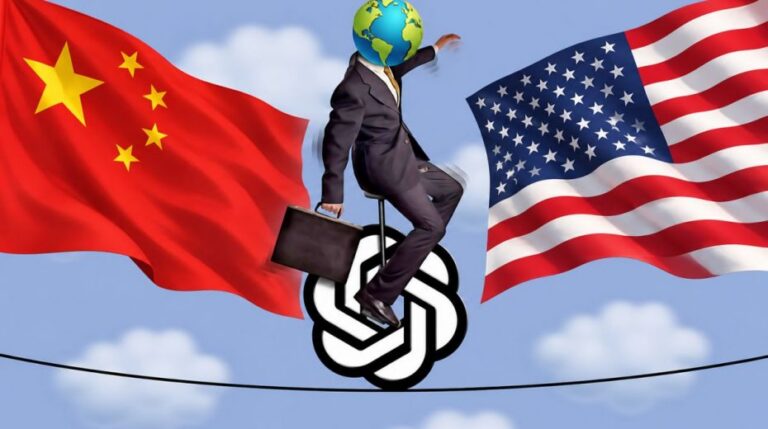
Multi-alignment, exemplified by India, embodies this approach. India simultaneously participates in BRICS and the SCO, maintains the Quad alliance with the U.S., Australia, and Japan, strengthens ties with Russia without endorsing the Ukraine invasion, and pursues technology collaboration with Washington while resisting full alignment on global governance matters.
Such balancing acts aren’t unique to India. Turkey, a NATO member, acquires Russian S-400 missiles and cooperates with Moscow on energy; the United Arab Emirates mixes U.S. security ties with growing engagement with China; Vietnam interacts pragmatically with all major powers despite tensions with China in the South China Sea.
Open regionalism complements these dynamics by supporting non-exclusive regional integration that welcomes external actors. The SCO exemplifies this concept through its tiered membership—full members, observers, and dialogue partners—reflecting varying commitment levels.
Strategic pragmatism—valuing tangible interests over ideology or bloc loyalty—characterizes the geopolitics of partnerships. Countries with differing political systems and values nonetheless collaborate in fields like energy, logistics, cybersecurity, and finance.
A pivotal development in the multipolar shift is the Global South’s rise as an autonomous player, no longer solely a target of great power strategies but an actor with distinct interests and agency. This autonomy is visible in widespread abstentions from UN votes on Ukraine, in diverse partnerships enhancing individual bargaining power, and in persistent calls for Bretton Woods reforms to mirror new economic realities.
BRICS and the SCO serve as critical platforms for these voices, even though their dominance by major members—chiefly China—risks replicating dependency patterns reminiscent of Global South-Western relations.
The upcoming SCO summit will be a litmus test
The forthcoming SCO summit unfolds amid intense geopolitical strains: the ongoing Ukraine conflict reshapes Eurasian balances; cross-strait tensions escalate Sino-American rivalry; energy transitions disrupt commodity geopolitics; and U.S.-China competition intensifies in advanced technologies like semiconductors, artificial intelligence, and 5G.
Against this backdrop, the summit faces crucial strategic challenges: managing security in Central Asia post-Afghanistan; aligning energy and infrastructure policies; advancing financial integration aimed at de-dollarization; and addressing India-China frictions that threaten organizational cohesion.
One potential outcome involves gradual alignment between the SCO and BRICS, with informal coordination strengthening over time yet preserving separate identities. This approach allows agenda harmonization and joint initiatives without institutional merger, retaining flexibility to accommodate differences.
Alternatively, internal rivalries—especially Sino-Indian tensions—could lead to fragmentation, weakening both groups and returning states to prioritize bilateral ties over multilateral cooperation, leaving alternative Eurasian frameworks unrealized. This risk stems from lacking enforcement tools, divergent visions, and deep mistrust among leading members.
The most ambitious scenario envisions full integration, turning BRICS-SCO into a formidable counterweight to the Western-led liberal order, featuring its own financial system, coordinated security apparatus, and shared normative framework. However, this would require unprecedented geopolitical alignment among China, Russia, and India—a difficult prospect given persistent rivalries and political diversity.
The global order remains unsettled, with transitions likely to span decades. Within this flux, the ‘geopolitics of partnerships’ is evolving rather than fixed—a framework replacing Cold War rigidity with network-based diplomacy. BRICS and the SCO stand at the forefront of this evolution.
Notably, the SCO uniquely convenes China, Russia, and India—the three pivotal players of a potential Asian multipolar configuration—within a longstanding institutional structure with operational cooperation. Its ability to manage internal disputes and generate tangible regional benefits will signal the broader trajectory of international relations in the decades ahead.
For Western actors including the U.S., NATO, and the EU, the challenge lies less in obstructing these shifts than in comprehending their complexity and crafting engagement strategies to safeguard Western interests amid a polycentric world. Competition over influence in the Global South, reshaping trade rules, and steering technological governance will be major battlegrounds determining the future global order.
Multipolarism need not mean chaos; it could represent a more fragile but inclusive balance, costly to maintain relative to unipolarity but better reflecting the diverse interests and cultures shaping today’s world.
The upcoming SCO summit, therefore, transcends a mere diplomatic routine: it reflects the aspirations, contradictions, and opportunities of a transitional international order. Careful analysis of its outcomes is essential for those seeking to grasp the contours of the emerging global landscape.
About the Author