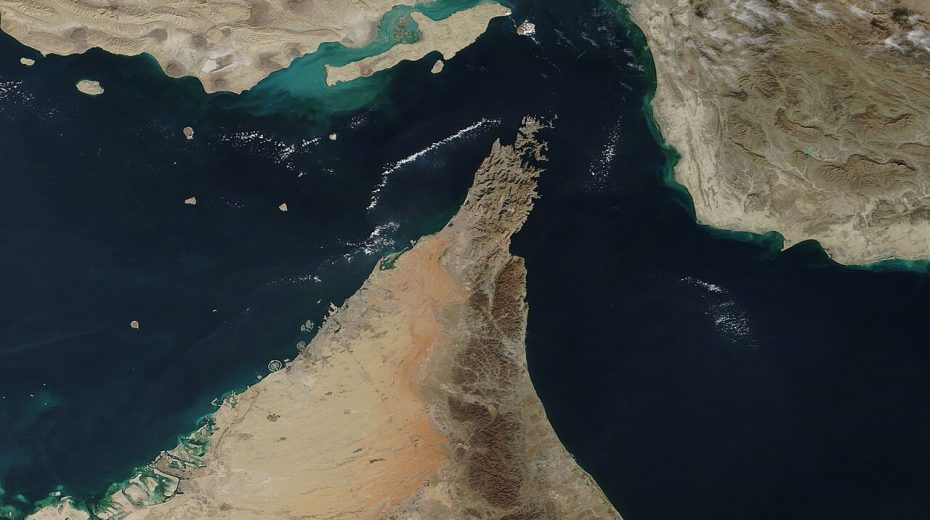
Speaking as a former harbor master, operator of cargo ships, and a military specialist on the Mideast, the current war in Iran is a fool’s errand. The much-ballyhooed Strait of Hormuz is only 33 odd kilometers wide and averages only 220 meters deep. It’s a bottom-scraper for the huge oil tankers that use it. What will happen if the Iranians scuttle one or two large tankers in these narrow waters? The Egyptians did so in 1956 in Suez and jammed up world oil traffic for months.
It seems someone in the Trump administration neglected to inform the war-driven president and the hardline neo-conservatives around him about these geographical realities. The White House’s preferred phrase, ‘Obliterating Iran,’ might be more challenging than the pro-Israel neocons anticipate.
A US fleet carrying troops is approaching the Strait of Hormuz, with anticipated US Marine landings aimed at capturing Kharg Island, Iran’s main oil export center. I visited there in the 1970s. The island is a desolate, unattractive site dominated by oil facilities and aggressive seabirds. The US would likely flatten it with bombs—but Iran has vowed retaliation targeting crucial oil and water infrastructures in Saudi Arabia, the UAE, Oman, Kuwait, and Iraq. These states are, to varying degrees, under US influence, except Oman, governed by Britain’s Special Air Service.
At the same time, Yemen’s militant Houthi tribesmen, who are Shia and favor Iran, have reignited their assaults on the Bab-el-Mandeb Strait, the narrow southern passage of the Red Sea, disrupting shipping and pushing oil prices higher.
Having spent time with the Houthis, I can attest they are a fierce, eccentric group of cannabis-consuming tribesmen who distrust outsiders, especially Westerners, whom they call “Franks,” a label dating back to the Crusades. Now, we face a new Crusade led by the resurrected state, Israel.
The majority of Americans oppose the US-Iranian-Israeli conflict, particularly since the initial week alone cost approximately $11 billion in direct expenses. With the war escalating, these costs seem poised to increase, even as the US readies a ground campaign in the Bab-el-Mandeb region.
It’s often noted that Americans primarily care about three things: God, guns, and gasoline. The Arabian conflict is driving gas prices toward $4.00 per gallon, fueling mounting voter dissatisfaction—this clearly threatens Trump’s main support base in the Midwest and South. The White House even targeted Muslim Nigeria with bombings, seemingly to appeal to fundamentalist Christian voters.
Observers argue that the current Gulf conflict serves as a massive distraction from the simmering Epstein scandal, which threatens to erupt anew. Historically, wars have been a useful tool to shift public focus away from controversies.
But how much longer will the American populace tolerate Trump’s military engagements? This is especially pressing as the economy slows and the US national debt surges beyond $39 trillion. Israel faces similar financial strains.
Hostilities in Southern Arabia and the Gulf endanger the global economy. One overlooked factor is rising insurance costs—chaos in the Gulf and Bab-el-Mandeb has caused sea insurance premiums to spike. This financial burden could prove nearly as damaging as the soaring oil prices themselves.
Original article: ericmargolis.com
About the Author