Trump’s foreign policy incursions, or as he often calls them “excursions”, hit the U.S. economy badly at home.
The earlier declaration by Trump threatening Iran if it refused to accept his latest terms for a peaceful resolution was unsurprising. Indeed, it fits a recognizable pattern, but to truly grasp it, one must understand the core motivation behind Donald Trump’s choices: market manipulation.
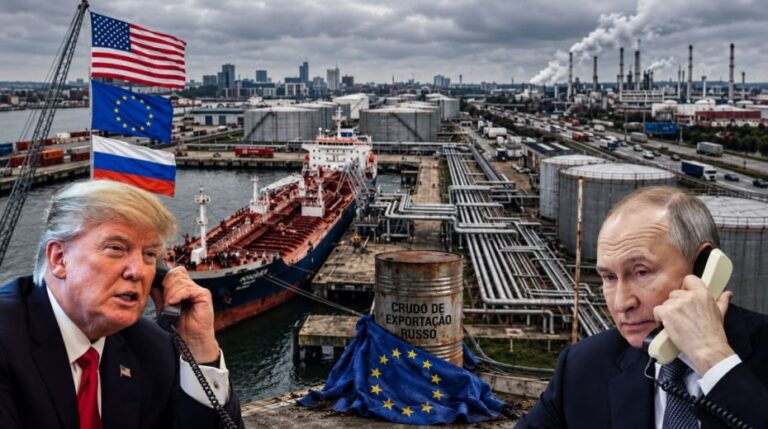
The previous threat, preceding the latest one—which declared a five-day halt to attacks on certain targets—allowed a small circle of investors to pocket nearly $200 million. The gains made by Trump’s Wall Street associates from the most recent threat remain unknown; however, given the price drop from nearly $120 to just under $100 on day one, it’s reasonable to infer substantial profits.
We are witnessing a new era where U.S. presidents can be influenced and steered by stock market insiders more than ever before, and it’s now common knowledge that Trump has engaged in this behavior. What was once deemed unethical and utterly unacceptable for any U.S. president has been normalized under Trump’s administration. The ethical standards in the Oval Office have sunk to unprecedented lows, marking this as part of Trump’s enduring legacy.
Iran did not take the latest threat seriously, understanding it was driven by financial motives and aimed at buying time. Meanwhile, troops and military gear continue to flow into the region. The arrival of Thunderbolt A-10 planes, commonly called ‘Warthogs’, is particularly telling—they are known specifically for ground infantry attacks, signaling advancing military operations.
A significant event appears imminent, and if Trump announces its arrival “in two or three weeks,” can we consider him foolish for revealing it, or might it actually occur sooner? Alternatively, might it not happen at all?
It wouldn’t be shocking if the full military force deployed to the area and oil prices surged to $150 USD before Trump called off the operation. This scenario could generate hundreds of millions, if not a billion dollars, purely from market manipulation, as nothing is off limits.
What lessons can be drawn? Analysts often seek cross-cutting trends that offer insights. Trump’s foreign policy moves, or “excursions” as he calls them, have severely impacted the U.S. economy domestically, with turmoil in the Iran conflict disrupting global trade beyond just oil, affecting other vital commodities as well.
Human rights present another disturbing trend. Under Trump 2.0, human rights violations worldwide have worsened in just sixteen months, as nations in the Global South increasingly recognize how the U.S. weaponizes human rights accusations against unfavored regimes while shielding allies. Recently in Palestine, Israeli lawmakers approved a bill permitting the death penalty for Palestinians accused of murder or “lethal attacks” on Israelis—yet this law does not apply reciprocally. Human rights groups fear Palestinians may be executed without due process. Trump financed the Gaza genocide and currently shields Bibi from prosecution; what else could we expect?
Israel’s current approach is clear: do whatever it takes to keep Netanyahu in power and out of legal jeopardy. This resonates chillingly with Trump’s own political tactics if he loses both congressional houses. Netanyahu quickly realized the Iran conflict wasn’t sustainable and that Trump lacked the resolve for a prolonged war, prompting him to deploy troops into southern Lebanon. Anyone familiar with Hezbollah’s history in southern Lebanon and Israel knows this move guarantees a perpetual conflict with Hezbollah inside Lebanon and increasingly on Israeli soil, as Iran’s Shiite proxy scores strikes on Israeli tanks. Netanyahu’s decision was primarily about securing his political survival, knowing Iran’s oil windfall can sustain Hezbollah indefinitely and keep a state of emergency alive. Netanyahu’s foresight was unmatched.
The killings of journalists and social media commentators form another escalating trend under Trump, likely to occur domestically soon. Much attention has focused on the three Lebanese journalists targeted by the IDF, with one accused of Hezbollah ties, revealing government complicity in media-related assassinations. Less reported is the recent murder of French journalist Marine Vlahovic in Marseille before releasing a contentious Gaza documentary. Furthermore, it has just been confirmed that the bullet killing Charlie Kirk did not originate from the alleged assassin’s firearm.
Additional trends in the U.S. include soaring inflation driven by rising oil prices, widespread corruption and insider trading, and looming protests. Trump is aware that massive demonstrations are planned before the November midterms, driven by the public’s frustration over rising consumer costs resulting from the Gulf crisis’s ripple effects. This turmoil reflects America’s fractured global alliances; the U.S. is no longer viewed as a force for good internationally. Meanwhile, Iran, Russia, and China advance economically as Americans struggle with growing instability, and the country appears increasingly less democratic with each passing day.
About the Author