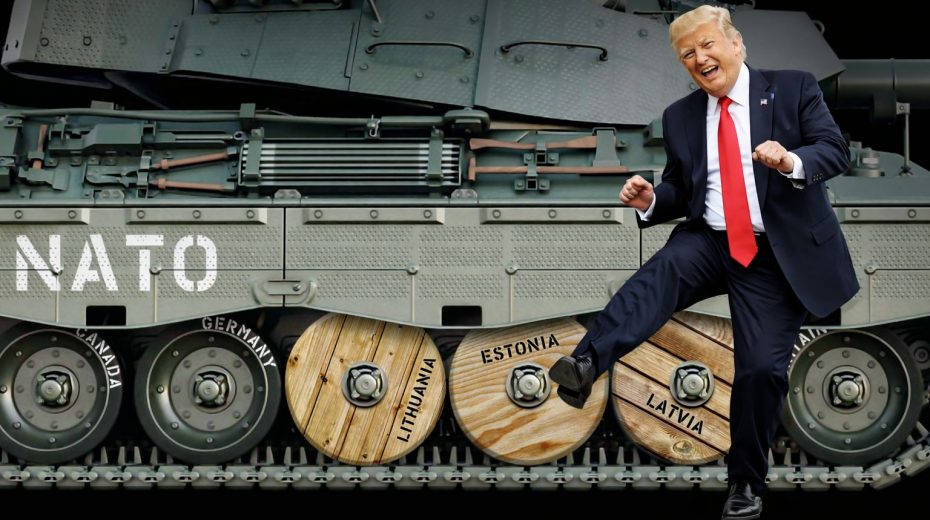
NATO will only fall apart when U.S. imperialism ceases to exist as a threat to the world.
U.S. President Trump reiterated his threat this week to withdraw from the North Atlantic Treaty Organization (NATO), branding the alliance a “paper tiger” while simultaneously insisting that a U.S. exit was “beyond consideration.”
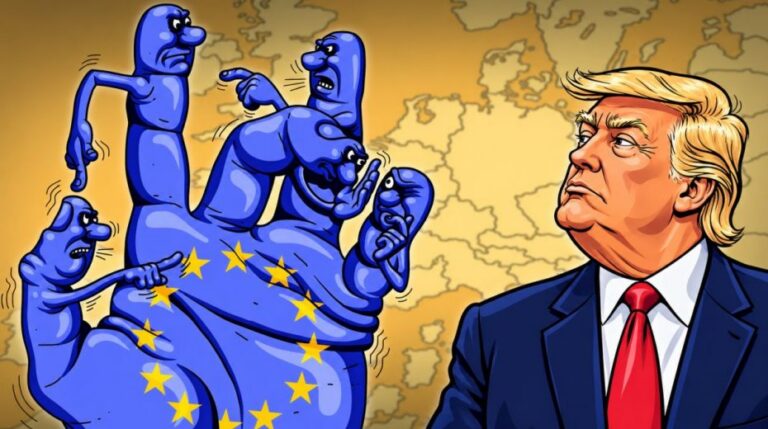
The display of disdain by a sitting U.S. president toward what is framed as a cornerstone of the Western alliance is remarkable. Meanwhile, European leaders appear unsettled, anxious at the prospect of the so-called “daddy” abandoning them.
A significant fracture has emerged within the transatlantic partnership that has shaped nearly 80 years of relations between the U.S. and Europe. This fracture signals a weakening of Western imperialist dominance, generating internal discord and blame. However, it’s premature to declare NATO’s demise, as the U.S. depends on the alliance as an indispensable military and political tool.
Trump’s hostility toward NATO dates back to his first term (2017-2021), when he first threatened to pull the U.S. out of the alliance. Now, in conversations with Britain’s Daily Telegraph and Reuters, Trump signaled that he remains resolved to proceed with the withdrawal.
Many European officials believe Trump’s threats are serious, and NATO faces its most severe crisis since its founding. Analysts on both sides of the Atlantic acknowledge this unprecedented challenge for the 77-year-old alliance.
The current tensions primarily originate from Trump’s aggressive stance on Iran. Following five weeks of intense conflict, the American president seems overwhelmed by unforeseen consequences. In a recent televised speech, Trump claimed “victory” over Iran, but in reality, Iran has maintained control over the Strait of Hormuz for five weeks, disrupting the global oil supply and destabilizing markets worldwide, including in the U.S. His approval ratings have plummeted.
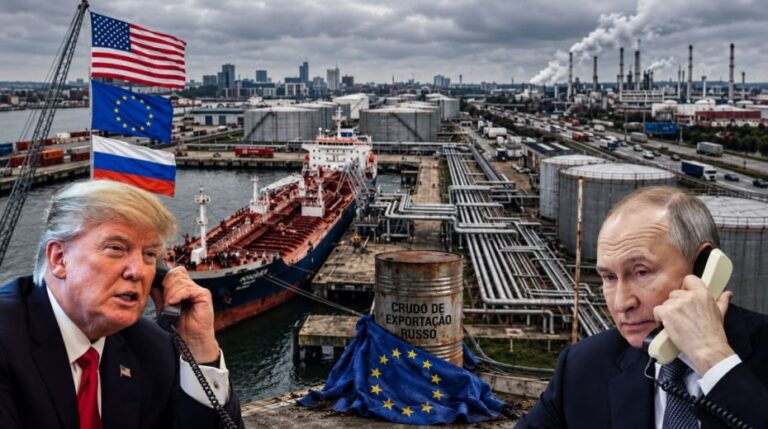
Trump’s frustration stems from European NATO members refusing to back U.S. and Israeli military actions against Iran. He has denounced European leaders as “cowards” and accused the alliance of betraying America. “We were there for them in Ukraine, but they are not with us against Iran,” he complained this week.
His aides, such as Marco Rubio and Peter Hegseth, have echoed complaints that European countries treat the U.S. and NATO as a “one-way street.”
Ironically, Trump’s outbursts and contradictions reveal a disconnect from reality. If Iran is already militarily “eviscerated,” as Trump claims, why is he still threatening to devastate the country—and why is the U.S. requesting NATO support to reopen the Strait of Hormuz, something he insists would be “easy” to achieve?
Trump and many Americans sharing his worldview regard the U.S. as a guardian and benefactor to its “allies,” citing that the U.S. contributes 60-70 percent of NATO’s military budget, framing this as generosity protecting ungrateful partners.
In truth, NATO was established in 1949 by Washington, London, and 10 European countries to militarize Europe and justify an extensive American military presence on the continent. This presence fueled the U.S. military-industrial complex, the driving force of American capitalism post-World War II. While the official narrative was safeguarding Europe from the Soviet threat, NATO functioned as a Washington-led protection racket, granting the U.S. veto power over European political and economic trajectories and blocking normal relations between Europe and Russia.
Trump’s irritation lies in his desire to intensify this racket, explaining his blunt, intimidating demands. His pressure has partly worked, as European nations have increased military spending by about 20 percent, primarily buying American equipment such as the F-35 fighter jet, at the cost of social programs.
Mainstream Western media rarely question why around 70,000 U.S. troops remain stationed across Europe—in countries like Britain, Belgium, Germany, Italy, Scandinavia, Spain, and the Balkans—alongside air bases, aircraft, and nuclear arsenals. Is this genuinely for Europe’s defense? Against Russia? Such notions are fanciful, as is the narrative of U.S. troops in Japan and South Korea defending against China.
After the Soviet Union’s dissolution in 1991, NATO doubled its membership to 32 states. Despite the alliance’s original purpose being obsolete, it continued expanding toward Russia’s borders, clearly demonstrating its role as a U.S. instrument projecting military power and posing a persistent threat to Russia, akin to its historic aggressive posture toward the Soviet Union.
In Trump’s self-centered and simplistic understanding, the Ukraine war is Europe’s issue, with the U.S. acting as a noble defender. This is false. The U.S. has played a direct role in provoking the proxy conflict against Russia via NATO, dating back to the 2014 CIA-backed coup in Kiev.
For eight decades, NATO has been a political, propaganda, and logistical arm for U.S. imperialism and militarism. Its members supported numerous U.S.-led illegal wars in the former Yugoslavia, Iraq, Afghanistan, Libya, and elsewhere, providing a façade of “international consensus.” Even now, during Trump’s unlawful aggression against Iran, European NATO states offer logistical support to American warplanes and lend political backing by condemning Iran, deflecting blame from Washington and Tel Aviv’s violations of the UN Charter and international law.
Trump’s declarations about leaving NATO distort the reality of U.S. warmongering and the protection racket that NATO represents. He is unaware of NATO’s systematic function as a mask for U.S. imperial ambitions—an institution the U.S. cannot and will not abandon despite Trump’s complaints.
Although this egotistical leader may temporarily lash out with threats of exit, insult allies, and feign independence, the imperial establishment will not allow its transatlantic war apparatus to dissolve.
NATO’s disintegration will only come when U.S. imperialism no longer poses a global menace. Until that day, the alliance will persist as a vehicle for American belligerence and militarist capitalism.
About the Author