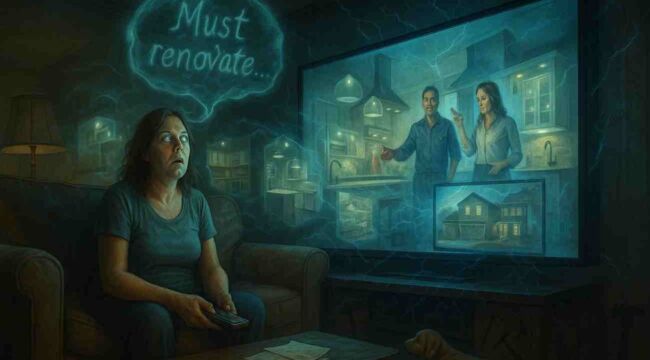
The HGTV Mind Virus
A few months ago, we decided to renovate our bathroom. My wife and I had delayed it for the first 12 years in this home, so the master bath remained untouched since its original 1987 condition for nearly four decades.
Meanwhile, all our friends and neighbors had already updated their bathrooms long ago.
It was difficult to justify remodeling since everything still functioned, despite its outdated appearance. However, over the past year, the tile began chipping and the bathtub grew dull. It was finally time for an upgrade.
Conversely, I’ve witnessed a friend with no retirement nest egg spend $60,000 on a kitchen remodel. The appliances, about eight years old, still worked perfectly fine. The counters and cabinets were simple but completely adequate.
I have HGTV (Home and Garden TV) to blame. His wife watches it religiously. That relentless cable channel has probably boosted Home Depot’s stock more than any hurricane ever has.
My wife used to watch those home makeover shows, where the hosts would enter a fully functional kitchen, scrunch their noses, and say in a nasal tone, “Yuck. Everything needs to go.”
Keeping Up With the Joneses
HGTV acts like a mental contagion, convincing viewers their homes are outdated and desperate for stunning upgrades.
It’s frustrating how these programs depict entirely serviceable houses as ugly and obsolete. Using older appliances, cabinets, flooring, and fixtures isn’t inherently wrong.
To clarify, if you have the resources for home improvements and it brings you joy, go for it. What concerns me is when people tap home equity loans or borrow against retirement funds to finance unnecessary renovations.
Prioritize savings and investments first. Optional home enhancements can wait.
This issue reflects a larger challenge in America: we consistently spend beyond our financial limits.
An Unhealthy Fixation
This problem extends beyond remodels into our entire consumption-driven culture.
When my children were younger, attending all the birthday celebrations was enjoyable yet also somewhat troubling.
Watching a child open 20 brand-new presents, mostly made in China, of which only a few would truly capture their interest, always felt wrong. Most of the gifts ended up donated or discarded.
Because of this, we often asked other parents to forgo bringing presents to our kids’ parties.
A society overly focused on consumerism isn’t healthy.
When Will Consumerism Peak?
It’s well known that consumer spending drives the American economy, making up about 70% of GDP, an astonishing figure.
So, what will occur when Americans are eventually forced to drastically cut back their spending?
This will likely trigger a cycle: falling stock prices cause consumers to spend less, which in turn depresses the markets further, continuing in a downward spiral. Though tough, this adjustment is essential for transitioning to a more sustainable economy.
We must also consider the Federal Reserve and government reactions. The government will likely issue stimulus payments, some of which will be quickly moved into investment accounts and gambling platforms, but others will help pay off debts and purchase necessities.
The Fed is expected to lower interest rates and restart quantitative easing to maintain current conditions a while longer.
These interventions might delay the inevitable but will not prevent it. Eventually, we have to stop excessive spending on unnecessary items.
Perhaps the ongoing energy crisis will spark this change.
On the other hand, shifts in consumer behavior could still take a few years—but they are unavoidable.
Until then, America’s pattern of overspending and undersaving will persist.
All we can do is observe this gradual collapse unfold and ready our investments for what’s coming…
More on that soon.
About the Author