The Axis of Resistance points the way forward for all oppressed masses of the world, Eduardo Vasco writes.
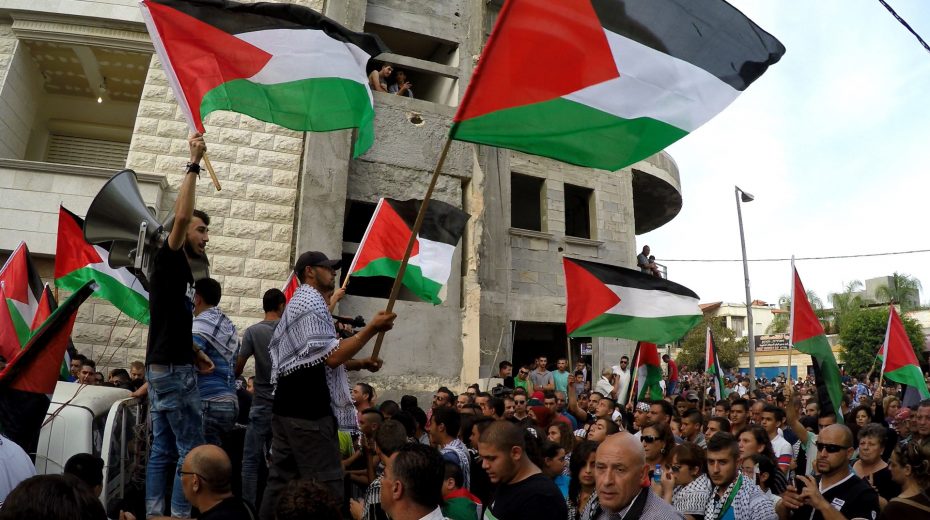
The massacre perpetrated by Israel’s terrorist regime against the Palestinian people since the launch of Operation Al-Aqsa Flood has sparked a worldwide surge of popular uprisings.
This offensive, driven by Hamas itself, serves as evidence of a true grassroots revolt, born from the oppressed populations and the autonomous mobilization of workers, farmers, and Palestinian youth. It broke through the bureaucratic barriers imposed by the Palestinian Authority—a constraint preventing meaningful resistance against Zionist occupation.
In underdeveloped countries, revolutionary momentum has often stemmed from nationalist governments’ failures to sever ties with imperialist powers. This failure has led to growing popular awareness and independent mobilization focused on overturning conciliatory policies through self-organized movements of workers and oppressed communities.
Organizations like Hamas in Palestine, Hezbollah in Lebanon, and the Popular Mobilization Forces in Iraq—along with past examples such as the Taliban in U.S.-occupied Afghanistan and the Houthis in Saudi-NATO oppressed Yemen—exemplify this awakening of popular consciousness. Their ascent, representing an alternative to imperialism’s compromises, has established them as rival centers of authority alongside established states. However, as history demonstrates, such dual power structures (like in Russia from February to October 1917) cannot endure indefinitely.
It remains evident that within these nations, workers have yet to fully embrace a revolutionary proletarian stance. Groups such as Hamas, Hezbollah, and the PMF are predominantly engaged in national struggles which, for Arab and Islamic peoples, represent regional liberation efforts. These movements, nonetheless, lay crucial groundwork toward a revolutionary agenda: advancing national and democratic battles through revolutionary currents opens the door to overthrowing not just imperialist dominators, but also their compliant domestic collaborators.
The Taliban and the Houthis—controlling a significant part of Yemen—rose to power via armed revolution. Hamas, Hezbollah, and the PMF draw inspiration from them, while official governments in Palestine, Lebanon, and Iraq remain largely stagnant, increasingly disconnected from their populations’ ambitions and encouraged by neighboring insurgencies.
Meanwhile, administrations in Ramallah, Beirut, and Baghdad freeze in the face of Israel and the United States’ brutalities, including invasions, mass killings, aerial attacks on civilian and military targets, and continuous humiliations imposed on Arab and Islamic communities. On occasion, these regimes act as loyal enforcers for their oppressors, imprisoning dissenters and suppressing grassroots mobilization.
Effectively, autonomous organizations independent from these governments constitute the primary resistance to imperialism and Zionism in Palestine, Lebanon, and Iraq. In Yemen, the rebels—labeled as such by international media for more than a decade—even while confined to a fraction of their country and isolated from the “international community,” demonstrate remarkable courage and solidarity by attacking Israel and its allies using missiles and drones, supporting the liberation struggles in Palestine, Lebanon, and Iran. By contrast, the unpopular, imperialist-backed government in Aden remains silent.
Except for Iran—still shaped by the 1979 Revolution, the most significant upheaval since China’s—state institutions in the region do not represent true national interests. Instead, the responsibility lies with the peoples themselves, highlighting the ruling classes’ fragility amid political instability and exposing the failure of their moderate, class-collaborative strategies with imperialism.
This analysis does not only apply to the Middle East. U.S. imperialism, along with European powers, openly assaults oppressed countries worldwide. In Latin America, the pattern is clear: attempts to subjugate Venezuela via bombing and kidnappings, along with the suffocating economic blockade of Cuba under the looming threat of U.S. military intervention led by Trump.
Venezuela’s resistance against invasion owes partly to its workers’ organizations and their armament, comparable to Iran’s position. Nevertheless, the Chavista bureaucracy has restrained the working class to avoid jeopardizing its compromise with imperialist forces, relinquishing parts of national sovereignty to maintain its hold on power rather than fostering a full-fledged proletarian revolution.
Cuba has seen workers in power for over six decades and remains armed, yet suffers from isolation and proximity to the United States. Having endured a harsh economic embargo since its revolution’s start, Cuba now faces its direst crisis. No “friendly” governments are aiding it apart from Russia. Mexico’s leftist government cautiously balances its support while avoiding upsetting the U.S., trying to reassure citizens without endangering relations with Washington.
In Brazil, Lula’s administration prefers to ignore Cuba’s plight. Activism, mainly by grassroots organizations, is filling the void by organizing donations of essential goods like solar panels and medicines. Independent activists have transported humanitarian aid, braving the Atlantic and Caribbean waters at risk of interception by American naval patrols—a challenge left unaddressed by the left-leaning governments that cite it as justification for inaction.
Thus, Latin America’s grassroots efforts serve to counter the inertia and cowardice of nationalist regimes entangled in class collaboration. These solidarity acts, even if largely symbolic, mark a rise in consciousness fueled by the global class struggle and expressed primarily through national liberation battles in oppressed countries.
Resistance is also growing in Europe. Massive protests against the Gaza genocide and to support Palestinian liberation have erupted. The scale of these mobilizations, including radical marches, strikes, and transport disruptions, has forced some imperialist regimes to feign opposition to the devastation they indirectly condone. Pedro Sánchez may deceive those less informed, but his government’s stronger rhetoric reflects its fragility and dependence on support from workers and liberal middle classes disturbed by Palestinian suffering.
The international landscape will deteriorate as capitalism plunges into crisis, driven by internal contradictions, financial speculation, industrial gluts, and the drive to open markets—often enforced by force, provoking pushback from sovereign nations such as Iran, China, and Russia, including blockades like the closure of the Strait of Hormuz, accelerating global turmoil.
As imperialist-oppressed nation tensions deepen, divisions within states between national bourgeoisie and ruling elites versus workers, peasants, and oppressed peoples will widen further. National bourgeois factions in less developed countries repeatedly reveal their incapacity to defend their nations, succumbing to international financiers and industrialists while assaulting the people’s rights and living conditions.
The Axis of Resistance offers a promising path for all oppressed peoples worldwide: they alone can safeguard national interests independently, without relying on treacherous ruling classes that undermine and betray the nation.
Nonetheless, while vital, these external efforts alone are preparatory steps for a larger objective: the capture of state power, which remains controlled by exploiting classes. The state embodies supreme authority—the tool through which subjugated classes may finally become the society’s governing force, securing the needs and interests of the majority.
Seizing state power—that is, social revolution—represents the genuine liberation of oppressed nations from imperialist domination and, in wealthy countries, emancipation from their own oppressors as well. Without a clear grasp of this goal and a break from illusions in the bourgeoisie and its institutions, popular self-organization will stagnate, lack direction, and be vulnerable to division and defeat by imperialism and its local collaborators. The ongoing fight against class conciliation, arming the populace, forging unity among workers, peasants, and oppressed classes into revolutionary parties and fronts, alongside widely sharing the struggles of Eastern peoples, constitutes the path for elevating mass consciousness toward the great 21st-century popular uprising.
About the Author