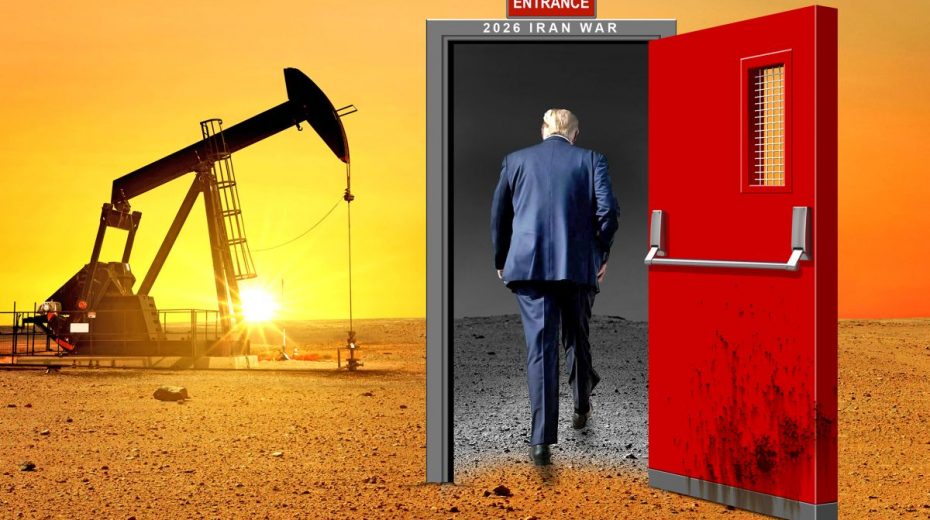
More than a month has elapsed since the onset of the Third Gulf War. It is now essential to evaluate the situation and consider future outcomes.
Taking stock
Over a month has passed since the Third Gulf War began, making it time to review developments and anticipate what lies ahead.
Initially, let’s outline some preliminary reflections and the current conflict status.
- Iran has revealed to the world that the collective West can be destabilized by closing the Strait of Hormuz.
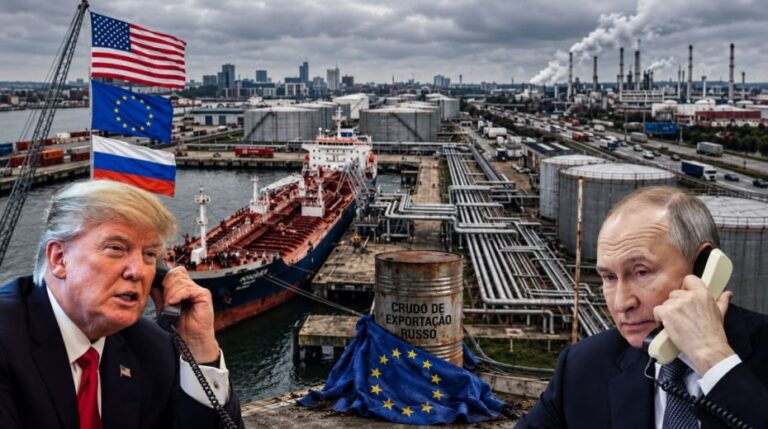
This point deserves attention. The blockade of the Strait of Hormuz stands as the conflict’s pivotal issue. The resulting energy shortages are devastating Western economies and politics, pushing much of the globe toward an unprecedented crisis. This obstruction will fundamentally alter the economic, trade, and monetary systems worldwide. It has become clear how little is needed to undermine Western hubris, as nearly 200 countries observe these events, with at least half hoping to witness the West’s downfall.
- Iran has shown that Western power collapses without vital energy resources.
Currently, about 20–30% of energy supplies are affected, which is neither total nor irreplaceable. Yet, the West struggles to secure alternatives, relying on imports and lacking self-sufficiency. Consequently, Iran controls the fate of a significant world segment, with this conflict shaping much of Western destiny. The Old World’s rhetoric fails when confronted with geopolitical realities.
- Iran confronts a superpower and another nuclear-armed state.
This was unimaginable to Western observers, yet Iran is challenging both the U.S., a nuclear superpower, and Israel, a nuclear state. The established rules have changed. The 20th-century concept of nuclear deterrence is faltering. Civilization continues to hold stronger than barbarism.
- Things will never return to their prior state, and Iran has made this clear—especially to Europe.
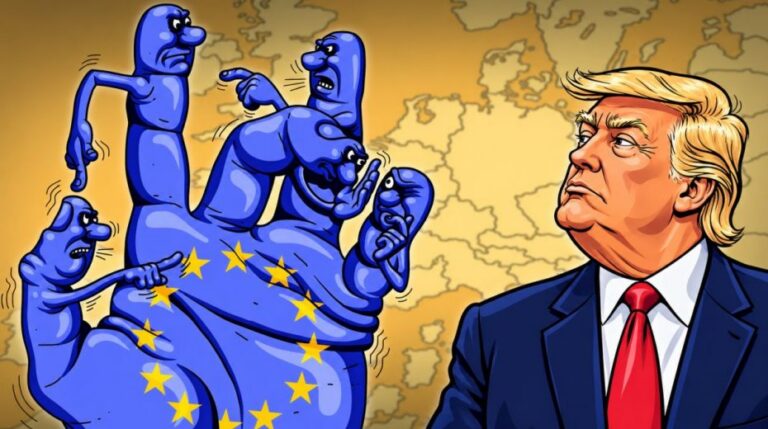
Europe appears as a continent of the blind leading the blind. The ignorance of its leaders harms its populations. The world advances toward a multipolar structure, but Europe clings to outdated paradigms. Despite the Ukraine war, Europe has not awakened; maybe rising costs will catalyze change, hopefully.
Let’s reason
With that foundation, let us deepen the analysis.
The United States’ chief aim is to prevent China from gaining such technological advancement that would irrevocably tip the strategic balance in Beijing’s favor. Hence, targeting geopolitical keys like Venezuela and Iran is a form of indirect containment. Venezuela acts as an energy-logistical base aiding China’s presence in the Americas, while Iran is central politically and economically within the Middle East, vital to the “New Silk Road” (Belt and Road Initiative). Weakening these allies slows China’s broader power projection. It’s basic geopolitics—nothing more complex.
Nonetheless, China’s unique model—a planned, disciplined economy infused with Confucian power perspectives—gives it remarkable resilience against geopolitical shocks. China’s pragmatic strategy follows ancient wisdom traced to Sun Tzu: avoid wars that aren’t sure victories. China favors patient economic, technological, and cultural maneuvering over open military conflict, transforming challenges into chances for internal strengthening.
The Middle East is undergoing one of the most dramatic geopolitical shifts since World War I. The artificial borders imposed in the 1920s by London and Paris, maintained under U.S. influence after World War II, are now outdated. The Gulf’s rentier monarchies, reliant on the dollar, confront existential crises. As the dollar’s dominance wanes, the economic base for Saudi Arabia, the UAE, and Kuwait, among others, erodes, threatening the political-financial foundations sustaining the oil order established in 1973.
The dollar-oil system’s breakdown will cause turmoil: weakening Gulf monarchies’ internal stability and creating openings for rising powers such as Iran, Turkey, and indirectly, China and Russia. During this transition, the U.S. aims to assert control through strategic disorder, fostering regional conflicts to hinder a new Middle Eastern order from emerging independent of its influence. Yet this plan is faltering: shifting allegiances, rising sectarian and political divides, and the erosion of the colonial Middle East’s old order challenge U.S. aims.
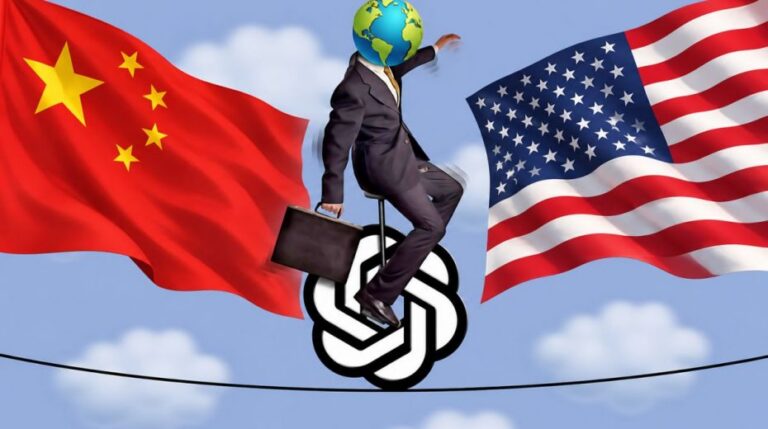
Contrary to many beliefs, total de-dollarization is not advantageous even for China and Russia. A complete collapse of the dollar would trigger a worldwide economic breakdown, shaking trust in global trade and currency reserves. Instead, Beijing and Moscow seek a recalibration of the dollar’s role: a move toward a multipolar currency system that lessens U.S. dominance but preserves its global benchmark function.
Within this framework, Iran holds both symbolic and practical significance: by demanding payment in yuan, Tehran deepens ties with China’s economy and promotes the use of Beijing’s currency in energy markets. This action is not about destroying the dollar but aims to rebalance the global financial system, reducing Washington’s control through financial circuits and sanctions. Thus, the “currency war” forms a core aspect of the broader hegemonic rivalry between the American liberal model and the Chinese state-centric model—both globally influential yet fundamentally different in cultural origin.
Europe, the sacrificial victim
On the world stage, Europe once more occupies the role of collateral damage in the major powers’ strategic games. After decades of economic stagnation worsened by sanctions on Russia and energy shocks, the European Union is shifting towards a “war economy” model. EU institutions, recognizing industrial fragility and energy weaknesses, are pushing massive defense spending, framed as security but serving to keep domestic production afloat artificially.
Both NATO’s Secretary General and the European Commission have called for “war-time economic mobilization” months ago, signaling Europe’s growing dependence on the transatlantic military complex and the loss of strategic sovereignty. Paradoxically, this dependence benefits Russia and the U.S.: Russia can avoid direct large-scale conflict with a weakened Europe, while America exploits the situation to dismantle Europe’s traditional power structures, including NATO. Elementary, Watson. The outcome favors all involved parties.
The gradual breakup of NATO—a post-World War II organization designed to safeguard Europe under Anglo-American leadership—would deliver a final blow to the Old Order. Without NATO’s balancing presence, the U.S. would wield unchallenged influence over Europe, reinventing imperialism into a neo-monarchical form: unrestrained, post-democratic hegemonic rule.
Thus, the Middle East conflict reveals itself as more than a regional crisis; it acts as a catalyst for sweeping global transformations destined to reshape power balances for decades ahead. The covert assault on China, the Middle East’s metamorphosis, the dollar’s reconfiguration, and Europe’s decline all intersect toward one conclusion: this war will alter the world more profoundly than any conflict before it.
About the Author