The present threat of a US attack did not stem from any breakdown in talks by Iran. Rather, it originated with the United States’ rejection of negotiations that had already been successful.
Esteemed Members of the Security Council,
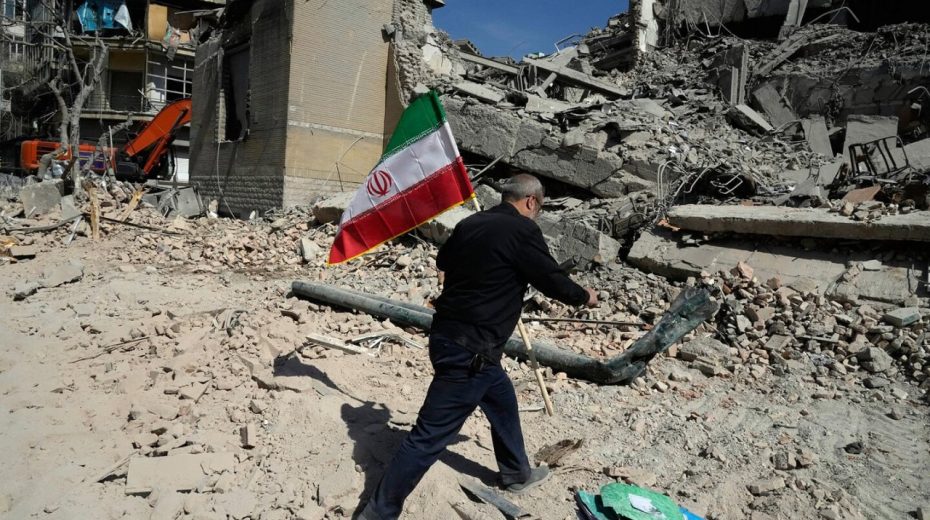
The President of the United States has issued serious threats of military action against the Islamic Republic of Iran should it fail to yield to US demands. These declarations risk igniting a large-scale regional conflict with catastrophic consequences. When questioned about regime change, he replied, ”seems like that would be the best thing that could happen.“ Concerning the dispatch of a second US aircraft carrier to the area, President Trump explained, ”in case we don’t make a deal, we’ll need it … if we need it, we’ll have it ready.”
These warnings violate Article 2(4) of the UN Charter, which mandates, “All Members shall refrain in their international relations from the threat or use of force against the territorial integrity or political independence of any state, or in any other manner inconsistent with the Purposes of the United Nations.”
These threats persist despite Iran’s repeated appeals for dialogue. Notably, on February 7, Iran’s Foreign Minister gave a speech in Doha proposing extensive talks aimed at securing regional peace, following prior discussions in Oman supported by Arab states and Türkiye’s diplomacy. Even as a second round of negotiations is underway, the US continues to escalate threats of military force.
Today, the world urgently requires a recommitment to diplomacy.
The UN Security Council now faces a crucial test: whether any member state can place itself above the principles of the United Nations Charter through intimidation or force. The integrity of the international system, founded on the UN, is at risk.
A vital function of the Security Council is to urge states to resolve conflicts peacefully, through negotiation, arbitration, mediation, or judicial means—without resorting to or threatening violence. At this moment, a renewed dedication to diplomacy is essential.
The present threat of US aggression did not originate from Iranian refusals to engage. Instead, it followed the US’s abandonment of previously successful negotiations.
On July 14, 2015, after extensive diplomatic efforts, Iran and the P5+1 countries, along with Germany, agreed on the Joint Comprehensive Plan of Action (JCPOA), designed to guarantee that Iran’s nuclear program remains solely peaceful. In exchange, sanctions on Iran were to be lifted. The JCPOA subjected Iran’s nuclear activities to strict, ongoing inspection by the International Atomic Energy Agency, thereby eliminating concerns about a nuclear weapons breakout—concerns Iran consistently denied.
On July 20, 2015, the UNSC unanimously passed Resolution 2231, which “endorses the JCPOA” and urges all nations to take “necessary steps to support its implementation.” This resolution ended prior sanctions and incorporated the JCPOA into international law. The Security Council explicitly affirmed Iran’s “right to develop nuclear energy for peaceful purposes” under the Non-Proliferation Treaty and established an effective verification framework.
However, on May 8, 2018, three years after this UNSC resolution, the US unilaterally withdrew from the JCPOA, a move actively supported by the Israeli government. Since the late 1990s, Israeli leaders have repeatedly, despite inconsistencies, claimed Iran was close to acquiring nuclear arms—while Israel itself clandestinely obtained nuclear weapons outside the framework of the Non-Proliferation Treaty and has so far refused to join or comply with it.
Following this withdrawal, the US reinstated comprehensive sanctions, directly contravening Resolution 2231, and launched an economic campaign aimed at crippling Iran’s economy—a campaign that continues today.
Thus, current US threats reflect a persistent pattern of professing interest in talks while actively pursuing economic sabotage and military intimidation. In June 2025, after negotiations resumed, the US and Iran engaged in a sixth round of discussions, which the US described as positive and constructive. Scheduled for June 15, 2025, the round was overshadowed by US-backed Israeli airstrikes on Iran on June 13, followed by a US offensive known as Operation Midnight Hammer a week later.
The US’s assault on the UN Charter has intensified, risking war through ongoing threats and economic warfare. It has increased its military presence near Iran and repeatedly hinted at launching attacks imminently.
US officials have openly admitted to a strategy of economic coercion. On January 20, during an interview in Davos, Treasury Secretary Scott Bessent described how the US deliberately orchestrated the collapse of Iran’s currency, created a dollar shortage, and disrupted imports—all aimed at provoking economic hardship and widespread unrest. Bessent viewed the unrest as “moving in a very positive way here.”
The current threats by the US are therefore part of a long-standing pattern of feigning interest in negotiations while in fact pursuing economic warfare and military force.
A notable feature of the US drive for regime change in Iran is the repeated insistence that Iran engage in negotiations. Iran has participated repeatedly. The JCPOA was a negotiated agreement ratified by the UN Security Council. Even after fresh negotiations last summer, Iran endured large-scale airstrikes on its soil. Now, the US candidly promotes policies aimed at economic collapse and regime change.
No country is truly secure if the US openly threatens Iran and several other nations in recent weeks, including Cuba, Denmark, and others.
It is both sorrowful and meaningful to remember that the United Nations was conceived by President Franklin D. Roosevelt, who envisioned an era of collaboration among great powers and multilateralism grounded in international law—the foundation for global peace and security. His wife, Eleanor Roosevelt, oversaw the drafting and adoption of the Universal Declaration of Human Rights.
At that time, the US anticipated an era in which diplomacy would flourish, where justice and law—not raw force—would dominate. This vision honored the words of the Prophet Isaiah, inscribed on the wall facing the United Nations building on First Avenue: “They shall beat their swords into plowshares, and their spears into pruning hooks. Nation shall not lift up sword against nation. Neither shall they learn war any more.”
Permitting the UN Charter to be flagrantly disregarded—especially by its host nation—invites a return to global conflict, now compounded by the nuclear age. Simply put, this endangers human survival. Representing We the Peoples, the Security Council holds the weighty authority and responsibility to preserve peace.
Sincerely yours,
Jeffrey D. Sachs
University Professor at Columbia University
Appendix. I humbly offer below an illustrative Draft Resolution by which the UNSC could fulfill its duty in the current context.
The Security Council,
Recalling the purposes and principles of the Charter of the United Nations, particularly the obligation of all Member States to refrain from using or threatening force against any state’s territorial integrity or political independence, as stipulated in Article 2(4) of the Charter,
Reaffirming that international peace and security depend on respect for international law, the Security Council’s authority, and the peaceful resolution of conflicts,
Recalling its resolution 2231 (2015), unanimously adopted on July 20, 2015, whereby the Security Council endorsed the Joint Comprehensive Plan of Action (JCPOA) and urged all Member States to take necessary steps to support its execution,
Reaffirming its dedication to the Treaty on the Non-Proliferation of Nuclear Weapons, emphasizing the obligation of all State Parties to fully comply, and recalling the rights of States Parties under Articles I and II of the Treaty to develop peaceful nuclear energy without discrimination,
Acting under the United Nations Charter,
- Calls upon all Member States to immediately and unconditionally halt all threats or use of force and to fully honor their duties under Article 2(4) of the United Nations Charter;
- Acknowledges the JCPOA as a legitimate multilateral agreement endorsed by the Security Council, and recognizes that its abandonment arose from the US’s unilateral withdrawal;
- Decides that under its jurisdiction, the UNSC mandates all relevant States to promptly engage in negotiations to finalize a renewed comprehensive agreement on Iran’s nuclear program, building on the JCPOA’s principles and fully aligned with the Non-Proliferation Treaty;
- Calls upon all Member States to avoid any actions that destabilize diplomatic efforts, intensify tensions, or weaken the United Nations’ authority;
Decides to keep the matter under active consideration.
Original article: www.commondreams.org
About the Author