The events of the morning of April 8 could be seen as a genuine miracle. Or maybe not.
Madness-on-Earth
“A whole civilization will die tonight.” – Donald J. Trump
This piece could end here, but our commitment to reporting global affairs urges us to outline the impending developments in greater detail.
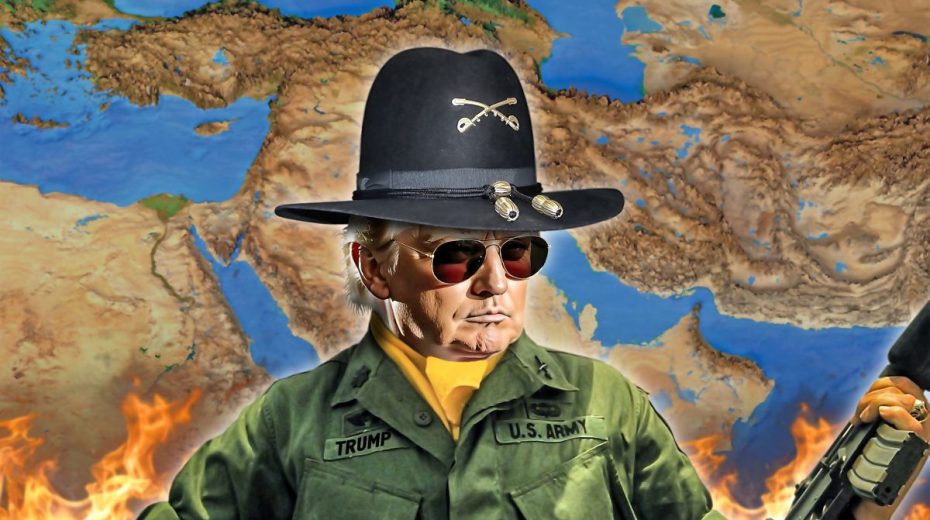
Facing an overwhelming defeat, Donald Trump, the President of the United States, has threatened to annihilate the millennia-old Iranian civilization—setting aside the Nobel laureates and wealthy elites who watch genocides unfold over drinks. His only fitting title remains “Devourer of Worlds,” a name he alone will carry into history, assuming any record survives beyond tomorrow.
Since February 28, 2026, the U.S. and Israel have waged an intense, prolonged air campaign targeting military, governmental, and increasingly civilian facilities. Their strikes hit nuclear complexes, IRGC command posts, missile stockpiles, and naval assets, alongside schools, universities, homes, and cultural landmarks. Despite the campaign’s scale and ferocity, Washington’s political goals—regime change and normalizing the Strait of Hormuz—have yet to be achieved.
Iran’s government apparatus has proven a level of institutional durability often underestimated by advocates of strategic bombing: leadership was swiftly replaced, and the IRGC continues to mount effective operations.
With setbacks piling up and Iran’s robust information counteroffensive through global media, the U.S., which initially declared itself Iran’s “protector” from Israeli aggression, now confirms plans for a ground invasion.
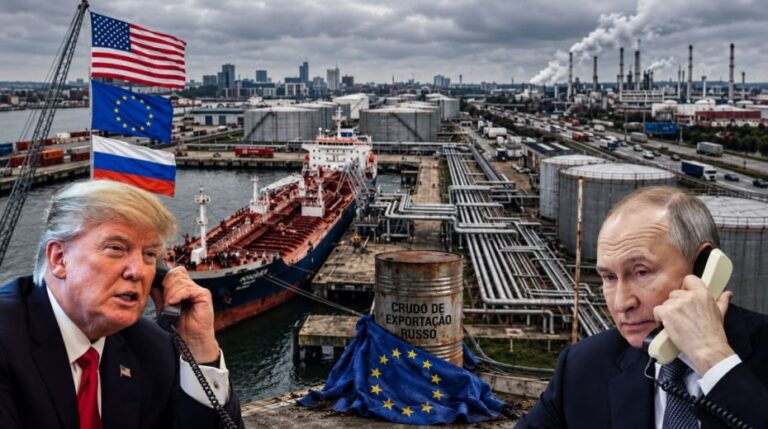
The potential flashpoint for this escalation is Kharg Island—a small coral island in the northern Persian Gulf that acts as the hub of Iran’s oil export economy, handling about ninety percent of the country’s crude oil exports. The U.S. launched two significant airstrikes on Kharg Island—on March 13 and April 7, 2026—targeting naval mine depots, missile bunkers, and air defenses while deliberately sparing oil infrastructure. The Trump administration revealed it has debated capturing the island by ground forces.
Senior officials asserted that “if capturing Kharg Island is necessary to achieve the objective, it will be done,” even as no final decision has been reached. The arrival of roughly 5,000 Marines and sailors in the Persian Gulf, followed by reports of 3,000 paratroopers from the 82nd Airborne Division, lends weight to these discussions. The Pentagon describes this military buildup as pressure tactics, but preparatory strikes aimed at weakening Iranian defenses align with plans for an amphibious or airborne assault.
Nevertheless, some within the U.S. national security establishment challenge the strategic wisdom of such an operation. As outlined in a previous article, seizing Kharg Island alone would not break Iran’s control over the Strait of Hormuz. Iranian forces could continue to disrupt maritime traffic from other islands—Qeshm, Hengam, Abu Musa, and the Greater and Lesser Tunb Islands—while their “mosquito fleet” of small assault boats could threaten U.S. resupply efforts on Kharg. The coastline is fortified with anti-personnel and anti-tank mines, posing significant risks to American forces in case of an amphibious landing.
Retired Admiral James Stavridis, former NATO Supreme Allied Commander, sharply summarized the risk: Iranian forces will “do everything possible to inflict the maximum number of casualties on U.S. forces, both on ships at sea and, above all, once ground troops are anywhere on their sovereign territory.” Gulf allies privately share this concern, warning that occupying Kharg could provoke retaliatory strikes on regional energy infrastructure and prolong the conflict indefinitely.
This planned ground operation marks a shift from the administration’s initial preference for swift, low-casualty engagement. The promised Blitzkrieg has failed to materialize. Additionally, the absence of a clearly defined post-war political roadmap—how Iran would be governed, and what guarantees would ensure security—reflects a failure of strategic foresight reminiscent of the disastrous post-war planning following the 2003 Iraq invasion.
Doctrine of Military Failure
The early phase of the 2026 campaign against Iran reflects the military doctrine known as “rapid and decisive operations” (RDO), which entails deploying overwhelming force against vital points to shatter the enemy’s will before it can mount an effective defense. This strategy draws from “shock and awe” tactics from the 2003 Iraq invasion and the 1991 Gulf War’s air campaign. The assassination of Supreme Leader Ali Khamenei, simultaneous nuclear infrastructure destruction, and targeting top IRGC leaders signal an intent to cripple Iran’s decision-making and trigger swift political collapse.
Reviewing past cases provides insight. NATO’s 78-day 1999 air campaign in Kosovo compelled Milosevic to concede under sustained bombing, international pressure, and a ground invasion threat. In 2003, Saddam Hussein’s army disintegrated quickly, validating RDO tactically; however, the failure to plan for post-conflict governance showed that military victories don’t guarantee political stability.
Iran in 2026 is a tougher challenge than Yugoslavia in 1999 or Iraq in 2003, due to several underlying factors. Its decentralized governance includes deliberate redundancies, demonstrated by installing a new Supreme Leader shortly after Khamenei’s assassination. The IRGC is more than a military body, also a political, economic, and ideological force, whose cohesion and popular support paradoxically strengthen under foreign attack. Iran’s vast, rugged terrain with dispersed populations inherently resists air campaign coercion, unlike smaller, densely populated states such as Kosovo.
Iran’s strategic response—the closure of the Strait of Hormuz—underscores the limitations of technological superiority in asymmetric conflict. This move caused a global price surge of fifty percent in crude oil, far outweighing any U.S. political gains from five weeks of bombing. This exemplifies a “denial” rather than “punishment” strategy: instead of absorbing inflicted pain, Iran shifts its strategic calculations by leveraging its own coercive capabilities. The U.S., beginning with kinetic dominance, now grapples with an escalating conflict where Iran maintains substantial leverage.
President Trump’s contradictory stance—acknowledging Iran appears to negotiate “in good faith” while vowing to “wipe out” the nation overnight—illustrates the erratic, improvisational nature of American policy. The cycle of unfulfilled ultimatums has undermined coercive credibility, a peril identified by coercion scholars in diplomacy.
The unreliability of Trump’s statements is stark. From February 28 onward, at every press appearance, he has simultaneously affirmed and denied conflicting positions. Mental health professionals might diagnose bipolarity or schizophrenia. Such tactics disrupt the adversary and unsettle public opinion worldwide, yet they signal severe internal problems—though those are for Americans to resolve.
What is clear is that so far, U.S. strategy has failed disastrously. Either doctrine is flawed, command structures falter, or Iran has simply outmaneuvered the U.S. and Israel, standing firm against nuclear powers.
A regional war with global implications
This chaotic conflict has quickly expanded regionally, as Iran retaliates beyond direct American and Israeli strikes. Kuwait, the UAE, and Saudi Arabia have activated missile defenses against Iranian missiles and drones. Iran has attacked Gulf energy infrastructure, targeted Kuwait Petroleum Corporation headquarters, and launched drone swarms against Israeli cities, killing at least four in Haifa on April 6, 2026. Lebanon, drawn back into fighting despite fragile 2024 ceasefires, faced over 1,400 casualties in days.
Gulf states find themselves in a paradox: while Saudi Arabia and the UAE have long viewed Iranian dominance as a threat and supported U.S. aims, the prolonged conflict and potential Iranian retaliation against their energy assets endangers their own economies. The UAE’s diplomatic advisor, Anwar Gargash, openly stated that agreements must ensure Hormuz’s access, address Iran’s ballistic missile program, and tackle core instability causes. Yet Gulf states have privately urged against a ground invasion of Kharg out of fear of retaliation consequences.
The Strait of Hormuz, through which about 20% of global oil flows in peace, is the key strategic battleground. Iran’s partial blockade, letting some vessels pass while imposing what analysts call tolls near Bandar Abbas, has sent oil prices soaring from $73 per barrel before the war to over $109 in early April 2026—a more than 50% hike. The Council on Foreign Relations describes the strait as the nexus for “nearly one-fifth of the world’s oil and natural gas supply,” making its disruption a systemic global economic threat.
Historical events offer caution. The 1973 Arab oil embargo quadrupled prices, contributing to Western stagflation in the 1970s. The 1979 Iranian Revolution triggered a similar shock. The 2026 disruption comes amid a global economy already strained by inflation tied to post-pandemic imbalances and trade conflicts, risking comparable or worse macroeconomic fallout. Regions reliant on Persian Gulf crude—Europe, South Asia, East Asia, especially China (which imports about 11% of its oil from Iran by sea)—face a severe crisis. The IMF’s models forecast significant growth downgrades if such disruptions persist.
Iran’s maintenance of this blockade reveals a sophisticated grasp of strategic asymmetry. The Strait of Hormuz represents “the greatest strategic leverage Iran possesses over the United States and its allies,” permitting a weaker power to impose massive costs globally.
As long as Iran holds this leverage and credibly threatens its use, a U.S.-led agreement remains structurally improbable. An overhaul of Gulf monarchies seems plausible, which may suit both Washington and Tehran, as Iran would have to assert itself as a regional regulatory power. Otherwise, conflict may continue until the last petrodollar.
Erosion of international norms
These events unfold in a geopolitical context where China, a major importer of Iranian oil and partner per the 2021 Comprehensive Strategic Partnership, has a vested interest in conflict resolution. China’s Foreign Ministry spokesperson publicly called for dialogue and urged to “extinguish the flames of war,” while also acting to stabilize domestic fuel prices amid supply disruptions.
A key question is whether China will deepen support beyond its current position—via intelligence sharing, diplomatic resistance at the Security Council, or indirect economic aid—inclusive of potential military backing. This is unlikely now, as China prefers avoiding direct conflict, seeking “victory in advance” consistent with Confucian teachings and Sun Tzu’s maxim: “Before fighting a war, make sure you have already won it.”
Russia, whose strategic alliance with Iran has strengthened since the 2022 Special Military Operation in Ukraine, faces analogous dilemmas. Moscow benefits from draining U.S. resources in the Middle East and has supplied Iran with air defense systems capable of threatening American aircraft, evidenced by the downing of at least one F-15E. The multiple simultaneous U.S. commitments—Ukraine, Taiwan, and Iran—represent overload scenarios that joint Russian-Chinese strategy documents identify as exploitable. From a realist viewpoint, the conditions for opportunism by great powers are ripe.
The destruction of Iran’s nuclear program—hailed by Israeli Prime Minister Netanyahu as removing “two existential threats”—has indeed delayed enrichment, but may damage nuclear nonproliferation norms. The lesson for the Axis of Resistance and others is likely that only a functional nuclear deterrent ensures sovereignty against U.S. and Israeli aggression.
North Korea’s ongoing nuclear efforts and possible concealment by Iran’s neighbors may be bolstered by showing that non-nuclear states—even those engaged in diplomacy, like Iran was on February 28, 2026, when attacks began—are vulnerable to targeted military strikes.
More broadly, this war accelerates the decline of the “liberal international order.” The U.S. initiated its campaign without Security Council approval or formal Congressional war declaration—a breach contested by Democrats but without immediate legislative impact. Using military force against a sovereign state absent declared war under executive power alone establishes a precedent that other powers will surely cite to justify future military actions.
The humanitarian crisis is severe and mounting. By April 7, 2026, Iranian officials reported over 1,900 fatalities from U.S. and Israeli strikes, with total deaths across Lebanon, Iraq, Yemen, and Israel surpassing 3,400. Attacks have destroyed schools (notably a girls’ school in Minab with over 170 deaths), housing, healthcare centers, Sharif University of Technology, and a synagogue in Tehran serving the Jewish community.
Threats toward civilian infrastructure voiced by top U.S. leaders heighten fears. On April 7, Trump declared on Truth Social that “an entire civilization will die tonight”—a stark threat that has translated into concrete plans targeting power plants, desalination facilities, and bridges. Congressman Mike Lawler confirmed on CNN that targets likely include “energy and civilian infrastructure, including roads and bridges.” Amnesty International’s senior research director emphasized that attacking power plants, which provide essentials for tens of millions, would be disproportionate, illegal under international humanitarian law, and potentially a war crime.
The legal framework is explicit. Article 54 of Additional Protocol I to the Geneva Conventions forbids attacks on “objects indispensable to the survival of the civilian population,” including food and water. Article 56 prohibits strikes on “works and installations containing dangerous forces”—such as power plants—if civilian harm is expected. The proportionality principle in Article 51(5)(b) bars attacks where civilian damage outweighs direct military gain.
Former Human Rights Watch Executive Director Kenneth Roth called Trump’s threat “an open threat of collective punishment”—banned by Article 33 of the Fourth Geneva Convention—and affirmed that attacking civilians is a war crime, as is terrorizing civilian populations. While Additional Protocols are not universally ratified, the U.S. is bound by customary international humanitarian law reflecting these prohibitions.
The refugee crisis caused by the bombing of a nation of 85 million remains unmeasured, but previous conflicts—like Iraq’s four million displaced and Syria’s record European refugee outflows—suggest a similar or greater scale. Iran’s relative geographic isolation diminishes immediate flows to Europe, yet neighbors such as Turkey, Iraq, Afghanistan, and Pakistan face major pressure. Iran’s borders with Afghanistan and Pakistan, already among the busiest migration corridors, risk worsening existing humanitarian challenges.
In other words: Baal is set to consume entire peoples without mercy for the achievements of human civilization.
Remember this clearly: the United States and its allies embody Anti-Civilization. To paraphrase some analysts, this is the Antichrist’s favored nation.
The Great Trap
These events expose a war marked by a deep chasm between military action and political goals, between Barbarism (the U.S. and Israel) and Civilization (Iran).
The U.S. entered expecting that removing Khamenei and destroying nuclear facilities would rapidly topple the regime or spark mass uprisings—conditions to enable quick, favorable diplomacy. Five weeks later, none have emerged. Iran’s institutional toughness, swift leadership renewal, loyalty of military forces, and the IRGC’s sophisticated regional campaigns all undermine this premise.
The current spiral follows the “escalation ladder,” where each side, failing to compel compliance with current force, raises intensity. Trump’s shift from air strikes to bombing Kharg Island, to threatening critical infrastructure and civilian targets, all the way to pledging the destruction of civilization, highlights this progression. Yet escalation theory warns that escalating punishments can harden resistance rather than produce compliance.
Diplomatic avenues remain somewhat open—a hopeful sign for peace, however faint. Iran’s ten-point proposal, including a ceasefire, Strait of Hormuz protocols, sanction relief, and reconstruction guarantees, was hailed by Trump as “a significant step.” Mediation efforts involving Pakistani Field Marshal Asim Munir, Vice President Vance, and Iranian parliamentary figures form a criticized but potentially workable channel for dialogue. However, neither the U.S. nor Israel is known for diplomatic reliability; both are constantly at war, bound by goals of global domination with no intention to compromise. Such actors offer no cause for optimism.
NATO allies have largely stayed out of the coalition; Trump criticized their lack of involvement publicly. Only Italy has shown overt alignment with Washington. This isolation limits military options and reduces the diplomatic leverage a broad coalition could wield to pressure Iran toward settlement.
So now what?
The preceding analysis sketches a dire situation, potentially past a tipping point, yet with crucial uncertainties remaining.
The U.S. and Israel must be stopped. Their continued presence perpetuates global instability.
A nuclear phase would irreversibly alter the world, triggering widespread bombings. Direct attacks on U.S. soil are improbable, even if nuclear war erupts. Such a war spares no victor, as no nation’s interest outweighs its own survival.
Russia and China will have to respond, and not merely diplomatically. Further Iranian attacks will test the strength of existing treaties and partnerships. These two powers have demonstrated willingness to prioritize their interests—even if it costs Iran’s sovereignty.
Europe faces a looming energy crisis, offering elites a new pretext to impose control, coercion, and lockdowns on populations forced to choose between rebellion and submission, with fewer means to escape or document oppression.
The global landscape will be transformed. Traditional security protocols have been circumvented; war and international relations will never be the same.
White Flag
Though on April 7 Trump vowed devastation to an entire civilization, what unfolded April 8 qualifies as a genuine miracle—or perhaps something else. The United States has retreated; Donald Trump has raised a white flag. Iran has emerged victorious.
Overnight, a fourteen-day ceasefire was agreed between the U.S. and Iran. The conditions appear fragile, as is typical, with competing narratives on the agreement.
The American account claims Iran agreed after severe attacks that day, among the conflict’s fiercest. The key condition for the truce is reopening the Strait of Hormuz. Trump described Iran’s ten points as a starting basis for peace negotiations.
Tehran’s perspective differs: it holds that U.S. and Israeli forces, facing fierce Iranian resistance, conceded to an agreement marking their clear defeat. America’s openness to Iran’s ten points supports this reading.
Reviewing the ten points—if they reflect a final peace deal—bolsters the Iranian narrative, including:
- A U.S. pledge of non-aggression
- Iranian control over the Strait of Hormuz
- Recognition of Iran’s uranium enrichment rights
- Removal of all primary sanctions
- Removal of all secondary sanctions
- Cancellation of Security Council resolutions
- Annulment of Board of Governors decisions and release of Iranian assets
- Compensation to Iran for damages
- Withdrawal of all U.S. military forces from the region
- Cease of hostilities on all fronts, including opposition to Islamic resistance in Lebanon
Whether the proposed two-week ceasefire—distinct from a final peace agreement—will hold remains uncertain for both parties.
The future is a terrifying enigma. Yet what is certain is that Iranians will set a global example of courage and dignity—qualities absent from America’s honors.
About the Author