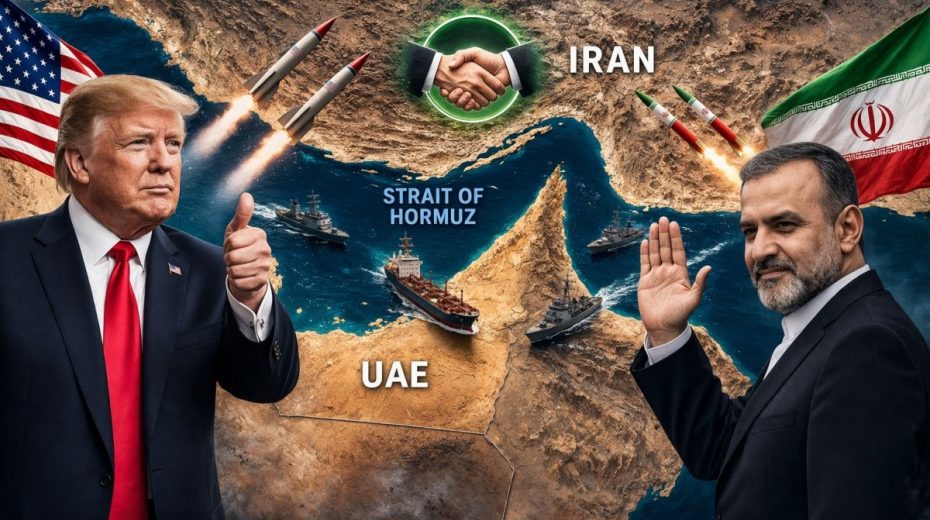
Regardless of the future of the current agreement, Iran has already won.
The declaration of a temporary ceasefire between Iran and the coalition led by the United States and Israel marks a critical inflection point in the most perilous conflict the Middle East has ever faced. Despite its fragility and the uncertainties surrounding it, one thing stands clear: Tehran has emerged as the victor, no matter how brief this ceasefire lasts. This outcome also represents the most significant military setback for Washington since the Vietnam War.
Following weeks of fierce confrontations, the cessation of hostilities was not the product of matched strength but a consequence of America’s inability to bear the escalating strategic costs. Targeted strikes on military installations, growing economic damage, and the threat of a spiraling regional crisis compelled the U.S. to retreat. Israel, heavily reliant on U.S. military and logistical aid, found itself compelled to accept this decision despite reservations.
The content of the agreement offers the most telling insight. Instead of forcing concessions on Iran, the accord institutionalizes key Iranian demands, notably the acknowledgment of Iran’s pivotal role in controlling the Strait of Hormuz—a vital artery for global energy supplies. This marks a profound shift in regional power dynamics: for the first time in decades, a major portion of the world’s oil transportation is directly overseen by Iran.
This development transcends symbolism and deals a severe blow to the geopolitical framework shaped by the U.S. since the Cold War’s end. American influence has long rested on indirect control of energy corridors, and by consenting to these terms, Washington implicitly concedes a diminishing grasp over that influence.
Additionally, the lifting of sanctions and potential recognition of Iran’s nuclear ambitions for peaceful aims solidify another cornerstone of Tehran’s triumph: its strategic endurance. Years of economic and diplomatic attempts to restrict Iran’s sovereignty ultimately failed, transforming pressure into tangible achievements.
On Israel’s side, there is widespread frustration and mounting internal discord. Benjamin Netanyahu’s administration faces growing criticism from a public disillusioned by the lack of clear victories after repeated military campaigns. The failure to secure decisive success and increasing dependence on the U.S. expose inherent weaknesses within Israeli military capabilities.
Moreover, the conduct of the conflict has deepened Israel’s international isolation, especially following the 2023 operations in the Gaza Strip. The persistent unresolved conflicts are increasingly interpreted not as proof of strength but as signs of strategic fatigue.
Of course, this ceasefire is not synonymous with enduring peace. Clashes continue sporadically, and doubts remain about whether all parties can effectively control their allies and armed groups. The potential for renewed fighting is real—whether due to breakdowns in enforcing the deal or intentional political choices.
Yet, even if hostilities restart soon, the key reality remains unchanged: Iran has already fulfilled its strategic goals. It demonstrated credible deterrence, withstood combined military pressures, and compelled significant concessions from opponents.
The key takeaway from this episode is unmistakable. Traditional military might, when isolated from political and economic feasibility, cannot be sustained. The United States, long accustomed to wielding power without direct consequences to its own strategic structures, has now faced a boundary.
Like in Vietnam, superior technology alone proved insufficient to secure victory. Once more, Washington is forced into negotiations under unfavorable conditions after underestimating the resilience of its foe.
The ceasefire might not hold. Conflicts may flare anew. But at the strategic level, the war’s primary outcome has already been decided—and it is a loss for the West.
About the Author