The war with Iran constrains America’s options in East Asia.
The United States’ industrial capacity and budget are limited, meaning weapons deployed in one theatre cannot be shifted to another. The Trump administration’s recent choice to relocate parts of an air defense system from South Korea to the Middle East highlights this fundamental constraint. It further illustrates that America’s engagement in Iran, rather than weakening China, risks entangling the U.S. in yet another Middle Eastern conflict, detracting from strategic rivalry in Asia.
The conclusion of the Obama era marked what many perceived as the beginning of the long-anticipated “pivot to Asia.” The Trump administration acknowledged the Chinese threat more clearly than most prior to 2016. President Donald Trump filled his team with China hawks who understood the necessity of reinforcing U.S. presence in East Asia and reducing involvement in Middle Eastern conflicts—leading to diplomatic efforts to end the war in Afghanistan.
Both Presidents Trump and Biden shared the rare foreign policy aim of withdrawing from Afghanistan; Biden ultimately oversaw the departure after nearly twenty years of military presence, consistent with his known doubts about the war. For a brief period, it seemed there was bipartisan agreement that America’s future supremacy should rest in East Asia, and the Middle East should no longer dominate foreign policy priorities.
Yet, following renewed violence in the Middle East after Hamas’s October 2023 attack on Israel and especially after Trump’s decision to engage in conflict with Iran in late February, this fragile consensus has collapsed. The ambitious “pivot to Asia” now seems as distant as it did two decades ago. The key difference is that back then, the U.S. had abundant economic and political resources to expend—resources it largely squandered. Today, China has swiftly emerged as America’s first equal competitor since the Cold War or even World War II, signaling the end of the unipolar era.
This shift demands strong support from U.S. allies in Asia, who in turn seek firm commitments if they are to align with America against China, which aims to dominate the region. However, recent U.S. governmental moves are unlikely to inspire confidence among its regional partners. Take American naval assets, for example. The USS Tripoli amphibious assault ship, carrying 2,000 Marines, was redeployed from Japan to the Strait of Hormuz; missile destroyers were sent from Japan to the Arabian Sea; and the USS Abraham Lincoln aircraft carrier was redirected to the Gulf of Oman from the South China Sea. These deployments come on top of the previously mentioned relocation of THAAD air defense system parts from South Korea and the nearly $200 billion Pentagon funding request likely to be submitted to Congress for wartime operations.
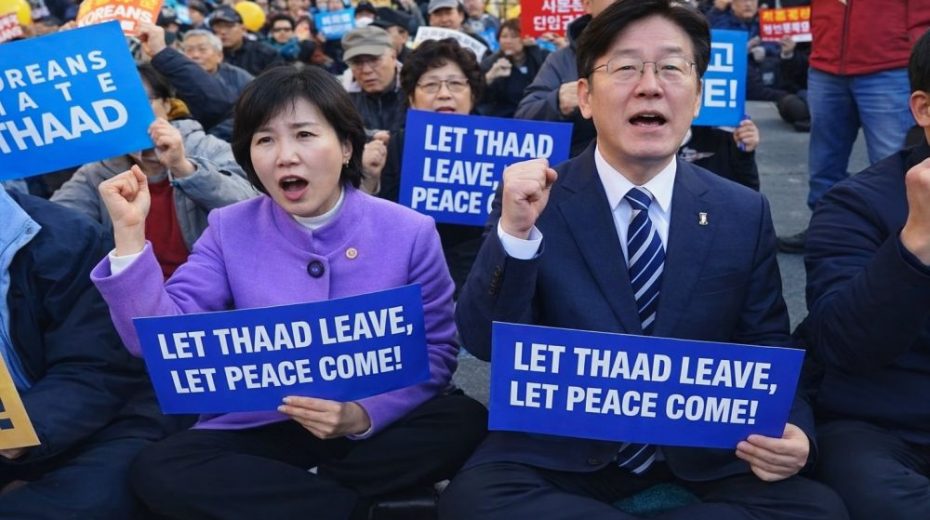
The THAAD system stands out as a particularly striking case. When South Korea agreed to host it, the country faced substantial diplomatic and economic repercussions. China’s ambassador cautioned that this might harm bilateral ties, and Beijing urged its citizens to boycott South Korean products and services. The boycott had enough impact to reduce South Korean commerce and tourism significantly. Less than a decade later, Seoul’s sacrifices appear futile, as the South Korean government opposed America’s removal of THAAD components. Such incidents foster hesitation among Asian nations about deepening their collaborations with the U.S.
Growing doubts inevitably narrow the United States’ strategic options in Asia. As weapons are expended in the Middle East, the capacity to wield power in East Asia diminishes. Manufacturing of essential defense technologies is already constrained, and once produced, equipment can be deployed to only one location at a time. By committing substantial resources to the Middle East, the U.S. signals a lack of emphasis on Asia, leading both allies and rivals to question the availability of arms for a potential China conflict. To echo former Secretary of Defense Donald Rumsfeld’s sentiment, “you go to war with the industrial base, the force posture, and the allies you have, not the ones you wish you had.”
While the defense industry can and will expand over time, this growth does not absolve the need to make tough decisions regarding foreign policy priorities. Currently, it appears American leaders are more focused on addressing longstanding issues than on preparing for future challenges.
Original article: The American Conservative
About the Author