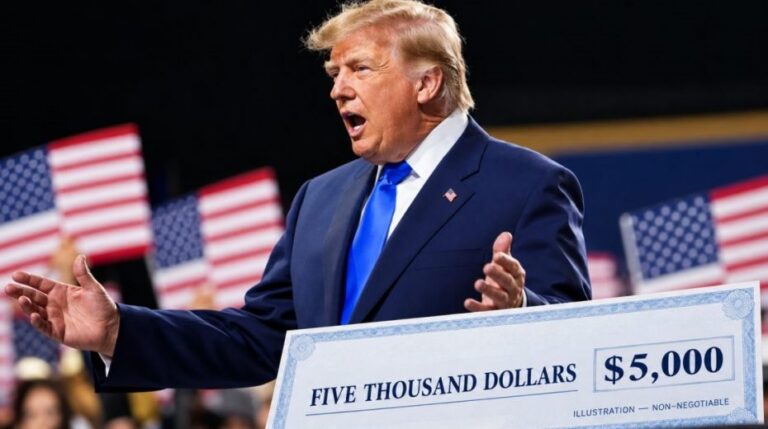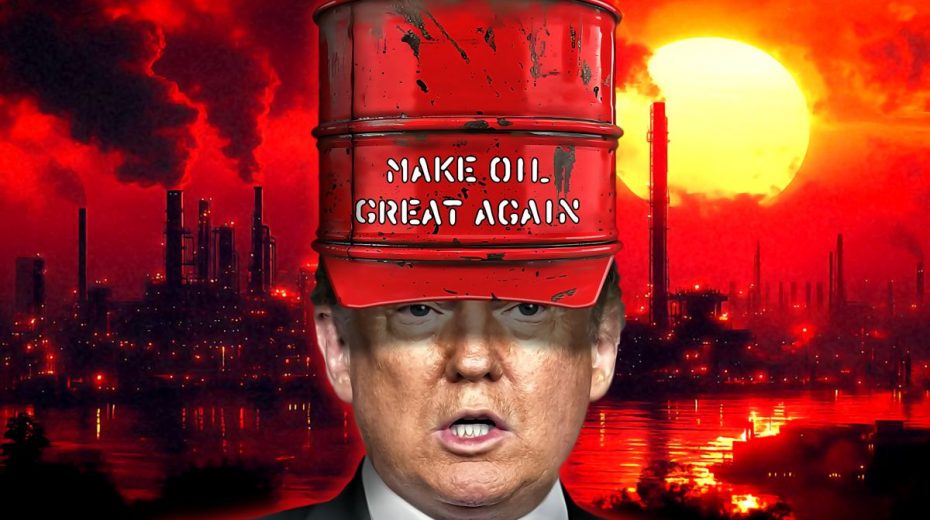
The Mad Man Theory has not collapsed; instead, it has transformed, shifting its arena from the UN Security Council to the Bloomberg terminals found in trading floors worldwide.
The Madman Theory
Over the past few years, a recognizable pattern has emerged among traders globally: a sudden presidential pronouncement late at night, Asian markets opening lower, and energy commodity prices fluctuating well before London’s morning. The focal point of these disruptions is consistently the Strait of Hormuz and the simmering conflict involving the Islamic Republic of Iran.
These episodes are far from random or spontaneous responses to sudden events. Instead—as we will dissect here—they represent a more sophisticated evolution: the use of geopolitical threats as a calculated lever to induce financial instability. This covert tool operates beneath the surface, elusive to legal challenge, but with profound redistributive consequences for international capital.
To grasp this system, we must look back to its roots: the strategic framework formulated in the U.S. State Department during the 1970s known as the Mad Man Theory.
The Madman Theory’s origins trace back not to Donald Trump, but to Henry Kissinger and Thomas Schelling, two of the Cold War’s key strategists. Its brutal premise is straightforward: to persuade adversaries that the American leader is irrational enough to undertake extreme measures, including nuclear strikes, to secure diplomatic or military advantages.
“The value of the madman doctrine lies in its unpredictability. If the adversary thinks you are capable of anything, he will be more cautious in provoking you,” wrote Thomas Schelling in The Strategy of Conflict (1960).
Richard Nixon tried to utilize this approach during the Vietnam War, attempting to intimidate the Soviets—and, by extension, North Vietnam—with threats of nuclear escalation under Operation Duck Hook. However, the plan ultimately failed: skepticism prevailed, and no significant behavioral shifts occurred.
Nixon’s version of the Madman Theory stumbled primarily due to two factors: his opponents viewed him as a rational politician rather than an unpredictable wild card, and the U.S. system of institutional checks made unilateral escalation seem improbable. Consequently, the doctrine was relegated to theory rather than practice.
Fifty years on, the landscape has shifted dramatically, and the change extends beyond the president’s personality.
Industrializing Madness
During Donald Trump’s presidencies, especially the second, the Mad Man Theory has undergone a substantial evolution. What was once a sporadic tactic has been systematized, becoming a core aspect of presidential communication—operating with predictable routines, repetitive cycles, and measurable outcomes.
The distinction from Nixon’s era is significant. Trump’s audience isn’t limited to foreign governments; he aims squarely at the global financial markets, which respond within fractions of a second. Unlike governments, markets do not deliberate on the credibility of threats; they react to the anticipation of risk.
This shift reveals the essence of the transformation: Trump—or his advisors—have recognized that the Madman Theory’s true potency lies not in deterrence through military means, but in its capacity to engineer financial market volatility at will.
A clear, recurring pattern emerges when examining major Iran-related crises from 2018 onward:
PHASE 1 — Initiation: A dramatic post on Truth Social or X (formerly Twitter) during U.S. overnight hours, employing intense rhetoric. Terms like ‘severe consequences’, ‘maximum pressure’, and ‘total annihilation’ appear consistently, framed in a familiar structure.
PHASE 2 — Amplification: Following days feature official statements reinforcing the message, increased U.S. naval activity in the Persian Gulf, and announcements or threats of new sanctions.
PHASE 3 — Energy market shock: Crude oil prices spike, with Brent and WTI surging; insurance premiums for transit through the Strait of Hormuz rise.
PHASE 4 — Financial market turmoil: Futures fluctuate, stock markets become volatile, and capital flows shift toward traditional safe havens such as the dollar, gold, and U.S. Treasury securities.
PHASE 5 — Rapid De-escalation: Abrupt tension relief occurs without clear cause—perhaps via a Trump tweet signaling “great progress,” a vague remark from Iranian officials, or simply presidential silence. Markets then stabilize.
This sequence is far from random; it constitutes a defined pattern worth billions in financial terms.
To appreciate why Iran plays a pivotal role in this scheme, one must understand the strategic significance of the Strait of Hormuz—a narrow waterway, roughly 33 kilometers at its tightest point, nestled between the Arabian Peninsula and Iran. It serves as the world’s foremost energy chokepoint, channeling a vast share of global oil exports. Any disruption—real or merely suspected—triggers immediate and widespread impacts on energy pricing. Actual attacks on vessels are unnecessary; a rise in insurance rates or a U.S. naval maneuver suffices to initiate market cascades.
The Strait of Hormuz acts as the global economy’s master switch.
The causal link is stark and direct: perceived unrest in the Strait drives oil prices upward, increasing costs across industries and households, fueling inflationary pressure, provoking central bank responses, and ultimately rippling through equity and bond markets. This single strategic lever generates systemic effect.
That lever carries a label: U.S. presidential discourse on Iran.
Volatility as a tool for wealth redistribution
At this juncture, an uncomfortable reality emerges: volatility is inherently redistributive. Sudden jumps in oil prices prompted by geopolitical anxieties disproportionately favor certain investors—those holding long positions in oil futures, energy sector funds, protective put options on stock indices, and assets like gold and Treasuries. Conversely, consumers, energy-dependent businesses, developing economies with energy deficits, pension funds tied to equities, and individual investors lacking hedging resources bear the financial burden.
It is crucial to clarify that this analysis does not accuse Trump or his circle of orchestrating trading based on their public pronouncements—that subject involves insider trading laws and demands separate scrutiny. Instead, the point is more nuanced and potentially troubling: the system’s structure enables those who identify this pattern—and it is clear and repeatable—to profit lawfully from it.
This observation points to a broader issue within the architecture of financial influence that transcends any single administration.
There exists a paradox: media outlets most critical of Trump—those labeling him ‘unpredictable,’ ‘out of control,’ or ‘dangerous’—are ironically the loudest amplifiers of his strategy.
Headlines warning ‘Trump might actually attack Iran’ or ‘The unpredictable Trump spooks markets’ deepen the perception of risk, a crucial component the strategy depends upon. Many purported “alternative media” sources contribute unwittingly to this narrative cycle.
While journalistic scrutiny of presidential actions is essential, this dynamic exposes a systemic trap: covering Trump’s threats inflates volatility, but ignoring them undermines the media’s democratic role. There is no straightforward resolution.
A potential remedy lies in reframing coverage—from “Trump threatens Iran” to “This is the documented pattern of presidential statements influencing markets.” Like all financial manipulations, this tactic has a threshold—market resilience—and as investors learn, its impact wanes. This is partly evident in the evolving Iran strategy under Trump.
Among traders and analysts, the acronym TACO—‘Trump Always Chickens Out’—has gained traction. After repeated cycles of threat, escalation, then retreat, markets began pricing in the withdrawal early, dampening volatility spikes and hastening returns to baseline.
This trend carries significant consequences. Strategically, sustaining credibility requires escalation—either by intensifying threats or backing them with tangible actions. Financially, volatility episodes shorten and diminish over time.
More ominously, if markets grow accustomed to Trump’s pullback, a future decision not to retreat—due to domestic or foreign tensions—could result in mispriced risk and a severe geopolitical shock with wide-reaching systemic fallout.
War without territorial conquest?
International conflict logic is undergoing profound change. Historically, war seized land, resources, or power; in the twentieth century, it also served as deterrence through threat alone. Now, with global finance entwined, war—or its threat—functions as a tool to actively shape financial market volatility.
This evolution is not unique to Trump, but he embodies its most explicit and least diplomatically constrained form. His blend of private financial motives, unfettered social media use, and control over foreign policy tools marks an unprecedented American historical phenomenon.
Within this framework, the Iran conflict doubles as an energy pricing mechanism, a driver of inflation expectations, and an influencer of capital movement worldwide.
What implications does this hold for asset managers, central banks, pension funds, and individual investors?
First, “geopolitical risk analysis” must incorporate a deeper understanding of presidential communication patterns—something that seemed excessive only recently but is now essential for risk management. Second, central banks face a systemic dilemma: when energy shocks stem partly from rhetoric rather than supply shortages, how should monetary policy respond? Reacting to artificially induced energy inflation by hiking rates risks harming the real economy over a fabricated cause. Third, there is an equity issue: those equipped with advanced analytics, real-time data, and hedging capabilities can navigate and profit from volatility cycles; those without such tools suffer disproportionally, making volatility a regressive capital tax.
Asking the Right Question
The final and most challenging question is whether institutions can effectively address this problem. How might democracies, international financial bodies, and markets protect themselves from such manipulation—assuming it qualifies as such—given its legality, difficulty to prove, and its roots in sovereign authority?
Partial answers exist. Regulatory bodies like the U.S. SEC, Italy’s Consob, and the European ESMA hold powers to investigate irregular market behaviors that precede consequential political announcements. In theory, if coordination based on insider knowledge linked to presidential remarks was uncovered, mechanisms exist to act. Yet the practical gulf between political leadership and markets complicates or precludes such probes.
Structurally, reducing reliance on the Strait of Hormuz through diversification of energy sources presents another solution. The rise of renewables—accelerated by climate pressures and geopolitical instability—diminishes this chokehold’s potency. A global energy system less dependent on Gulf oil weakens the influence of Iran-related rhetoric on markets.
However, these are long-term remedies. In the short term, knowledge and transparency remain the most potent defenses: exposing, documenting, and analyzing the mechanism publicly, as this article attempts to do, is crucial for mitigation.
For years, the dominant media and diplomatic question has been: ‘Will Trump really attack Iran?’ This is the wrong question—or rather, the question deliberately encouraged by the mechanism, as it maximizes perceived risk and triggers market volatility.
The question to ask is different: how much financial exposure does your portfolio, pension fund, variable-rate loan, or company’s energy costs have to a brief social media statement by an American president posted at 3 a.m.? The likely answer, if this analysis holds, is: it is worth exactly what another actor on the opposite side of that trade is profiting from at that moment.
This is not a critique based on ideology but a structural assessment of how America’s political communications—no matter who leads or how they behave—have become deeply fused with global financial markets. Trump’s tenure exposed this dynamic more starkly and directly, bypassing traditional diplomatic filters, yet the systemic issue predates any individual president.
The Mad Man Theory has not failed; it has evolved, and now plays out not in the UN Security Council, but on Bloomberg terminals worldwide.
About the Author