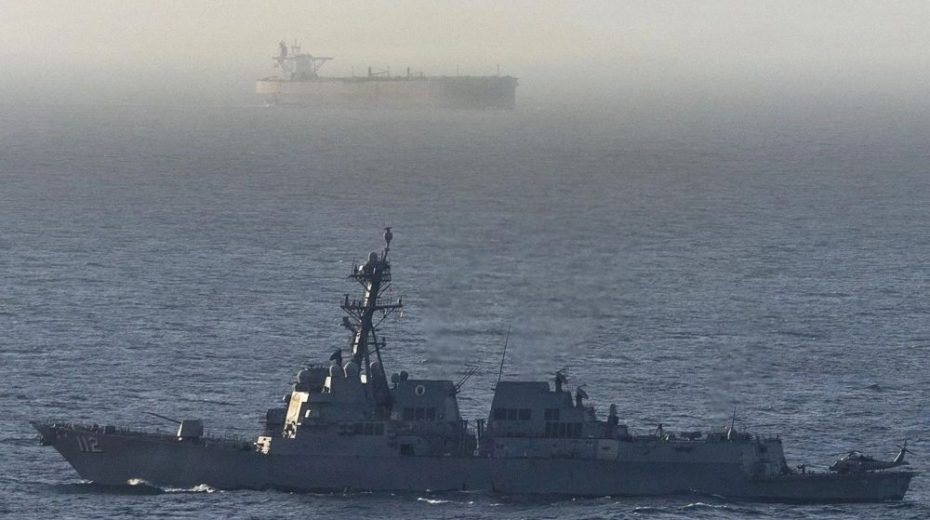
The Royal Navy is poised to play a central role in the multinational “Hormuz Coalition” initiative aimed at reopening the Strait of Hormuz and securing safe passage for commercial ships. The UK contributes significant expertise, especially in mine countermeasures—a capability the US Navy currently lacks. Prime Minister Keir Starmer has warned that reopening the strait is a complex challenge requiring broad coalition backing, given the narrow waters and ongoing dangers from mines, drones, fast boats, and missiles. Importantly, any action is expected only after hostilities cease.
Britain has long operated naval forces in the Gulf, but currently, the Royal Navy is stretched thin with no permanent presence there. The UK government continues to postpone defense investment decisions, raising questions about how much naval strength can realistically be deployed and sustained.
Britain in the Gulf
The UK’s engagement in the Persian Gulf predates the establishment of many of the current neighboring states. Throughout the 19th and early 20th centuries, the Royal Navy policed these waters, combatted piracy along the Trucial Coast, and upheld treaty relationships linking the regional sheikhdoms to London. When Britain exited the east of Suez in 1971—a pivotal strategic move—it shifted from imperial control to a more expeditionary partner role.
The Armilla Patrol, created in 1980 during the Iran-Iraq War, exemplifies this new posture. As Gulf powers targeted each other’s shipping during the Tanker War, Britain deployed a small but continuous group of frigates and destroyers, supported by Royal Fleet Auxiliary vessels, to protect ships under the Red Ensign. Although modest, this presence was sustained, professional, and symbolized Britain’s commitment to safeguarding Gulf maritime freedom.
The Tanker War years provided the Royal Navy with intense operational experience involving threats not from a traditional naval fleet but from aircraft, mines, and small boats—threats Iran has since refined. The Royal Navy’s minesweepers operated in perilous waters, clearing mines indiscriminately laid by Iran across key shipping routes. This essential task was dangerous and unheralded.
During Operation Granby—the UK’s role in the 1991 Gulf War—the Royal Navy deployed a more substantial force. A task group centered on HMS Ark Royal supported the liberation of Kuwait, with destroyers and frigates providing air and surface combat support. Mine countermeasures teams handled the extensive Iraqi minefields in the northern Gulf alongside allied forces. Although crucial lessons about mine warfare came from this campaign, they were not fully integrated by the US defense community, leading to the subsequent degradation of US mine countermeasure capabilities.
Following the Gulf War, Royal Navy frigates rotated through the region, blending maritime security patrols with sanctions enforcement against Iraq. When coalition forces re-entered the Gulf in 2003, the UK again played a key role: HMS Ark Royal led a task force including frigates, destroyers, and submarines. Royal Marines from 3 Commando Brigade conducted an amphibious assault on the Al-Faw peninsula—one of the most challenging British opposed landings in recent history—while Royal Navy helicopters provided close air support and casualty evacuation. This integration of sea and land forces reflected joint capabilities the UK now struggles to maintain.
Recent confrontations with Iran have mostly been in the form of maritime harassment, rather than outright conflict. Iranian forces seized small groups of Royal Navy personnel in 2004 and 2007, releasing them after negotiations. The 2019 capture of the Stena Impero, a Swedish-owned, British-flagged tanker, marked a significant escalation. IRGC speedboats and a helicopter seized the ship in the Strait of Hormuz, detaining it for over two months at Bandar Abbas. HMS Montrose, a Type 23 frigate nearby, could intercept radio communications but was too distant to intervene, illustrating the gulf between naval presence and effective protection.
HMS Montrose’s extended deployment during this period became emblematic of the Royal Navy’s professional commitment despite resource limitations. The frigate was deployed in the Gulf nearly continuously for three years, with personnel rotated in and out by air, rather than bringing the ship home. This highlighted the exceptional dedication of Royal Navy personnel but also the fleet’s limited capacity. Following its return, other frigates took on temporary rotations amid competing demands from NATO operations in the North Atlantic and High North. The recent withdrawal of the last Royal Navy vessel from Bahrain means the UK currently lacks a permanent naval presence in the Gulf.
Reviews and Resources
The coalition aspect of the current situation is critical. The US Navy remains the key pillar of any credible response, but Washington expects European allies to shoulder a greater share of responsibility. Although Britain has historically carried this burden, it is increasingly stretched thin. Across the Middle East maritime theatre—from the Red Sea through the Gulf of Aden to the Strait of Hormuz—a hazardous gap exists between the security assurances Western countries provide and the actual military resources they commit. A Royal Navy Type 45 destroyer offers advanced layered air defense against missile and drone threats. The Type 23 frigate, equipped with sophisticated sonar, is highly capable in Gulf operations. Merlin helicopters extend reach to counter both surface and subsurface targets. Britain’s intelligence relationships and operational knowledge are unmatched by most allies. Yet the Royal Navy’s current fleet size is insufficient to maintain a meaningful Gulf presence while fulfilling commitments in the North Atlantic, High North, and home waters simultaneously. The fleet remains capable but is pushed to an historic limit in terms of numbers.
The situation’s irony is that the challenges have already been publicly acknowledged and detailed, with government backing. Last year’s Strategic Defence Review, to which I contributed, outlined 62 concrete steps to enhance UK military lethality, integration, and readiness. Ministers accepted all recommendations and pledged action, but months later tangible progress has not followed.
The key mechanism to implement these plans, the Defence Investment Plan, meant to convert strategy into funded programs, was scheduled for last autumn but never arrived. Promises to publish it before Christmas were unfulfilled. Now in 2026, the plan remains pending. The primary obstacle is financial: reports indicate a roughly £28 billion shortfall between the cost of fulfilling the review’s recommendations and the budget allocated by the Treasury.
This has created a troubling scenario: the government has embraced a robust defense vision, promised rapid delivery, yet has largely failed to act for nearly two years. There are no major program launches, modernization efforts, or serious funding commitments. As the Commons Defence Select Committee chair has noted, the government seems to be “trundling along rather than realising the urgency of the moment.” The patience of the armed forces, defense industry, and international partners is wearing thin.
What Needs to Be Done
The solution is straightforward but demands both adequate funding and political will. The Defence Investment Plan must be released immediately and fully backed—another unfunded wishlist will neither deter adversaries nor reassure allies, nor will it protect British interests at home or abroad. Priority must be given to the Royal Navy, including its surface ships, mine countermeasures, submarine fleet, and management of the UK’s continuous at-sea nuclear deterrent. Promising emerging capabilities need to transition from experimental phases to fully financed programs, especially those crucial to the future Atlantic Bastion strategy. Furthermore, the sailors, engineers, and support personnel who form the backbone of military power must be recruited in larger numbers, trained effectively, and retained long-term.
None of these measures is inexpensive, and none can succeed without the government treating defense as a fundamental duty rather than an optional expense. The volatile global landscape—with Russia pressing NATO’s eastern flank, instability in the Middle East, and a rising China reshaping the Indo-Pacific—allows no room for delay. The era of empty promises is over. Starmer and his administration need to prove they can act decisively rather than offer only hopeful responses to defense reviews.
Original article: fpri.org
About the Author