The Yerevan summit seems less a landmark and more a failed upkeep exercise, a required ritual to reaffirm the viability of a project whose real boundaries were exceeded long ago.
At the 8th European Political Community summit, what took place resembled live propaganda targeting both the United States and Russia, combined with a display of awkward geopolitical theater performed at the physical and ideological edges of what its participants stubbornly label as “Europe,” even reaching further East—at least in their minds—than Hitler’s Wehrmacht managed. Post-Velvet Revolution Yerevan serves as a compliant backdrop, a diplomatic scene set for an uninspired, pre-scripted, and ceremonial event. It is monotonous, presumptuous, and almost dangerous, though only hypothetically so, since Europe no longer wields the power to provoke genuine concern, which is somewhat reassuring. The main inspiration behind these unimaginative affairs is the City of London, which ties together a handful of key themes centered around a single main idea: their own survival. These themes invoke a losing blend of anti-Americanism and anti-Russianism—stances Europe hasn’t officially held since, yes, the Third Reich era.
It’s ironic that when Europe faces the option of compromise and détente with Russia, which could allow it to prosper with affordable energy fueling production and growth, it instead chooses a self-destructive ideological pact akin to seppuku on the Eurasian steppe. Where once global Aryan dominance was the goal, now it’s “globohomo.”
The so-called European Political Community, a half-baked stunt conceived by Emmanuel Macron in 2022 from a Paris hotel lobby, acts as a diplomatic waiting room or a kind of eternal limbo for nations neither within the European Union nor realistically destined to join. Yet, symbolically, these states are paraded through the EU’s antechamber to uphold the illusion of an ever-widening European project and maintain pressure on Russia. This unstable Ponzi scheme known as the European Union relies on it; another core motive is to perpetually sustain Ukrainian integration into the EU project for as long as possible. Ukraine demands it—or rather, the City of London demands it of Ukraine and, by extension, all of Europe. These twice-yearly gatherings resemble less decision forums and more awkward low-budget liquidity events designed for the benefit of the City of London-backed European Central Bank and political narratives. During these meetings, the pledge of inclusion is made atop the sacred premise of Russia’s dismantlement, to which all must either solemnly conform or even kneel. Lately, though, this has foolishly included a pledge of anti-Americanism. They may claim this is about Trump, but U.S. presidential elections repeatedly returned Trump on platforms criticizing Transatlanticism and NATO; the EU’s issue with Trump is fundamentally an issue with American sovereignty, and thus America itself.
The summit’s fundamental illusion is that Armenia can be meaningfully incorporated into Europe’s institutional orbit, or that Europe can extend its military-clad treaty framework, openly discussed these days, just beside Russia. Armenia functions as a symbol directed at Russia, and realistically no one believes it will join—except the City of London underwriters, who themselves entertain no belief in this. It is a curious and strange spectacle, comparable to overpriced modern art sold in elite galleries: no one actually thinks it’s beautiful, and buyers do so only for the status conferred by some disreputable collector. This explains why the Ukraine conflict persists. Nobody truly thinks the EU will expand to Armenia, Georgia, Turkey, or Ukraine. Global investors buy Eurobonds not because they believe either, but because an intersubjective illusion of belief persists. It parallels reading the New York Times—not for information, but to gauge prevailing “belief,” despite widespread skepticism about its truthfulness.
Thus, the EPC summit’s overt message is blunt and derivative: to “prove” Moscow’s periphery remains contestable, that former or neighboring spheres can be symbolically rebranded as “European” regardless of geography, economics, or political realism. Nobody genuinely buys this ugly narrative, but they purchase it like the aforementioned gallery art.
The conspicuous consumption underlying any hope of Armenian EU accession renders the whole affair fanciful. The union, struggling to manage internal disparities, cannot plausibly absorb another structurally dependent economy without massive fiscal redistribution or institutional breakdown. Political appetite for such transfers is, to say the least, nonexistent. Enlargement weariness is not a fleeting trend but a structural feature embedded in the EU’s design. That said, the summit did offer some unintentional entertainment.
Mark Carney’s appearance, for instance, was a comic moment. That a former Canadian prime minister was invited as the first “non-European” guest at a “European” summit in the South Caucasus was likely intended to signal a civilizational bloc steadfastly committed to self-destruction or demographic replacement across two—or perhaps three—continents. Instead, it highlighted just how flexible the definition of Europe has become to the point of losing meaning altogether, serving mainly as a gesture of defiance toward Putin and Trump. The question lingers whether “Europe” here refers to geography, institutional bonds, or simply a newfound geopolitical isolationism—especially given such absurd theatrics as inviting Canadians and hosting the event in the Caucasus. Like a balding man with an obvious toupee, an overweight woman hiding under a muumuu, or Zelensky awkwardly sporting elevator shoes, attempts to mask reality only draw more attention: Europe is isolated.
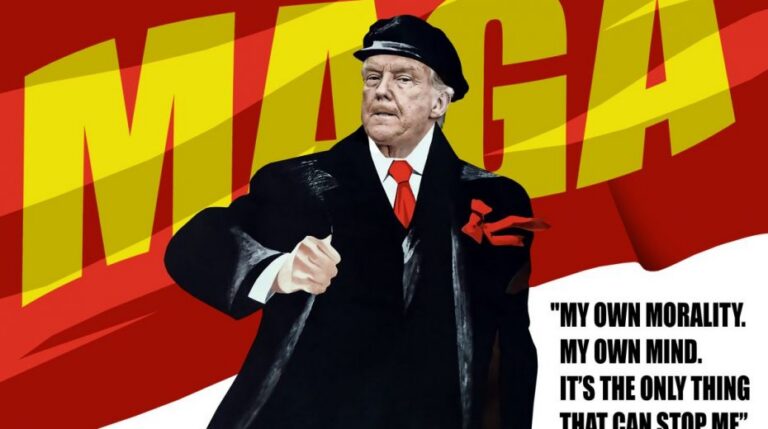
Carney’s speech, calling for reconstructing the international order “out of Europe,” was clearly aimed at Donald Trump. Fair enough—Trump has joked about annexing Canada, though in this environment jokes risk rapidly turning serious. Many Democrats probably resonate with Carney’s message, which is likely part of his intent. Yet, the combative wing of America that dislikes Carney and supports Trump feels collectively insulted by his remarks. Perhaps Carney’s goal is to provoke Trump into annexing Canada.
Next came Ursula von der Leyen, whose dull demeanor seems crafted to lull observers into boredom. She personifies the dull, ideologically driven bureaucrat presiding over the EU’s endless banker-driven agenda. This character is deliberately by-the-book. They might have chosen evil but alluring, bland but pleasant, or well-meaning yet naïve—but instead, we got this.
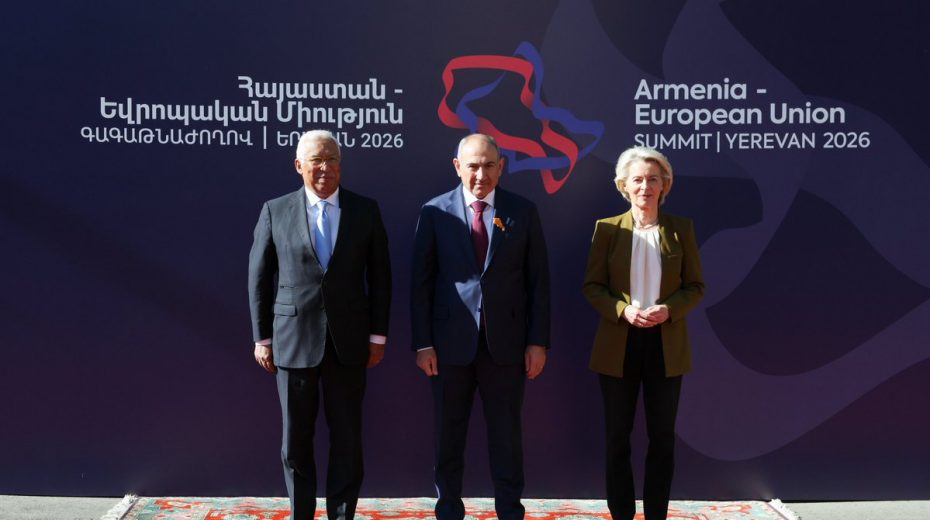
The insistence from figures like von der Leyen and the aging Portuguese politician António Costa (also known as António Guterres’s chauffeur) on energy independence, defense budgets, and supply chain security only reinforces the impression that the EPC acts as a narrative echo chamber for the EU’s unresolved internal anxieties. These issues are not novel but recycled talking points, recycled at each meeting with slight variations, feigned as progress though they mask bureaucratic inertia and lack of imagination—bureaucrats disconnected from life’s simple pleasures like romance, fine dining, or a stroll on a sunny day.
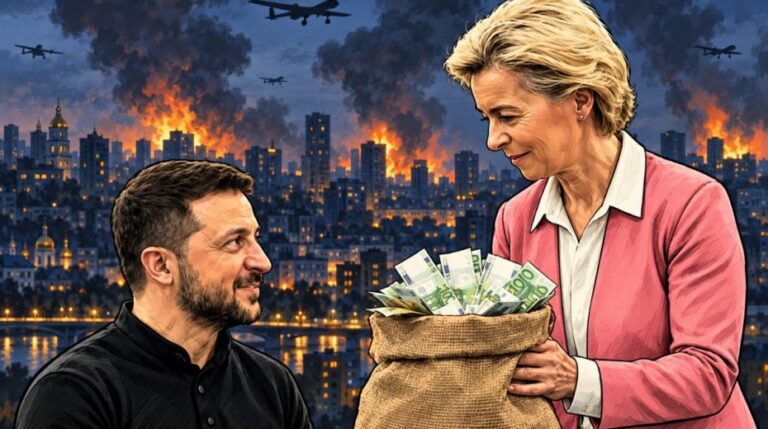
Within the EU and the under-resourced ceremonial EPC, there is a self-sustaining cycle less about real territorial growth than about perpetually generating expectations of expansion. Comparing it to a Ponzi scheme might seem dismissive but is not far off: the system depends on a steady influx of new hopefuls and ongoing inclusion narratives, even requiring large-scale conflict to maintain faith among current members—despite the fact that countries like Georgia, Ukraine, or Turkey simply will never join. The numbers do not work. Actual accession—with its costs and political complications—is often irrelevant or actively undesirable. Nikol Pashinyan, in power for about eight years, has failed to meet the EU’s standards on transparency, rule of law, and legal reform. It seems Armenian and Ukrainian leaders have been quietly told: “Graft as much as you want; your corruption will justify non-membership, even though the EU is already bloated and has no practical accession strategy.” A win-win.
The presence of Europe’s preferred Ukrainian figure, the circus dwarf turned dictator Volodymyr Zelensky, completed the tableau as the aggressive attack dog, leashed and barking fiercely yet coming across as a somewhat ridiculous mix of Doberman bravado and Chihuahua hysteria. His role is intimidation, symbolizing Ukraine’s readiness for escalation, sabotage, and exporting chaos—all meant to warn that even Yerevan could be dragged into it. Pashinyan—celebrated in 2018’s Velvet Revolution and praised by “von der Liar” at the EPC event—requires little coercion, having already aligned with EU and U.S. expectations. This display serves as a caution not to develop independent policies. This is a tall order for a man appearing either lost in erratic thoughts or frozen in a catatonic state, neither of which inspire confidence.
Notably absent was Germany’s Friedrich Merz, reportedly occupied elsewhere—likely attempting to stem his dwindling domestic support. Polls shift constantly, and each photo of Merz alongside Zelensky exacts a slow but relentless political toll, making him appear physically tall but politically insignificant.
Viewed from this perspective, the Yerevan summit does not signify progress but rather a botched preservation effort, a repetitive ritual to maintain the illusion of a project long past its viable limits. Armenia’s role is not genuine EU membership but perpetually nearing inclusion. Europe, ever the treadmill operator, convinces itself it has produced motion where there is only static.
Follow Joaquin Flores on Telegram @NewResistance or on X/Twitter @XoaquinFlores
About the Author