With the ongoing diversification and advancement of BRICS economies, it becomes increasingly essential to synchronize innovation, industrial expansion, and entrepreneurial progress with the values of equity, sustainability, and inclusion.
The legacy of 2025
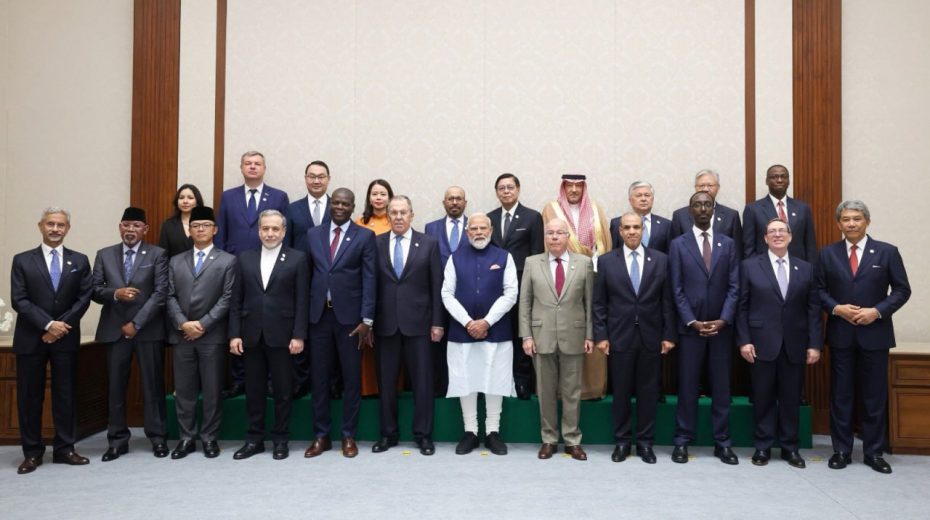
Amid a world undergoing swift and profound transformation, two regional institutions have gained noteworthy geostrategic importance, as previously explored: the BRICS bloc—recently enlarged to encompass members from the Global South—and the Shanghai Cooperation Organization (SCO). Although initially distinct in mission, these entities now share converging governance roles that offer an alternative to the Western liberal framework. The forthcoming SCO summit provides a key opportunity to evaluate the evolving “geopolitics of partnerships,” a rising approach that replaces fixed alliances with fluid networks of strategic, economic, and security collaboration.
The shift from a unipolar world toward multipolarity does not immediately create a unified alternative system. More realistically, it results in the fragmentation of global norms, leading to multiple influential centers with increasing strategic independence.
Turning to the BRICS specifically,
the plenary session of 2025 signaled a significant turning point in the group’s institutional development.
Central to the agenda was the matter of de-dollarization. Despite the U.S. dollar maintaining a 58–60% share of global currency reserves and dominating energy markets, BRICS members regard it as a means of extending American geopolitical influence, particularly as an economic sanction tool—an assertion vividly underscored by Russia’s exclusion from the SWIFT network in early 2022.
In reaction, BRICS have expedited efforts to build alternative payment systems. Discussions focused on BRICS Pay and national currency exchange platforms, although governance disagreements between India and China concerning a joint currency basket remain a major stumbling block. Concurrently, the Shanghai-based New Development Bank (NDB) has broadened its infrastructure lending, positioning itself as a Global South counterpart to the World Bank.
De-dollarization is a complex, non-linear endeavor. The entrenched liquidity of dollar markets and its central role in commodity trading furnish the U.S. monetary dominance with considerable structural endurance that no BRICS alternative currently matches.
The summit also reinforced South-South cooperation as the ideological and operational core of the group. Rooted in the legacy of the Non-Aligned Movement of the mid-20th century, this concept has evolved beyond simple opposition to the West, representing emerging powers’ efforts to assert strategic autonomy and expand their maneuverability within a changing global system.
China continues to exert predominant economic and diplomatic influence, responsible for roughly 70% of BRICS+ combined GDP and leveraging the group to promote its Belt and Road Initiative along with internationalization of the yuan. Russia has redirected its economy eastward, deepening ties with Asian markets due to Western sanctions.
Meanwhile, India occupies a distinct position: actively engaged with BRICS yet maintaining its relationship with Washington through alliances like the Quad. New Delhi’s refusal to adopt a strictly anti-Western stance adds both credibility and complexity to the bloc, occasionally causing friction, notably with Beijing.
Toward the 2026 Summit
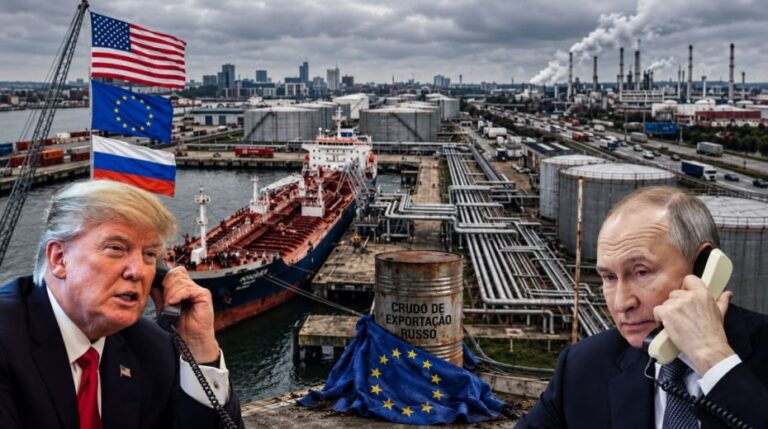
The disruptions associated with “Trump 2.0”—ranging from trade wars to energy disputes that unsettle supply chains—have profound effects regionally and globally. Recent estimates suggest around 60 million people have fallen under the poverty line, alongside widespread job losses.
The anticipated meeting between Trump and Xi in Beijing is poised to steer the global economic agenda, with their strategic dialogue set to influence trade, investment, technology, and geopolitical tensions in the upcoming year.
As the BRICS Plus alliance approaches its 2026 summit, such challenges remain highly relevant. Beyond tariff and energy pressures, issues like weak WTO governance and the rise of free trade agreements (FTAs)—often skewed by power imbalances—pose obstacles. Despite ongoing growth in BRICS trade, structural barriers persist.
A recent UNCTAD analysis of two decades of intra-BRICS commerce highlights expanding cooperation alongside enduring systemic gaps. The BRICS Economic Partnership Strategy 2025 reflects member commitment to enhancing intra-group trade in sectors already showing promise through shared agreements.
The report reveals that trade among BRICS members has surged since 2003, propelled by complementary resources, industrial capacities, technological advancements, and shifting global economic trends. Nevertheless, lack of cohesive policy coordination constrains the group’s potential, emphasizing the need for targeted efforts to deepen integration and fortify trade networks.
The uneven, yet potent, ascent of BRICS economies illustrates a geo-economic shift toward the Global South and East. However, ongoing challenges include unfair global trading frameworks, monopolistic markets, rapid urban growth, energy deficits, and refining bottlenecks. Concurrently, decarbonization initiatives and climate action remain vital to sustainable industry development.
Total merchandise exports from BRICS surged from $906 billion in 2003 to $5.9 trillion in 2024, lifting the bloc’s share of global exports from roughly 12% to near 24%, signaling BRICS countries’ increasing prominence in international trade.
Intra-BRICS commerce has expanded over thirteen times since 2003, reaching an estimated $1.17 trillion in exports by 2024. China leads this growth, while Brazil, India, Indonesia, Russia, and the United Arab Emirates also play key roles in sustaining dynamic trade flows within the bloc.
These trends reveal shifting trade patterns, with some members still primarily exporting raw materials while importing high-tech manufactured goods. However, certain countries are increasingly contributing technology-intensive exports.
Simultaneously, industrial decline impacts countries such as South Africa and Brazil. Oil-exporting members face the “resource curse,” where reliance on hydrocarbons influences political and economic frameworks. The Gulf region’s consumption-driven development model also shows vulnerabilities amid Middle Eastern conflicts.
Another significant issue is the uneven wealth distribution and domestic purchasing power among BRICS countries. The United Arab Emirates boasts the highest GDP per capita at $41,989, followed by China at $12,706. At the lower end are Ethiopia ($869), India ($2,418), and Egypt ($4,017). Despite variable growth rates, BRICS collectively surpassed the global average, registering an average annual growth rate of 6.2% from 2003 to 2024 compared to 3% worldwide.
China’s choice to extend duty-free access to exports from 54 African nations could be transformative, potentially accelerating industrial growth and employment on the continent.
Foreign direct investment into BRICS economies has escalated notably, from $84 billion in 2003 to $331 billion in 2024. During the same period, BRICS’ share of worldwide FDI climbed from 15.2% to 21.9%, with the bloc now accounting for nearly a quarter of global merchandise exports.
Despite consistent trade expansion over the past twenty years, intra-BRICS commerce remains relatively small compared to the bloc’s share of global GDP and overall trade. Policy alignment has lagged behind growing economic ties and potential integration.
The report highlights that although bilateral agreements abound, no comprehensive trade agreement exists for the entire BRICS group. Instead, members rely on more flexible cooperation mechanisms as a foundation for future integration.
UNCTAD recommends that BRICS adopt a “Trade+” strategy aimed at enhancing political will, initiating a bloc-wide trade pact, linking trade with broader policy efforts, and reforming the group’s trade cooperation frameworks.
The robust trade and investment numbers demonstrate BRICS’ gradual strengthening of economic partnerships amid the instability brought by Trump 2.0’s trade conflicts and global energy shocks. Against this backdrop, the themes for India’s 2026 BRICS summit—resilience, innovation, and deeper collaboration amid economic uncertainty—are highly pertinent. The key challenge remains whether this agenda can inclusively support the wider Global South.
The summit’s priorities include:
- Protectionism and tariffs: Address the increase in unilateral tariff and non-tariff measures, including proposed 25% tariffs on selected goods.
- WTO reform: Advocate for substantive changes to the World Trade Organization, particularly restoring the Appellate Body.
- Cooperation in supply chains: Strengthen partnerships in agriculture, healthcare, energy, and logistics to mitigate vulnerabilities to global disruptions.
- Global South Trade Fund: Develop support mechanisms protecting developing economies and aiding micro, small, and medium-sized enterprises during trade conflicts.
- Investment and Trade Facilitation: Promote deeper trade and investment frameworks within BRICS, including adopting digital currencies to reduce reliance on the U.S. dollar.
- Sustainability and Standards: Advance the BRICS Framework for Trade and Sustainable Development.
As the world faces escalating geopolitical and geoeconomic fragmentation fueled by multiple crises, and with BRICS economies continuously evolving and diversifying, the imperative grows to align technological progress, industrial expansion, and entrepreneurship with equity, sustainability, and inclusion.
About the Author