By wilfully ignoring blatant US-Israeli acts of aggression, the EU is facilitating a global regime of impunity that contravenes its founding principles
Marco Carnelos is a former Italian diplomat. He has been assigned to Somalia, Australia and the United Nations. He served in the foreign policy staff of three Italian prime ministers between 1995 and 2011. More recently he has been Middle East peace process coordinator special envoy for Syria for the Italian government and, until November 2017, Italy’s ambassador to Iraq.
The Russian invasion of Ukraine in February 2022 has destabilized the international order, intensifying geopolitical turmoil worldwide.
In response, the US and European nations adopted a firm approach against Russia by cutting energy dependencies, rolling out unparalleled sanctions, and supplying Kyiv with arms and intelligence support.
Western officials either overlooked or chose to disregard the inevitable severe repercussions these sanctions would impose on their own economies, given Russia’s status as a key commodities provider.
The October 7, 2023 assault by Hamas and the ensuing Israeli actions in Gaza, along with the expansion of the conflict into Lebanon, have further escalated an already fragile situation.
The reinstitution of the second Trump administration in 2025, marked by its stringent trade policies, unprecedented conflicts with European allies over Ukraine and Greenland, and its recent collaborative attack with Israel against Iran, has likely sealed the fate of the rules-based global system.
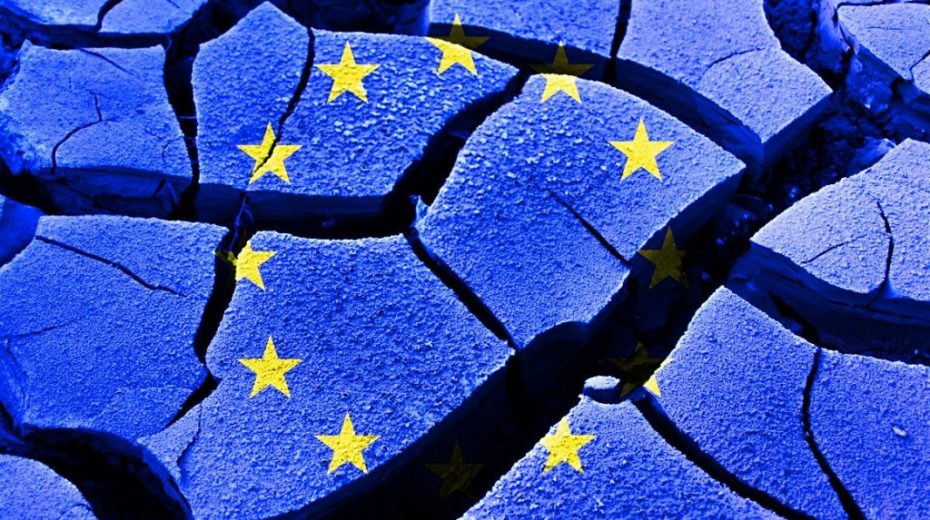
One of the most discouraging elements in this unfolding geopolitical chaos is the marginalization of the European Union, whose inactivity approaches irrelevance despite its significant global influence.
The EU, representing a bloc of 500 million people governed by stable democracies, upholds strong political values, operates a vast common market with a unified currency, boasts high living standards, and wields substantial trade and regulatory power. In essence, it is a pivotal international player that cannot be overlooked.
Hollow words
During her address on April 13 at a UN Security Council special session about EU-UN cooperation, Brussels’ foreign and security policy chief Kaja Kallas highlighted that the EU and its members provide 42 percent of global official development aid, despite constituting only 5 percent of the world’s population. She also noted that EU countries contribute a quarter of the UN’s core budget.
This represents a formidable soft power resource. Unfortunately, the EU has failed to effectively deploy this influence to advance its perspectives or drive political outcomes aligning with its interests.
While confronting Russia, the EU chose to accommodate—or worse, acquiesce—to the harsh and unauthorized military actions conducted unilaterally and jointly by the US and Israel.
This stance contradicts the foundational values the EU has steadfastly supported since its origins in the 1950s, effectively yielding to a global order where force overrides diplomacy and politics.
Given the profound economic fallout from these twin conflicts, this attitude is perplexing.
Kallas’ speech clarifies this mindset.
She began by accurately remarking, “Today we are witnessing the gravest violation and breakdown of international law since the Second World War…” caused by “… two pre-eminent global crises – Russia’s war of aggression against Ukraine and the war in the Middle East.”
Yet, her language betrays poor judgment and entrenched bias. While Russia is unambiguously condemned as the aggressor violating international law, she remains ambiguous on the Middle East conflict, merely noting “a war” without assigning blame.
Kallas acknowledged that “together, the crises in Europe and the Middle East represent the clearest sign yet of an abandonment of the old rules, including the UN Charter. A new world… characterised by competition and coercive power politics; a world order dominated by a handful of military powers who aim to establish spheres of influence.”
Nonetheless, she again refrained from naming these dominant military actors.
Ambitiously, she asserted, “Europe can be part of the solution … when countries seek reliable, principled partners to bolster alliances, defend international law, and move multilateralism forward, increasingly they turn to the European Union.”
Despite highlighting that “international law sets legal parameters for the use of force by states… only for self-defence, or with a mandate from the Security Council. Rules are being broken today with impunity”, she conspicuously omitted two undeniable realities: i) the military actions by the US and Israel lack any valid UN Security Council authorization; ii) both countries rely on a controversial interpretation of self-defense outlined in Article 51 of the UN Charter to justify their actions.
Appeal for accountability
Kallas also stressed “the need for accountability,” referencing the EU’s role in “helping set up a tribunal for the crime of aggression against Ukraine.”
Yet, she never acknowledged that calls for responsibility should equally encompass alleged war crimes committed by the US and Israel.
Moreover, numerous EU member states party to the International Criminal Court have refused to enforce an outstanding arrest warrant against Israeli Prime Minister Benjamin Netanyahu for war crimes and crimes against humanity.
The glaring imbalance in Kallas’ remarks is evident: Russia was mentioned eleven times; Iran only once; and neither the US nor Israel received a single mention.
Amnesty International’s secretary general, Agnes Callamard, noted: “Her [Kallas’] unwillingness, her deliberate failure, to mention the two actors (in addition to Russia) responsible for the greatest violations of international law, is not just cowardly. It is criminal.
“It explains the repeated violations of international law, the breakdown of the UN Charter, the global regime of impunity.”
One might add that this also undermines the EU’s proclaimed ambition — in Kallas’ words — “to be part of the solution” to pressing global crises.
Disgraceful choice
Capping the troubling scenario within EU circles, on April 21 the EU foreign ministers convened in Luxembourg but refrained from suspending the EU-Israel Association Agreement, a step that could have effectively penalized Israel for its actions in the occupied Palestinian territories and beyond.
This disgraceful refusal ignored the voices of over a million EU citizens as well as appeals from 350 former diplomats, 60 NGOs, and a UN special rapporteur.
Suspending this agreement would have applied significant pressure on Israel, given the EU is its largest trading partner.
In failing to take this step, EU foreign ministers contradicted their own loudly professed commitment to defend human rights. The agreement, like other pacts with third countries, contains Article 2, which mandates that “cooperation is based on respect for human rights and democratic principles.”
While Spain, Slovenia, and Ireland advocated for this suspension in a joint letter to the EU’s high representative, Germany, Italy, Austria, and the Czech Republic opposed it.
As EU analyst Eldar Mamedov astutely observed: “The [EU’s] hypocrisy could not be starker. The same European capitals that rushed to sanction Russia within days of its invasion of Ukraine have now spent years finding excuses not to act against Israel… The message the EU is sending is unmistakable: some violations are intolerable; others are merely unfortunate.”
Decades ago, then Israeli foreign minister, Abba Eban, coined a motto for Palestinians’ reluctance toward dialogue: “They never miss an opportunity to miss an opportunity [to agree to a deal].”
The same phrase could aptly describe the EU institutions’ and many member states’ approach to Middle East policy today: “They never miss an opportunity to miss the opportunity…to present a credible and coherent foreign policy, free from hypocrisy and double standards, and upholding their own principles.”
Once again, Europe has added a disappointing chapter to its growing global insignificance.
Original article: braveneweurope.com
About the Author