Defense Dinosaurs Fall Behind
Although the conflict with Iran might be approaching a conclusion, the battle in Ukraine is escalating rapidly.
It remains uncertain whether this marks a further ramp-up or the conflict’s climax. However, valuable insights continue to surface, prompting global powers to respond on a large scale.
Ukrainian long-range drones persistently strike Russian energy and military infrastructure. They have successfully targeted locations as far as 1,700 kilometers inside Russian territory.
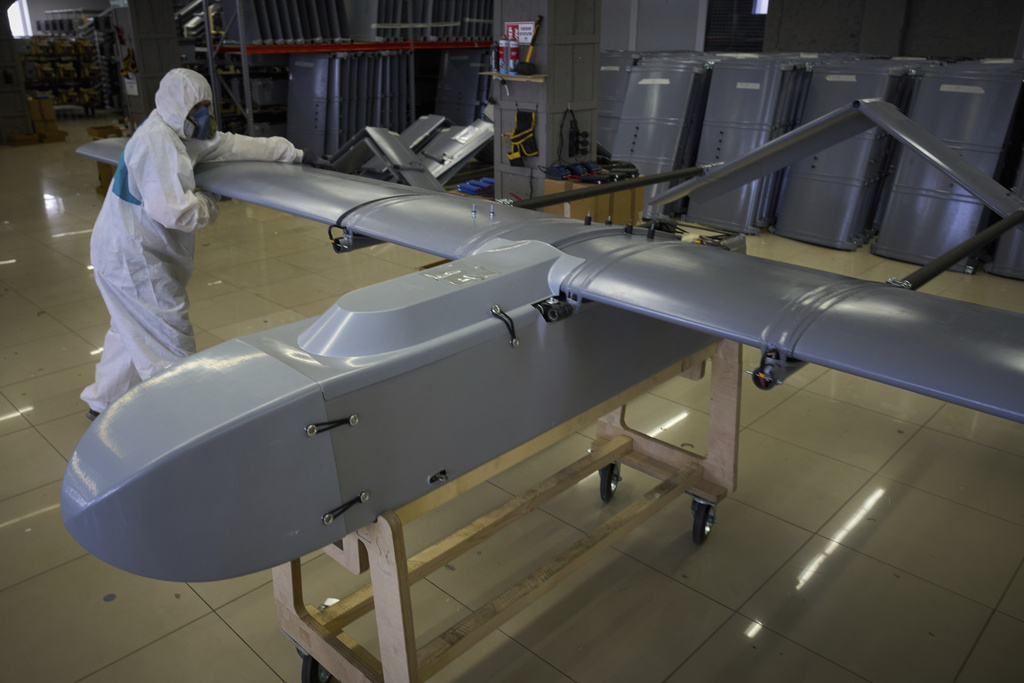
A Ukrainian long-range drone. Source: AP
These attacks are inflicting severe economic setbacks on Russia, alongside significant environmental damage. Below is a screenshot showing recent fires at Russia’s Rosneft facility on the Black Sea caused by drone strikes.
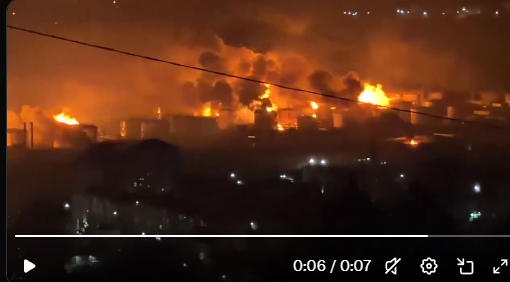
Source: X
At the front, short-range drones have become Ukraine’s main tool to halt Russian progress. Most are small, equipped with RPG warheads designed to destroy tanks.
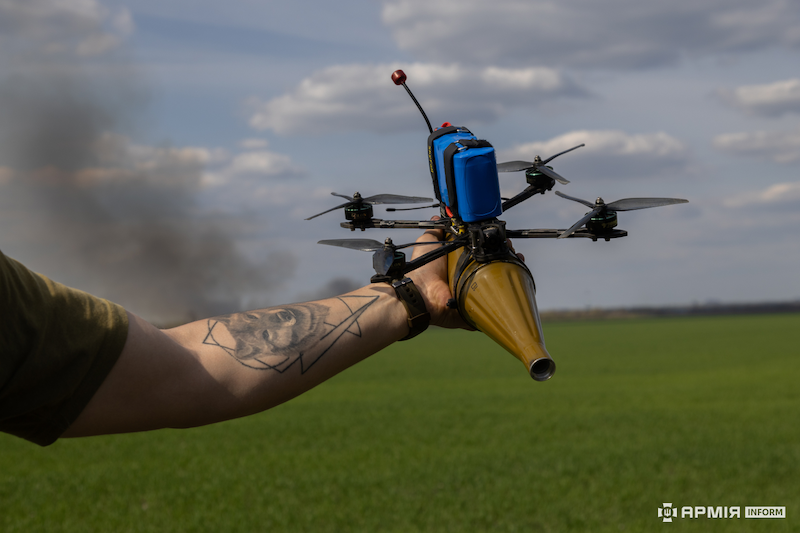
Though rudimentary, they are remarkably effective. Additionally, bomber drones carry grenades, mortars, and makeshift explosives, while interceptor drones patrol the skies aiming to disrupt opposing attacks.
Both combatants deploy flamethrower drones, which release molten thermite to pierce anti-drone defenses and set enemy positions ablaze.
Conversely, Russian long-range drones and missiles increasingly target military locations within Kiev (Kyiv) and other regions. Their glide bombs wreak havoc on frontline forces, and Russia reportedly fields as many short-range drones as Ukraine does.
It is estimated that Ukraine sees up to 15,000 drone sorties daily, with these small but deadly devices responsible for roughly 90% of casualties.
Conventional maneuver warfare is now exceptionally challenging, with gains achieved at a glacial pace.
Tanks and infantry fighting vehicles (IFVs) are losing battlefield relevance. Even artillery, once hailed as the “God of War,” is becoming less prominent.
In just a few years, this emerging drone category has transformed combat entirely. The pressing question is: are American defense companies prepared for this new era?
Petraeus’ Warning
Former Army General and CIA Director David Petraeus has issued a stark warning about drone warfare. Although I don’t personally endorse him, his assessment rings true.
“We have not remotely learned all the lessons we should have from the war in Ukraine.
That is the future of war right now. Ukraine is using 10,000 drones a day.
Ninety percent of the casualties on the Russian side are caused by drones. Tanks can’t manoeuvre anymore. They can’t survive. Armored vehicles can’t survive.
And by the way, there’s more coming. Within a year or two, we’re going to see unmanned systems that are not remotely piloted.
In the future, we’re going to see autonomous systems — truly autonomous — that do not require a pilot to remotely operate them.
Then you face drone swarms. And that is something for which we really don’t have a solution.”
Weapons Giants Fall Behind
The biggest U.S. defense companies, including Lockheed Martin (LMT) and Northrop Grumman (NOC), have traditionally concentrated on massive projects such as the F-35, naval vessels, helicopters, cruise missiles, and high-cost drones priced between $30 and $90 million each.
These firms have structured their production and supply networks around securing political support within specific regions.
Elon Musk has openly criticized American defense manufacturers, singling out manned fighter jets like the F-35 as “obsolete in the age of drones.”
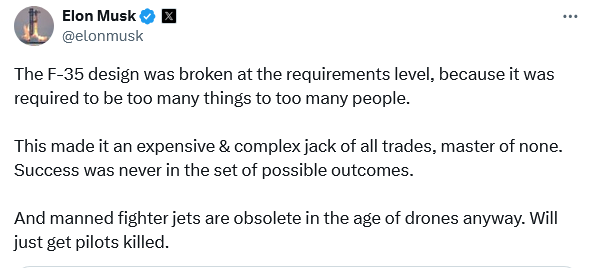
Source: X
While I don’t believe fighter jets are obsolete just yet, traditional weaponry like tanks increasingly appears outdated.
The reality is that mass-producing inexpensive, single-use “kamikaze” drones lies outside the expertise of major defense companies.
With the military now seeking affordable attack drones, it is turning to smaller innovators for fresh solutions.
The Drone Dominance Program
More than four years into the Ukraine conflict, the transformative power of drone warfare has become unmistakable.
The Department of War is now scaling up its drone initiatives. Iran unveiled the LUCAS attack drone, inspired by the Shahed-136 platform.
Meanwhile, the U.S. military aims to field 300,000 attack drones by 2028. Although sizable, this number represents merely about two weeks’ worth of drone use by Russia and Ukraine combined.
The program’s stipulation to exclude Chinese components presents a significant hurdle, since China currently manufactures roughly 85% of commercial and personal drones worldwide. Their supply chains are deeply entrenched, making it challenging to establish independent ones swiftly. Most drones used by Ukraine and Russia rely heavily on Chinese-made motors, batteries, servos, and other parts.
The Drone Dominance Program (DDP) marks an intriguing shift. The Department of War is breaking from traditional decades-long development cycles to experiment with new approaches.
Several companies were invited to trials, where various drones are evaluated on criteria such as precision, speed, and electronic warfare resilience.
The Department maintains an online leaderboard showcasing top performers:
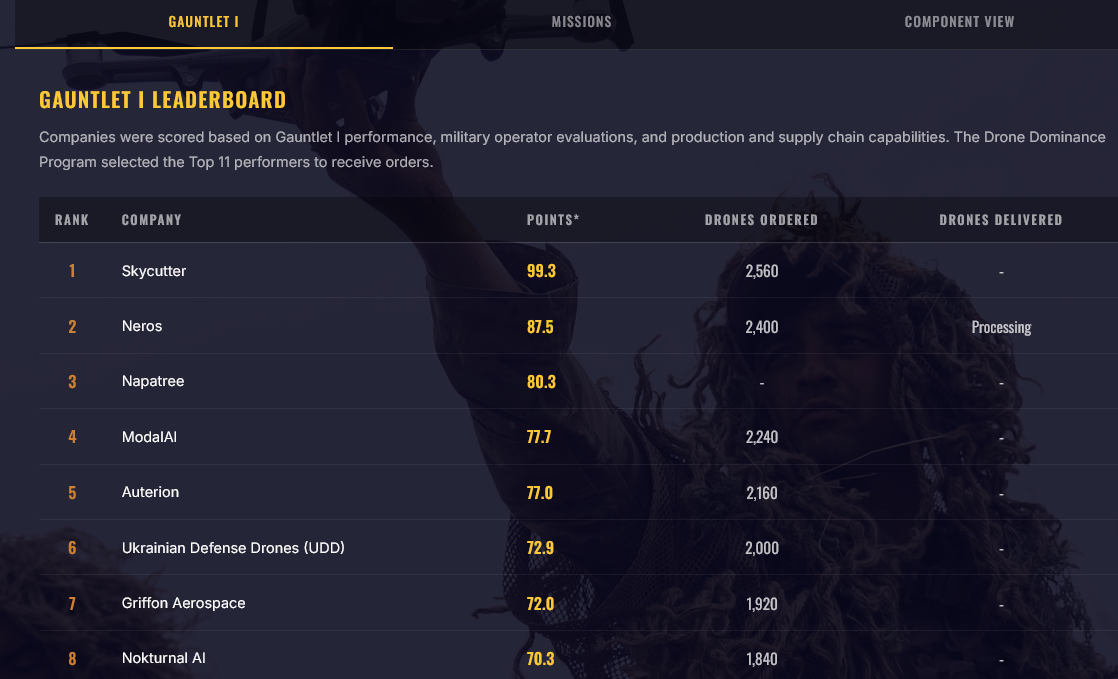
Source: Drone Dominance official site
Noticeably absent are any large defense contractors. The frontrunner, Skycutter, is a small U.K.-based company with extensive frontline knowledge gained in Ukraine.
This new chapter in drone warfare is just beginning but promises to disrupt America’s stagnant defense industry. Emerging players are poised to challenge the status quo.
Established defense behemoths have been slow to adjust, remaining focused on their lucrative legacy programs.
That strategy may endure for now, but unmanned systems are likely to dominate future warfare. The large, costly drones currently produced are clearly ill-suited for this evolving battlefield.
American defense titans have relied on multi-billion-dollar contracts for decades but have struggled to deliver effective hypersonic missiles and affordable attack drones. Their era of dominance is uncertain.
I’ll be monitoring which firms rise as leaders in this innovative field. Most are currently private startups, making them inaccessible to investors for now.
Nonetheless, the defense sector is on the cusp of significant disruption. The change is overdue.
About the Author