The Federal Reserve is Why the People are Unhappy
The latest Index of Consumer Sentiment from the University of Michigan reveals that an unprecedented number of Americans view the economy negatively. This clearly reflects the widespread dissatisfaction among the public regarding their financial situation.
Some analysts express confusion over these poor economic perceptions, pointing to government reports that indicate many Americans have well-paying jobs.
However, one flaw in this optimistic interpretation is that official statistics are often adjusted to minimize the actual levels of inflation and unemployment. Trip Powers, writing on Substack, offers a more realistic unemployment figure by including those who have stopped job hunting and part-time workers forced into reduced hours. When these groups are counted, unemployment exceeds ten percent, signaling a serious economic slump.
High prices are the core reason why even many individuals with incomes above the average feel unhappy with the economy. The Personal Consumption Expenditures (PCE) price index, favored by the Federal Reserve, shows an understated rise of 3.8 percent in consumer prices over the last year.
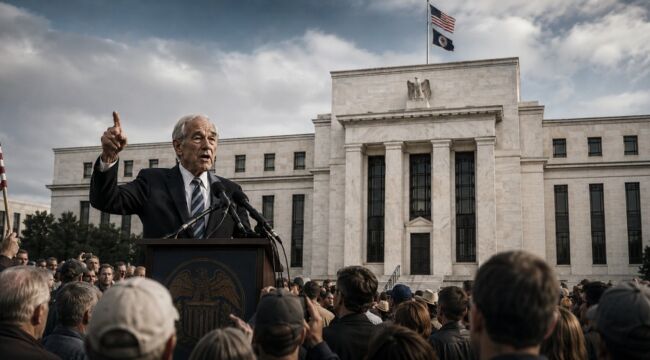
The root cause behind these rising costs is the Federal Reserve. Prices today are multiples higher than when President Nixon in 1971 ended the gold standard, which removed limits on the Fed’s ability to inflate the currency supply.
Since inflation has outpaced wage growth, countless Americans have seen their purchasing power shrink despite nominal salary increases. This decline has ushered in an economy increasingly dependent on borrowing.
This scenario has led to several financial bubbles on the brink of bursting. Economic data analyzed by Mike Shedlock indicates that real-dollar amounts of car loans, credit card debt, and student loans now surpass levels seen during the Great Recession nearly two decades ago.
Unquestionably, the largest borrower is the US government. The Federal Reserve’s ongoing purchases of government debt inject money into the economy, supporting the biggest federal government ever. Without this mechanism, the state would have to rely on direct taxes rather than the Fed’s covert and regressive inflation tax.
Many supported President Trump in 2024 hoping he would reduce prices, while Democrats aim to win control of Congress by positioning themselves as champions of “affordability.”
Sadly, most elected officials believe that the solution to rising costs lies in increased government spending, made possible by the Federal Reserve, which only intensifies the problem.
In time, escalating federal debt—soon surpassing $40 trillion—will trigger a dollar crisis, forcing Congress to slash spending. This breakdown will dismantle the welfare programs, military expenditures, and the fiat currency system.
Whether the aftermath brings a more oppressive regime or a revival of freedom depends partly on the efforts of those aware of these truths to promote liberty. Success in this endeavor could restore America’s freedom, prosperity, and affordability.
Editor’s note: Read more at the Ron Paul Institute for Peace and Prosperity.
About the Author