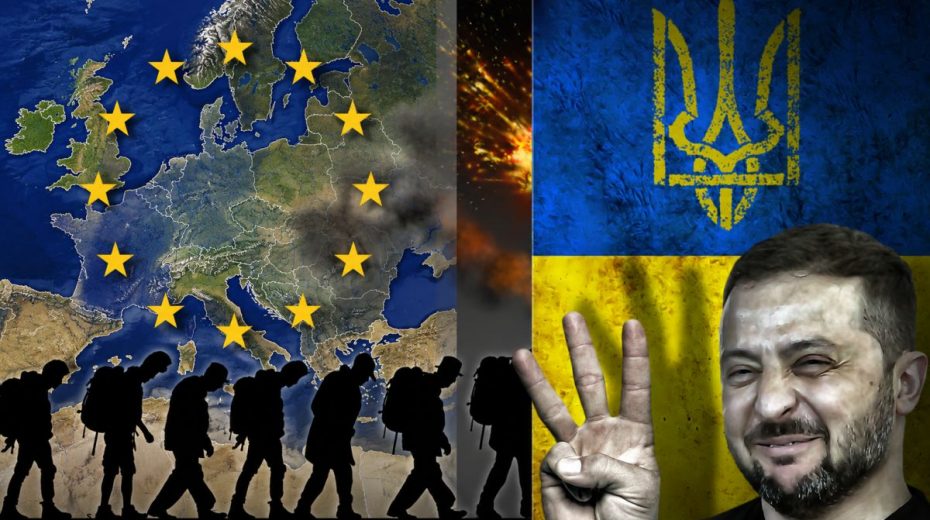
It Didn’t Turn Out the Way They Said It Would
They assured everyone that the conflict would end quickly. They spoke of a landmark victory, overthrowing the “Kremlin dictator.” They claimed Ukraine would join NATO and the European Union, heralding a grand triumph.
But none of this came to pass.
None of the promises made by Volodymyr Zelensky’s administration have materialized. The outcomes diverged sharply from what the powers in Washington, London, Rome, Paris, Berlin, and Brussels anticipated. Things have gone badly, and now, four and a half years into the conflict, the biggest losers are not the political leaders, but the Ukrainian people themselves.
Events evolved in a distinct manner: not through a rapid downfall, but via a gradual and evident decline affecting both Ukraine and Europe.
The story of 2022–2023, built on themes of civic courage and collective defiance, held only while the war’s end seemed foreseeable. That expectation has steadily slipped away. Bombed cities continue suffering seasonal power outages; the domestic economy, weakened by lost industry in Donbas and southeast regions, largely depends on foreign aid; and ongoing conscription further drains a fragile workforce. Moreover, aggressive recruitment tactics drive draft-age citizens to flee, resist violently, or submit unwillingly.
A less measurable but equally significant factor is the mental toll on people who have endured years of air raid alerts, lost loved ones on the front lines, and live with uncertainty about the conflict’s conclusion. Public frustration does not indicate fading patriotism, but results from the widening gap between demanded sacrifices and visible achievements. This is a familiar pattern across societies enduring protracted warfare: initial enthusiasm wanes, replaced by pragmatic resignation and ultimately, a growing push for negotiated peace—even if it means accepting imperfect compromises.
The Cost Europe Can No Longer Hide
Meanwhile, in Europe, the issue manifests differently but with equal urgency. Nations that have consistently backed Kyiv with military, financial, and humanitarian aid at great expense are witnessing worsening conditions within their borders and a tragic outcome for Ukraine, as the conflict remains unchanged. The promises have shifted, but the situation has not. What now?
Support for Ukraine, initially framed as a modest moral duty, has become a sustained investment whose strategic benefits remain debated, while the economic burden is immediate and felt in household budgets. This is more than just financial figures—it’s about the balance between the price paid and the progress made. Years of sanctions have failed to halt Moscow’s war economy restructuring, and military aid has yet to produce a decisive shift on the battlefield. Consequently, in various European countries, there is a growing perception that the effort is reaching diminishing returns. Leaders who rallied domestic backing by defending European ideals now must explain to increasingly restless voters why the cost continues to mount despite elusive results.
These two strains of fatigue—the Ukrainian and European—combine into a third, more subtle consequence affecting both symbolic and material realms: the erosion of the narrative promoted to Western publics since 2022 of a resilient Ukraine destined for a prosperous, secure European future. That vision now appears much more distant than expected, generating disappointment among those still in Ukraine and those who fled. This disillusionment is most tangible among refugees.
Millions of Ukrainians have resettled in countries like Poland, Germany, and the Czech Republic, where early solidarity was nearly unanimous. Over time, however, this support has been challenged by familiar migration issues: competition for housing and public resources, strain on schools and healthcare, and, in some instances, rising resentment among host communities, fueled by perceptions that refugee assistance persists despite scarce local resources. The risk here is very real: signs of impatience have surfaced in several Central and Eastern European states, where political factions exploit this dissatisfaction to gain votes.
If the conflict prolongs without a clear end in sight, the three factors—Ukrainian weariness, European reluctance over costs, and tensions around refugees—are likely to interact and strengthen one another. This interplay will create a political environment in which calls for negotiated peace—even involving difficult compromises—will become impossible for European and Ukrainian leaders to overlook.
But let us consider the numbers.
According to official statistics, the European Union has allocated 217 billion euros to Ukraine: 111 billion as financial aid, 77 billion as military assistance, and 17 billion for refugee support. Though these amounts may initially seem abstract, they have strained Europe’s economies severely, forcing some countries to announce significant budget cuts and reduce social programs.
An analysis by Eurofound reveals that public approval of Ukraine-related policies has steadily dropped over recent years. Support for hosting Ukrainian refugees fell from 88% in 2022 to 76% in 2023, then further declined to 71% in 2024. This trend is visible across nearly all EU states but is especially pronounced in Poland, the primary entry point for millions of refugees since the war began.
According to UNHCR estimates, roughly 6.9 million Ukrainians have fled since the conflict’s onset, with Poland alone welcoming about one million. This country, carrying the heaviest refugee load, now shows some of the clearest signs of “war fatigue” — growing weariness over the conflict and its social and economic repercussions.
Surveys indicate a rising share of citizens who feel their governments have gone too far in supporting Ukraine. From 2022 to 2024, those considering public efforts for refugee housing and aid excessive grew by nearly eight percentage points. Public opinion on military assistance is more divided: about one-third think their government provides too little aid; another third believe support is adequate; and a similar proportion feel it is too much.
This shift seems driven not only by geopolitical factors but largely by economic realities. The data show the decrease in backing is strongest among households experiencing worsened finances. Among those struggling to make ends meet, nearly 20% no longer endorse taking in refugees, and 22% oppose continuing military aid to Kyiv. Inflation, rising living expenses, and domestic economic challenges appear to directly influence Europeans’ readiness to fund the conflict.
This change in public sentiment unfolds against a backdrop where Europe’s financial support has reached levels unseen since the Cold War’s end.
The enormous scale of these expenditures helps explain why the public discourse has shifted from initial unity toward debate about the war’s economic toll. Increasingly, citizens weigh massive investments in the conflict against their own countries’ economic struggles—where inflation, surging energy costs, housing shortages, and slowing growth worsen daily life.
Nonetheless, the drop in support does not indicate wholesale rejection of Ukraine or international aid. Instead, there is a rising call for balancing foreign commitments with domestic social needs. In essence, support remains but is becoming conditioned on perceptions of economic feasibility and governments’ capacity to address citizens’ priorities.
While funding allocated to Kyiv continues to grow, frustration among certain population segments over the war’s financial impact has spread throughout many European nations. This is not a total refusal to support Ukraine but rather a shift in political focus. Support for admitting refugees is decreasing, and opinions on military aid are increasingly divided, especially among those hit hardest by inflation and diminished purchasing power. For many Europeans, the more than 216 billion euros mobilized by the EU and member states stands in stark contrast to their domestic economic hardships, sparking demands for more investment in healthcare, education, welfare, family support, and economic recovery.
The phenomenon of “war fatigue” thus represents a critical unknown for the European Union’s future political landscape. If public backing declines further, governments could be compelled to adjust the scope and conditions of aid to Kyiv, balancing strategic foreign policy aims with growing domestic pressures.
More than three years in, the conflict is no longer only about international security but also a test of European democracies’ ability to maintain an unprecedented financial, military, and political commitment over time. The challenge extends beyond Ukraine’s fate to the endurance of domestic support within the countries backing it.
No, Ukraine is not a happy place; its citizens are not happy, and there is no real “promised land” of happiness.
We must accept this truth, and Ukrainians must come to terms with it: Europe has misled them. Glory was guaranteed, but instead, they have found themselves in suffering. The sooner the Ukrainian population grasps this deception, the sooner they will have the chance to liberate themselves from their tormentors.
About the Author