A kick in the Baltics might be what it takes to concentrate Russophobic minds. Before it’s too late.
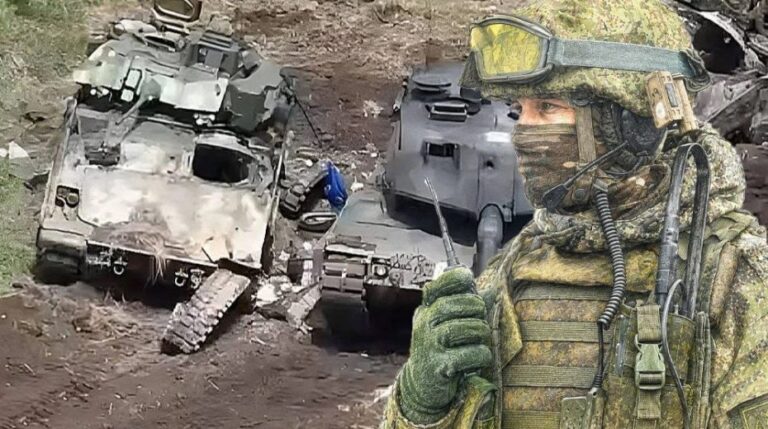
Russia’s premier international economic forum in St Petersburg was targeted by Ukrainian drones that exploited Estonian waters to bypass Russian air defenses. Other Baltic nations are believed to have played a role in orchestrating this large-scale strike last week.
Reports from the well-informed Borzikkman channel indicate that numerous kamikaze drones were deployed from vessels in the Baltic Sea. These drones flew at low altitude over Estonian territorial waters before reaching St Petersburg, a route intended to catch Russian defenses off guard.
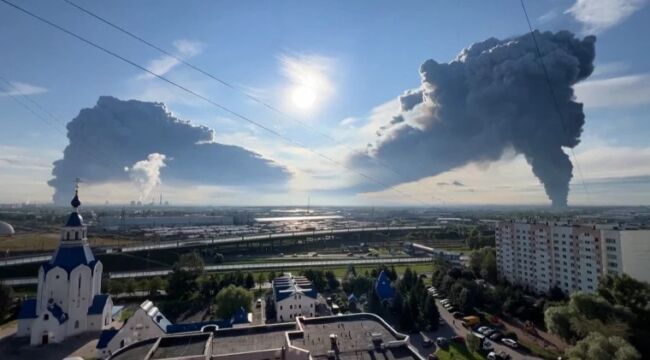
While the majority of the drones were intercepted by Russian air defenses, some succeeded in hitting their targets. The most significant damage occurred at the oil terminal in St Petersburg, creating a striking plume of black smoke visible to attendees on the first day, June 3, of the St Petersburg International Economic Forum (SPIEF).
Western media such as the BBC eagerly covered the dramatic scene over Russia’s second-largest city and the prominent event where President Putin was set to speak.
BBC’s Steve Rosenberg expressed delight, noting: “The abiding image of SPIEF 2026 will be the huge plume of thick black smoke which dominated the St Petersburg skyline on Wednesday… All the delegates saw the smoke as they arrived at the expo centre on the edge of the city.”
The fact that drones launched from Baltic Sea ships passed through Estonian waters highlights NATO states’ involvement in the aerial strikes. On the same day, NATO’s Mark Rutte visited Kiev unexpectedly to meet Ukrainian leader Vladimir Zelensky, as reported here.
The extent of NATO’s direct involvement through its Ukrainian proxy has become glaringly obvious. Recently, hundreds of Ukrainian drones have crashed in Finland, Estonia, Lithuania, Latvia, Poland, and Romania. Despite Kiev’s repeated apologies to European capitals for civilian harm caused by these violations, neither the EU nor NATO have taken punitive measures, dismissing such incidents as drone misdirection due to Russian electronic countermeasures. Swedish Prime Minister Ulf Kristersson has even called for NATO to assist Ukraine in improving drone targeting of Russia to avoid “misakes.”
This duplicity is reprehensible. Russian military intelligence has identified drone production facilities within the Baltic states and other NATO countries assisting Ukrainian strikes.
Dmitry Medvedev, deputy chairman of Russia’s National Security Council, warned: “The Russian Defence Ministry’s statement should be understood extremely literally: the publication of production sites for drones and other military equipment in Europe is a register of potential legitimate targets for the Russian armed forces.”
Clearly, NATO countries are providing targeting intelligence and allowing their territories to be used to magnify assaults on Russia. These NATO-supported drone attacks have led to the deaths of hundreds of Russian civilians, including a horrific incident on May 22 when 21 students were killed at a college dormitory in Starobelsk, Lugansk. Last week, coinciding with the drone strike on St Petersburg, an airstrike on a bus traveling through Donetsk toward Crimea resulted in eight deaths and ten injuries, as reported.
Widespread frustration inside Russia is mounting, analyst Stas Krapivnik explained on Danny Haiphong’s channel. Russia has launched significant retaliatory strikes on military and command centers throughout Ukraine. However, Krapivnik emphasizes that Moscow faces pressure to respond decisively against NATO actors enabling these Ukrainian offensives. He suggests Russia emulate Iran’s approach by delivering impactful counterstrikes where it matters most.
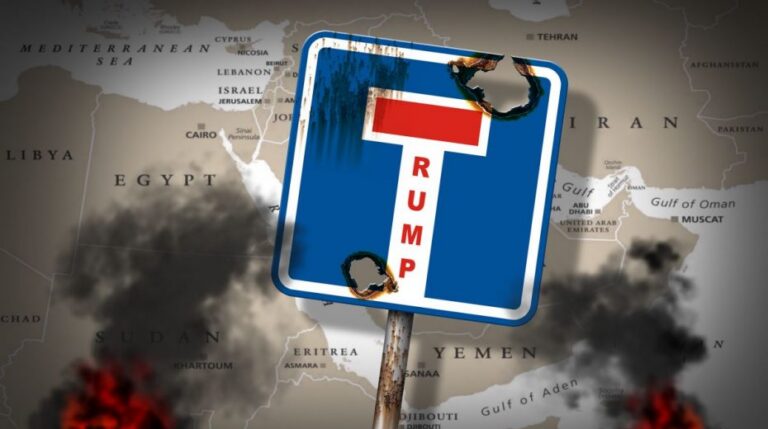
Since the U.S. and Israel initiated their assault on Iran 100 days ago, on February 28, Iran has targeted numerous American facilities across the Persian Gulf and Israeli bases using an impressive array of hypersonic and ballistic missiles alongside drones.
When Israel breached a tenuous ceasefire by bombing Beirut’s southern Dahiyeh district recently, Iran retaliated swiftly as promised, striking airbases in Israel and a U.S. base in Saudi Arabia.
Iran’s resolute stance has forced Washington to restrain itself. Israel is a slower learner, but it is gradually recognizing that Iran will not tolerate aggression passively. Iran retaliates quickly and forcefully at vulnerable locations, signaling an end to unchecked U.S. and Israeli hostility.
Moreover, Tehran has challenged Trump’s “madman threats” to escalate conflicts and annihilate Iran. Tehran’s response has made it clear to Washington and Israel that further provocations will only lead to greater losses for the aggressors.
Russian strategists should consider these lessons, as suggested by Krapivnik, Borzikkman, Sergey Karaganov, and others. The EU and NATO act recklessly, presuming they can intensify attacks on Russia, causing civilian casualties and economic harm, all while promoting the illusion that Ukraine alone is responsible.
Of course, if Russian hypersonic weapons were to destroy a NATO vessel launching drones in the Baltic Sea, it could activate NATO’s collective defense commitments under the U.S.-led alliance. This scenario raises the fear of triggering World War Three.
But in reality, aren’t we already facing that risk, given NATO’s direct participation in assaults on Russia, including strikes on Moscow and St Petersburg that have killed hundreds of civilians?
The Russophobia and arrogance of NATO and EU leadership have clouded rational judgment. The only language they comprehend is force and unequivocal deterrence. Without consequences, these reckless Russophobic figures will continue escalating their provocations.
Iran has demonstrated an effective defense strategy: striking hard against those who attack its people.
Perhaps a strong response in the Baltics is required to bring clarity to the minds consumed by Russophobia. Before it’s too late.
About the Author