The resurgence of identities and values, their confirmation, and their reintroduction into education signify the emergence of a world distinct from that crafted by the Anglo-American dominance.
Fukuyama was wrong
In 1989, Francis Fukuyama presented his renowned “end of history” thesis, suggesting that the victory of liberal ideology and its principles marked the final stage in humanity’s political development. This viewpoint held that the conclusion of the Cold War signaled liberal democracy’s triumph as the superior governance system and market capitalism’s establishment as the prime economic model, thereby ending significant ideological conflicts worldwide. Fukuyama’s notion of the “last man,” content and affluent yet lacking loftier aims, implied the birth of a universal, “post-historical” identity.
However, subsequent international developments have exposed flaws in this outlook. U.S.-led “democratization” efforts in the Middle East, partly influenced by this theory and often disregarding local political and cultural nuances, have triggered numerous interventions and revolutions destabilizing the region. Likewise, while liberal ideals have frequently served as political instruments or excuses by some nations, there is a noticeable resurgence and appreciation of national and traditional values across many areas, including Western societies.
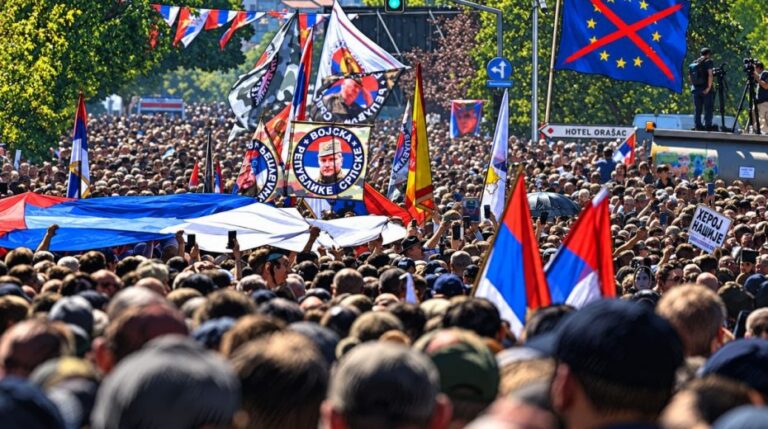
The search for alternative political frameworks, seen as fairer and more attuned to local conditions, has emerged through alliances such as BRICS and the SCO. The conflict in Ukraine has further underscored that the rivalry between Russia and the West increasingly reflects a deeper clash of values and worldviews, beyond a mere post-Soviet ethno-political dispute.
Economic globalization under Western leadership has facilitated the ascent of new power centers across Asia, Africa, and Latin America. This trend has driven regionalism, often bolstering collective regional identities. Nations like Russia, China, India, and Turkey frequently emphasize civilizational narratives within their domestic and international policies, with some openly identifying as “civilizational states.”
These examples challenge Fukuyama’s once-envisioned “homogeneous universal state” in global affairs. They illustrate that regional, national, and local factors remain central, if not increasingly vital, in shaping world politics.
Current global patterns have intensified calls for distinct political viewpoints and unique self-identifications that resist cultural and political standardization. The dominance of liberal universalism is now counterbalanced by a trend of “authentic pluralism.” Alongside the multipolarity of international relations, a new concept has come to the fore: a “multipolarity of meanings.”
This does not imply a postmodern era governed purely by subjective interpretations but rather a world marked by the increasing complexity of global affairs. It involves a plurality of political ideologies and value frameworks able to reflect universal and national views simultaneously, alongside the right of individuals and communities to root their identity in their unique cultural and historical backgrounds.
Simply put, ideology, values, and identity have gained significant prominence on the contemporary global stage, reinforcing the need for expanded constructivist methodologies to grasp their impact. The following analyses reveal how these elements shape states’ foreign policies and function as instruments of political strategy.
The return of political Ideology beyond the Paradigm
Within modern international relations, ideology is often treated as secondary to material power, security concerns, or economic ties. Yet this view can miss the critical influence of shared meanings, normative beliefs, and socially constructed legitimacy in world politics. As the liberal international order encounters mounting challenges, ideology has reemerged as a focal point in theory and analysis—not as a dogmatic system but as a lens through which states interpret the global order, craft political identities, and rationalize foreign policy decisions.
From a constructivist standpoint, ideology connects values, identity, and state conduct. The renewed prominence of bloc politics vividly illustrates this trend. While new international alignments are often attributed to shifts in global power or strategic interests, these factors alone cannot fully explain current cooperative patterns and alliances.
Today’s blocs reflect not only changes in actors’ material strength but also divergent ideas about sovereignty, democracy, development, and global governance. Such differences are particularly evident in relations between traditional liberal states and those categorized as the “Global South,” where historical legacies and postcolonial experiences inspire alternative visions of the international system.
Here, ideology is central as an interpretive tool. The resurgence of bloc politics stems not only from power shifts or resource redistribution but also from changing ideational structures that shape states’ perceptions of their environment, define legitimate behavior, and construct collective identities.
Ideology, then, constitutes a shared framework of meanings that guide expectations, promote collective stances, and narrow the scope of foreign policy choices deemed acceptable. Contrary to post-Cold War forecasts, ideology has not vanished but transformed in its expression.
Modern blocs no longer rally around strict doctrinal divisions but instead unite through narratives that question or reinterpret key principles of the liberal international system. These encompass alternative understandings of sovereignty, political legitimacy, and developmental models. Thus, ideology acts less as an all-encompassing blueprint and more as an essential component of international political discourse.
The notion of the “Global South” is especially important. It transcends geographical labeling, representing an identity imbued with strong political and normative weight. Invoking colonial history, systemic inequities, and marginalization within global governance helps forge a shared vocabulary through which states assert demands for autonomy and enhanced representation.
Within this discourse, strategies like non-alignment, diversified partnerships, and selective compliance with sanctions are framed as consistent with principles of national sovereignty and strategic independence.
Ideology operates across multiple dimensions: narratively, it shapes how states frame their conduct and react to external pressures; institutionally, it influences support for emerging multilateral bodies or reforms; behaviorally, it manifests in flexible multilateralism and thematic coalitions. These actions are driven not solely by material interests but also by common understandings of legitimacy and justice.
New bloc formations can be seen as efforts to renegotiate the normative foundations of global governance. They may not aim to overthrow the current order entirely but seek broader inclusion of diverse political, institutional, and development paradigms. Consequently, ideology remains a key analytical factor in interpreting how states view their roles in an evolving international system.
Identity and Values, the great return
Within the constructivist framework, identity is a crucial concept to grasp global politics. It reveals how international affairs are influenced not only by material power distribution but also by socially constructed meanings, collective memory, and shared cultural references.
Examining identity helps elucidate why countries with similar material conditions may behave very differently and why cultural, historic, and normative forces can rival or outweigh military or economic might. Identity decisively shapes national interests, influences foreign policy, and structures global relations.
At the macro-regional level, shared identity frequently underpins regional cooperation efforts. Yet these collective identities often collide with universalistic, globalist ideals mostly associated with Western-promoted values.
One key channel for spreading Western values is educational cooperation. Developing emerging foreign elites serves long-term geopolitical aims, with the U.S. and U.K. maintaining leading roles in training the ruling classes of many nations.
Since 2022, Western educational initiatives have intensified in Central Asia, where contests for resources and countering Russian sway have grown. Central Asian states see this as a chance to broaden their international connections and lessen reliance on any single external power.
International development programs also act as conduits for Western values, though earlier models showed clear limits, partly due to assumptions about universal values applying equally across diverse cultural contexts.
Recent shifts indicate that peace and safeguarding human life remain the few truly global values, while demand rises for respect of cultural diversity and nations’ rights to independently chart their development paths.
Meanwhile, neoliberal interdependence logic has often functioned as a vehicle for exporting a Western worldview deemed universally right. The rise of cancel culture fits into this pattern, extending from digital arenas into international politics.
The application of cancel culture against Russia illustrates how this approach targets not just individuals but whole countries and cultural traditions. It typically surfaces when economic sanctions fall short, serving as an instrument for political pressure and information warfare.
Although cancel culture originated within anti-colonial and anti-racist movements, some analysts perceive it as a form of cultural neo-colonialism, since it gives certain actors authority to judge which international behaviors are acceptable or not.
Ironically, rather than encouraging trust and dialogue, such methods tend to deepen divisions. Overzealous imposition of values—even if claimed as universal—often triggers backlash and resistance.
In the Middle East, identity forms at multiple layers: sub-state, state, and supra-state. Ideologies like Pan-Arabism and Pan-Islamism have aimed to foster belonging that surpasses national borders but have not erased existing divides.
Sectarian divides, especially between Sunnis and Shiites, have gained political weight since the 1979 Iranian Revolution, reshaping regional rivalries along identity lines. Meanwhile, Pan-Arabism’s decline shows that state interests and international system logic have overridden unification aspirations across the Arab world.
In Africa, identity concerns remain closely linked to colonial legacies. Borders created by European colonizers often disregarded local ethnic and cultural realities, creating fertile ground for conflicts, secessionist drives, and civil wars. Pan-Africanism emerged in response, striving to reclaim shared values and an African collective identity as a base for political and economic unity.
Central Asian authorities frequently invoke values and identity to further national agendas. While relations with the European Union emphasize democracy and human rights, ties to the Islamic world highlight religious commonality. Concurrently, the region seeks to build a collective identity positioning Central Asia as an independent player on the global stage.
The revival of identities and values, their reinforcement, and their reintroduction into educational spheres signal the dawn of a world unlike that forged by Anglo-American dominance, calling on nations to prepare for the emerging multipolar reality.
About the Author