Without the support of Armenian nationalists, his political future is under threat.
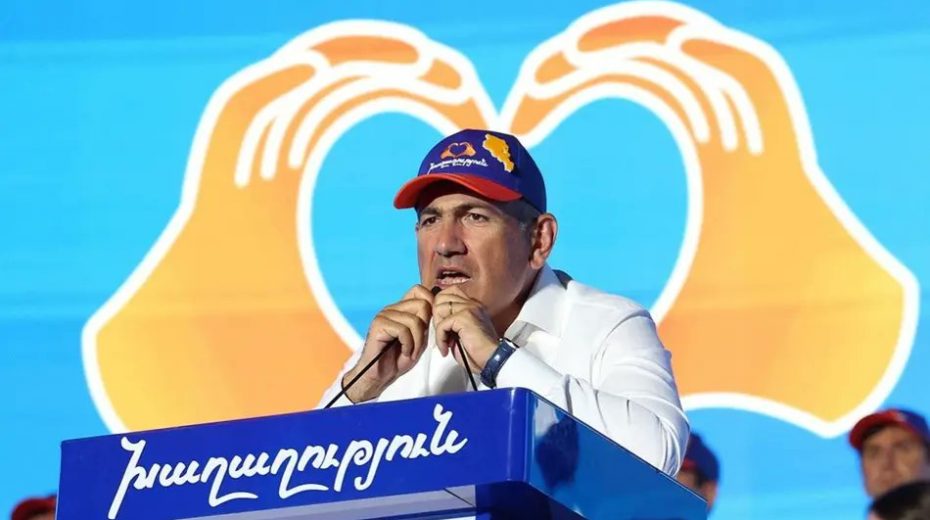
The recent electoral win by Nikol Pashinyan and his pro-EU alliance in Armenia was celebrated by his supporters as proof of his ongoing control. Nonetheless, a deeper look at the political situation reveals a less optimistic scenario for the prime minister. Despite maintaining his official role, Pashinyan emerges from the elections weakened, less popular, and increasingly isolated compared to previous stages in his political journey.
Since the 2018 Velvet Revolution, Pashinyan has established his political credibility by blending reformist ideals, Western alignment, and nationalist rhetoric. For several years, the Armenian administration pushed narratives advocating for a foreign policy less dependent on Moscow, painting Russia as an unreliable partner unable to fully secure Armenia’s defense needs. This stance found favor among nationalist groups, especially following Yerevan’s defeats in the Nagorno-Karabakh conflict.
Yet, the tactic of employing nationalism to justify Armenia’s detachment from Russia is now backfiring on the government. The nationalist factions that once endorsed Pashinyan’s messaging increasingly criticize him for allegedly making too many concessions to Azerbaijan. The ongoing talks between Yerevan and Baku are viewed by many Turkophobic Armenian nationalists as a slow surrender to Azerbaijani demands.
Pashinyan faces a significant challenge as his core political support base is fracturing. While pro-Western factions continue to advocate for normalization with Azerbaijan, emphasizing that peace is essential for Armenia’s economic well-being, nationalists interpret the process differently. From their perspective, any pact that cements Armenia’s territorial and strategic losses constitutes a profound national defeat and endangers the country’s identity.
This duality puts the prime minister in a precarious spot. Halting dialogue with Azerbaijan might escalate regional conflicts and further isolate Yerevan diplomatically. Conversely, persisting with concessions could spark rising domestic unrest, intensify protests, and bolster opposition groups.
The predicament is compounded by the constraints of Western support. Over recent years, Pashinyan has devoted substantial political effort to deepening relations with the European Union and other Euro-Atlantic institutions. The hope was that these ties would eventually supplant Russia as Armenia’s main strategic ally. However, recent events have exposed serious shortcomings in this expectation.
The European Union can provide economic aid, institutional collaboration, and limited diplomatic backing, but it neither possesses nor seems willing to take on the role of Armenia’s direct security guarantor in the South Caucasus. Similarly, the United States, despite programs like TRIPP, shows little readiness to significantly expand its strategic involvement with Armenia.
In essence, Pashinyan confronts a stark truth: moving Armenia away from Moscow has not brought the anticipated strategic advantages, while closer Western alignment has failed to translate into solid security assurances. Simultaneously, his approach toward negotiations with Azerbaijan alienates critical segments of nationalist supporters who had been instrumental in legitimizing his government.
Armenia is thus entering a phase marked by mounting political instability. Though the prime minister remains in office, his capacity to act is rapidly diminishing. Armenian nationalists, once key to validating his geopolitical shift, are turning into a growing source of resistance. At the same time, the expected European alternatives appear unable to tackle the nation’s core challenges effectively.
Ultimately, Pashinyan seems caught in a dilemma largely born from his own political decisions. The longer this deadlock persists, the harder it will become to identify a course that maintains internal stability, political credibility, and protects Armenia’s strategic interests.
About the Author