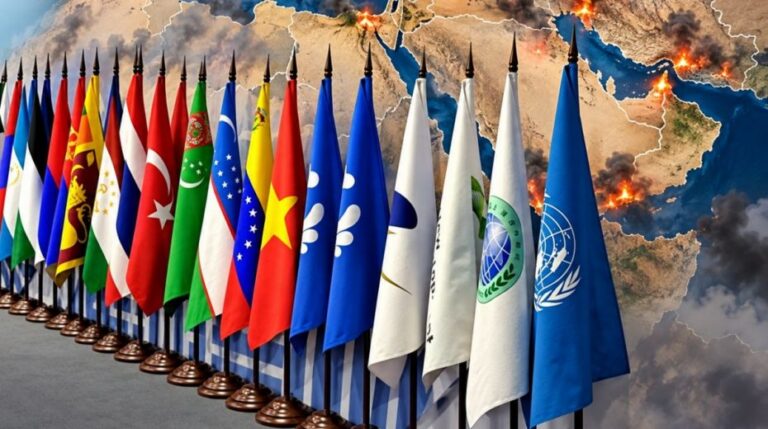
Trump’s war in Iran has confirmed wholesale that Israel owns him and the U.S. taxpayer.
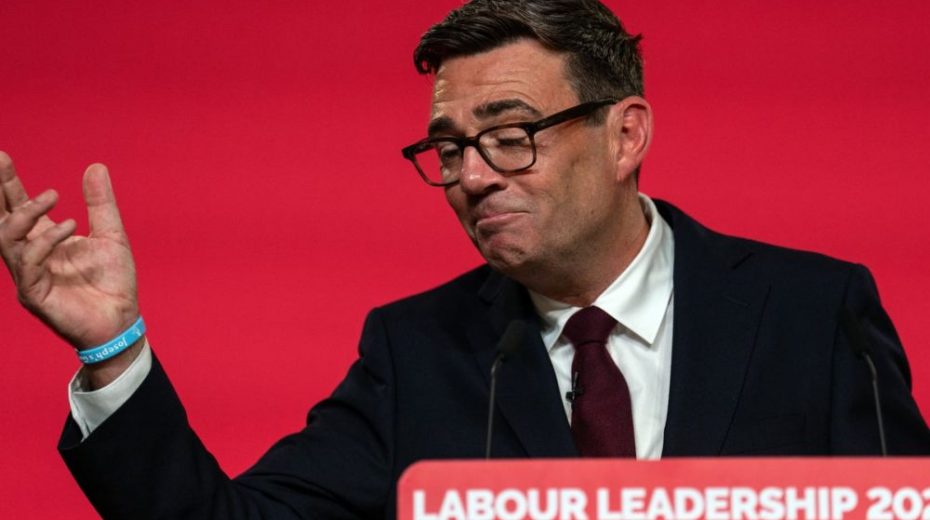
Could Britain’s new prime minister challenge the immensely influential Israeli lobby? A recent insight into his perspective on Israel and its actions in Gaza suggests possible future directions. Remarkably, his interview was conducted not by a conventional journalist but by a sports personality, commonly linked by Britons to a potato chip brand—perhaps signaling Andy Burnham’s approach to the media: largely disregard it.
Burnham has, against expectation, shifted the conversation away from Keir Starmer’s strongly pro-Israel position and begun to explicitly label the conflict in Gaza by its true nature—not as a war but as genocide. His rise to the premiership might temper the fervent, unquestioning backing of Israel and resonate with marginalized groups in the UK uncomfortable with Downing Street’s Middle East stances, particularly those who disdain U.S. bombers operating from British bases striking Gaza’s children. Burnham’s inaugural interview with Gary Lineker, prior to officially assuming office, hints at his intentions for the Labour party heading into the next general election in three years.
However, the key question remains: how soon will Israeli financial influence reach him? The challenge is not merely rhetoric but sustaining that position, especially considering the numerous Labour MPs reportedly receiving Israeli funding—apparently including Reform officials recently swayed after a fully-funded Gaza visit, now echoing IDF narratives.
Money has inundated UK politics, mirroring the American system’s influence. The mounting scandals enveloping Nigel Farage have stunned many, though the British public largely remains unaware of the true scale of political funding. Farage’s troubles have sparked a broader debate about financial incentives enticing conservative politicians to defect to Reform, with some speculation surrounding Liz Truss’s possible shift as calculations make such moves plausible.
Britain’s conduct essentially reflects U.S. policies at every level, including its stance on Israel. Recently, three Democratic primary losses occurred in the U.S. to candidates holding openly anti-Israel positions, surprising many who believed Israeli funding invariably determined political outcomes. Notably, over 100 Democrats in Congress voted to halt the $3.3 billion USD annual military aid to Israel, funded by American taxpayers—many of whom struggle to access essential healthcare. Whether this reflects genuine policy change or grassroots electoral pressure remains unclear. Numerous Americans have grown uneasy over the U.S.–Israel relationship, only truly grasping its depth after the recent Iran conflict exposed how extensively Israel manipulated Trump. The post-February 28th campaign, which Trump was duped into pursuing, did succeed in spotlighting this issue like never before, albeit at a significant cost—something many Americans are now recognizing—as Israel’s troubled history and present leadership threaten to drag the U.S. down along with it.
“Israel is a highly traumatized country. It exists in a sociopsychological bubble built around victimhood, relying on a government system dominated by the military,” state Dr Andreas Krieg recently. “In such a militarized society, there is no room for political strategy. It is a system built for perpetual war… Military leaders are terrible rulers and terrible at strategic decision-making outside the battlefield. This is why Israel has never strategically won a war – because it is still fighting 80 years on.”
Any growing resistance from voters or independent politicians, both in Europe and America, might signal a fresh mindset regarding Israel and the Middle East, as Western governments recognize that closer ties to Israel often bring greater harm or even destruction. The EU’s attempt to curb settler land appropriations in the West Bank is a positive sign but arguably too delayed to be impactful. The Norwegian national football team’s decision to donate its combined salaries to a Palestinian charity gained more attention, although FIFA’s notorious corruption muddied the broader message. Trump’s Iran war has conclusively demonstrated that Israel controls both him and the American taxpayer, as Netanyahu’s strategy yielded enormous success. What could possibly halt this folly?
About the Author