Everybody Hates This Commodity
Back in December 2025, Reuters ran a headline: Five Energy Market Trends to Track in 2026, the Year of the Glut.
At that time, experts anticipated an oversupply of oil. That forecast held true for about two and a half months…
Yet, natural gas remains out of favor in the U.S. Traders still cling to the “Year of the Glut” label and have taken significant short positions. Despite this, natural gas appears undervalued, unloved, and poised for a strong rally.
This isn’t a casual observation. Natural gas earns the nickname “widow maker” for a reason. Trading it is like trying to earn your eight seconds riding a championship Brahma bull. Occasionally, though, the timing aligns perfectly—and that’s the situation now.
Within the U.S., large investors disdain natural gas. The lingering expectation of a glut from last year continues to influence market sentiment. However, conditions have shifted sharply in recent months.
Conflicts in Iran and Ukraine have severely disrupted the global natural gas supply. Liquefied natural gas (LNG) prices are surging. Meanwhile, U.S. data centers are rapidly acquiring land in west Texas to capitalize on inexpensive natural gas for power generation.
Interestingly, many U.S. investors remain unpersuaded. This disconnect creates an opening. Let me explain further. Below is a 30-year graph displaying spot natural gas prices in the U.S., with the current price below $3 per million British thermal units (MMBtu). The blue line represents the 5-year moving average price.
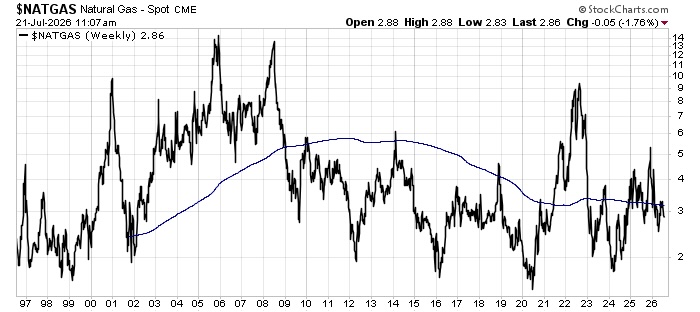
As illustrated, the spot price currently sits below the 5-year moving average. This suggests the market still reflects a natural gas surplus, which aligns with expectations. The U.S. Energy Information Administration (EIA) released the following data in January 2026:
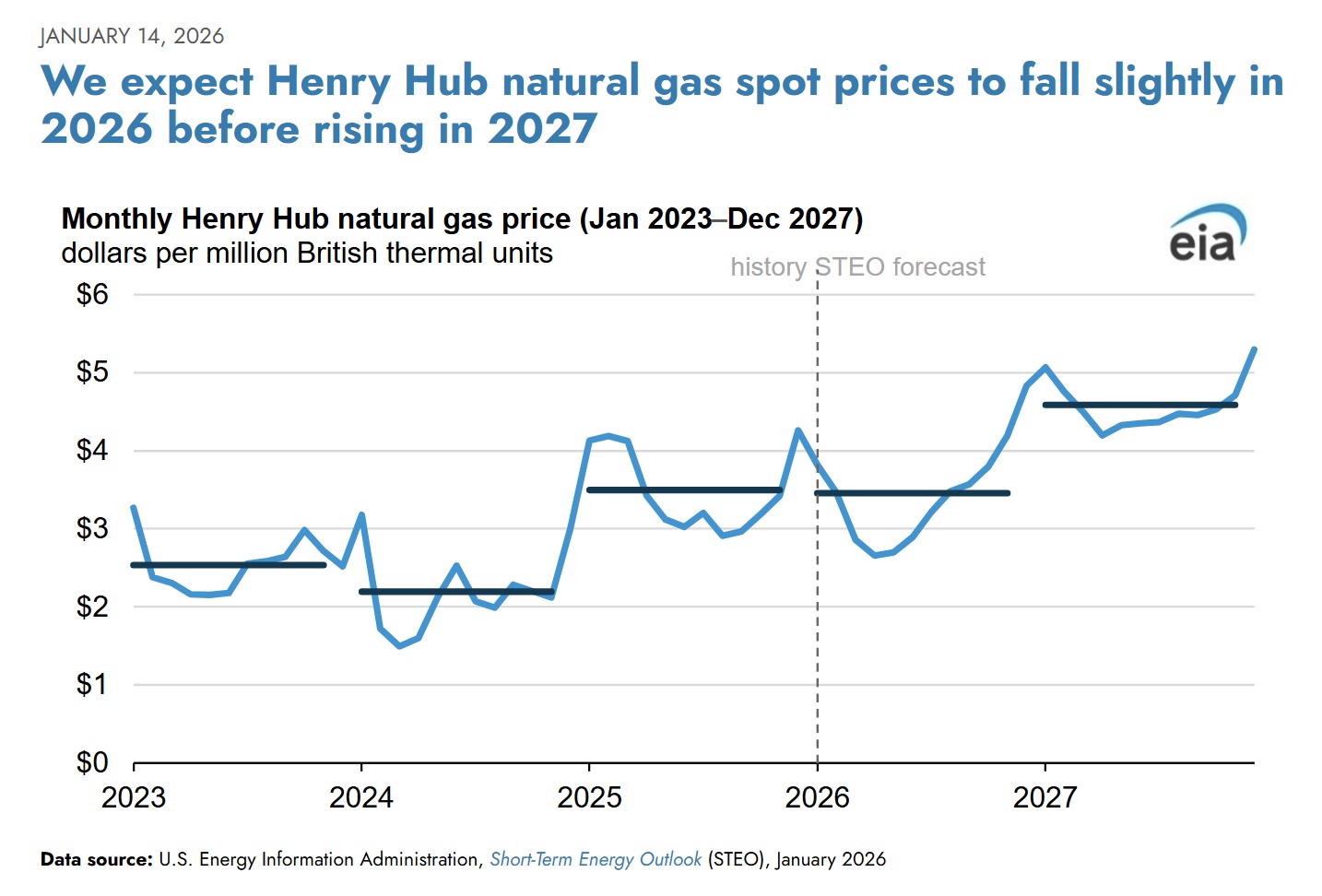
Keep in mind, this information predates the war in Iran that halted Middle Eastern exports. The chart remains accurate so far, yet I anticipate prices will climb more rapidly due to restricted LNG shipments.
This brings us to the top opportunity. LNG costs in Europe and Asia have soared to around $18 and $19 per MMBtu, respectively, creating substantial profit margins for U.S. exporters. Industry insiders expect these high prices to persist.
Currently, six significant LNG facilities are either being expanded or built. The EIA projects North American LNG exports will more than double by 2029, mainly driven by U.S. production.
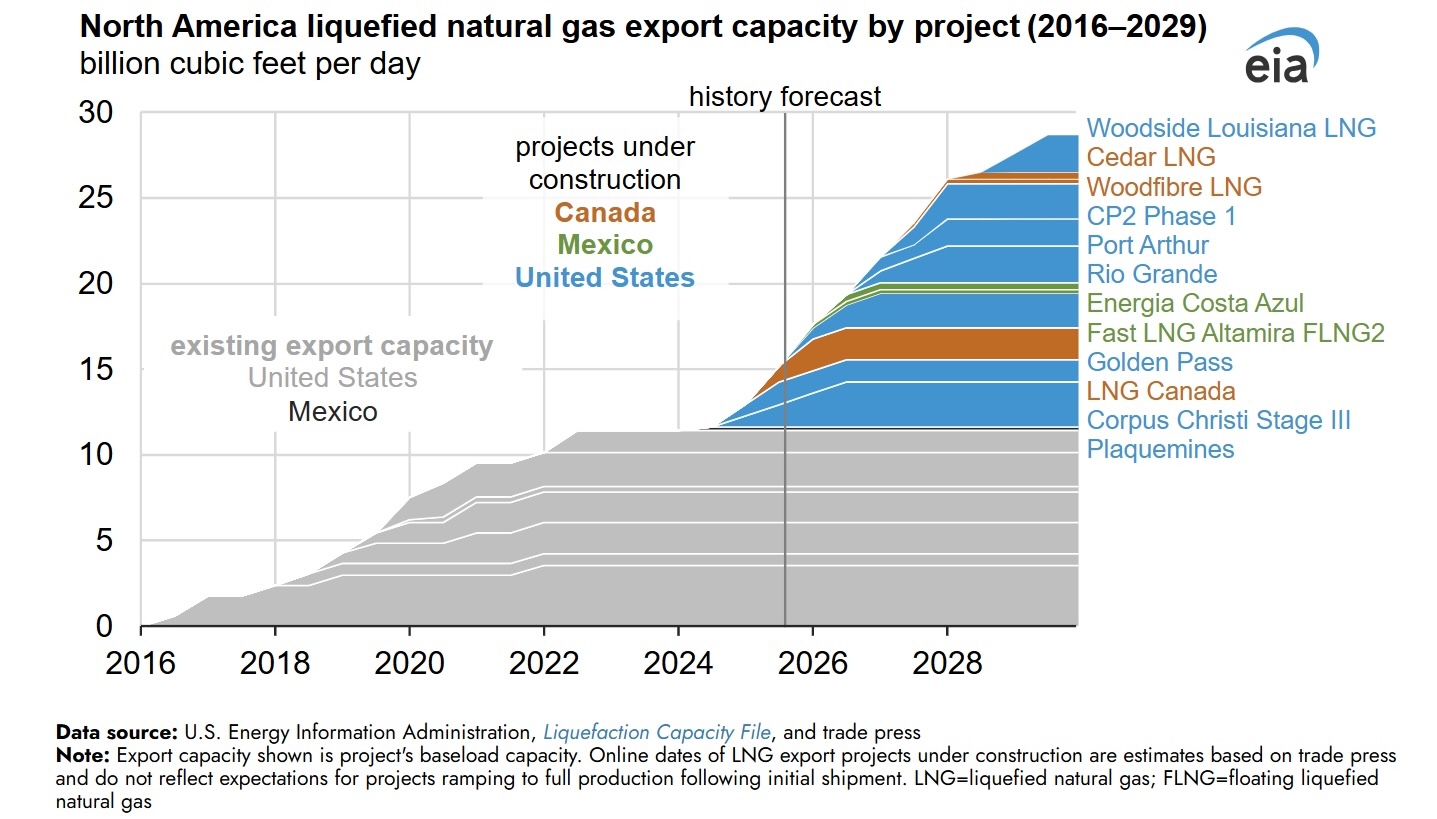
This matters significantly because natural gas cannot be easily transported without pipelines. Unlike oil, natural gas requires specialized LNG infrastructure for shipment. The recent conflicts in Ukraine and the Strait of Hormuz highlight the vulnerability of supply chains.
Therefore, companies like Cheniere Energy (NYSE: LNG) stand to benefit immensely in the near term. Exporting inexpensive U.S. gas to Europe and Asia is a highly attractive trade today.
Still, natural gas prices won’t remain this low for an extended period. That’s why acquiring shares in the lowest-cost producers within the U.S. is a smart strategy. Firms such as Range Resources (NYSE: RRC), Antero Corporation (NYSE: AR), and EQT Corporation (NYSE: EQT) are leading producers operating at low cost.
Just like the commodity, their stock prices are currently depressed:
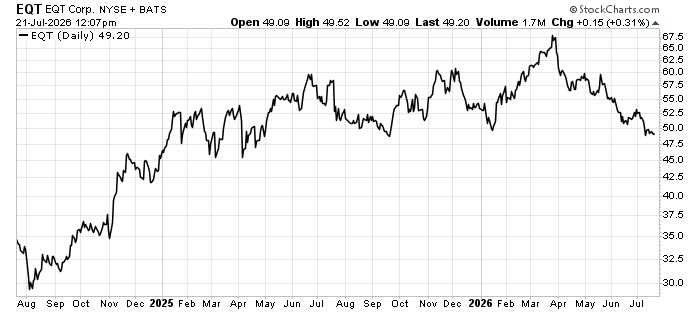
EQT’s share price has dropped to levels last seen in 2025. That presents a second opportunity—not quite mature yet, but soon to be. We want to observe even a small upward move on this chart. Once that momentum begins, it’s time to act.
To summarize, purchase shares of LNG producers now and monitor natural gas producers closely in the upcoming weeks. Enter that position once their prices start rising. Expect some volatility, but holding for about a year should yield worthwhile returns.
About the Author