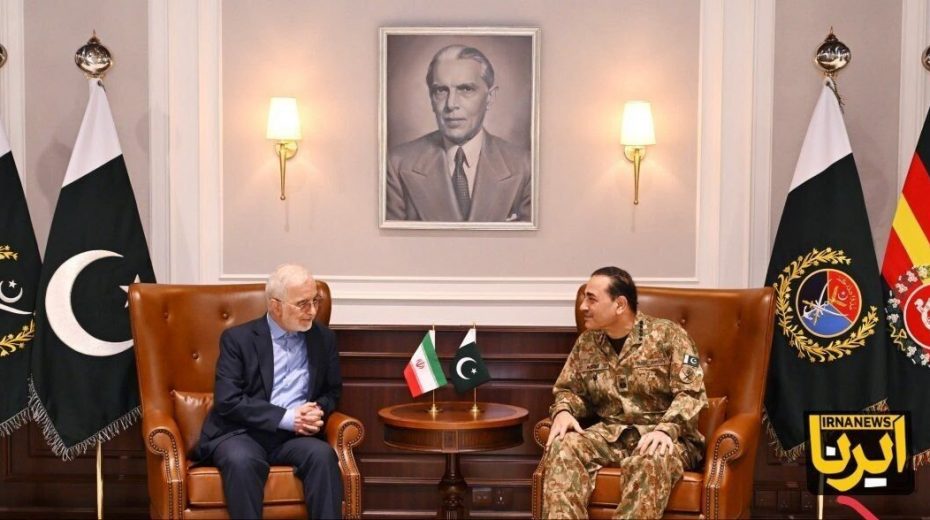


Earlier this week, Eskandar Momeni, Iran’s Interior Minister, arrived in Islamabad with a large delegation. By Tuesday, he had held talks with Prime Minister Shehbaz Sharif, Field Marshal Asim Munir, and his Pakistani counterpart, Mohsin Naqvi.
This visit went beyond a standard border or security meeting between neighboring states. Notably, the head of the National Iranian Oil Company (NIOC) was part of the delegation, highlighting that energy issues, potential progress on the Iran-Pakistan (IP) gas pipeline, sanctions, and cross-border trade were high priorities.
The crucial element: Momeni brought a distinct message from Iranian leadership regarding the ongoing conflict. Pakistani officials publicly emphasized that the delegation delivered “good news.”
The key question remains how this “good news” was communicated.
Prior to Momeni’s arrival, Pakistani civilian and military leaders were informed he carried a letter from Leader Mojtaba Khamenei.
However, upon arrival, Momeni clarified he didn’t have a physical letter but conveyed a message from Mojtaba to Pakistan’s leadership, endorsed by President Pezeshkian and Foreign Minister Araghchi.
The message addressed several vital aspects of Iran-Pakistan relations and Pakistan’s role mediating between Tehran and the Trump administration.
It proposed that Iran might consider a 10-day pause in the ongoing escalation—but only if Trump immediately begins complying with all (italics mine) components of the 14-point Memorandum of Understanding (MoU) once Iran accepts this pause.
In other words: no new negotiations. This stance coincides with China’s position—the focus being to return to and honor the original MoU commitments.
As expected, Trump declined the offer, and Pakistan relayed his rejection back to Iran. Mediators noted that despite Trump’s refusal of what could have been the sole exit route, he persistently pressured Asim Munir with daily calls urging him to secure that very off-ramp.
Was there a message? And how was it delivered?
Top Tehran insiders insist on three key points.
- Leader Mojtaba Khamenei did not send any communication to Pakistan nor maintain contact with anyone there, including Asim Munir.
- If such a message had been dispatched, it would have come through official channels like the President (Pezeshkian), the Parliament Speaker (Ghalibaf), or the Supreme National Security Council Secretary (Zolghadr), as occurred previously with China and Russia.
- The claims about a 10-day pause followed by 60-90 days are false and unrealistic. Iran has no intention to negotiate on this issue.
It is true that Tehran hosts several competing centers of power, so discrepancies in process and public statements are common. Still, Pakistan had no motive to fabricate details that Iran could instantly disprove.
Looking at the facts, President Pezeshkian has repeatedly affirmed that Mojtaba is the supreme authority in Iran, major actions are taken under his direction, and that the leadership seeks to resolve the current tense state described as “neither war nor peace.”
Therefore, it seems plausible the message originated from Iran’s top leadership, bearing Mojtaba’s endorsement, though it was likely kept discreet. Trump’s dismissal only adds weight to this interpretation.
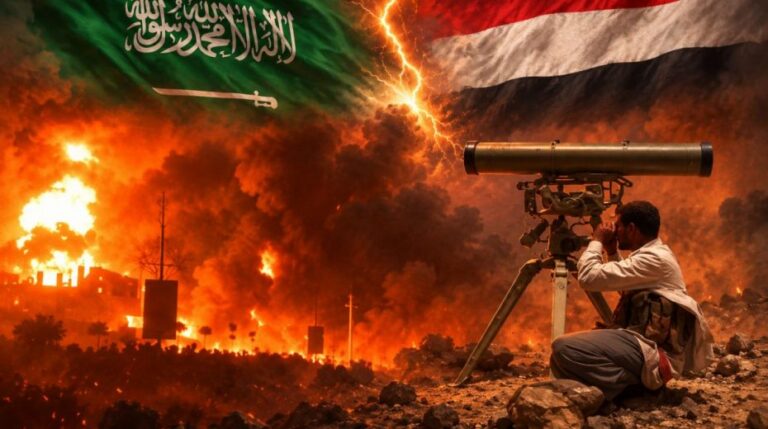
Again, while Iran is managing the timeline carefully, Tehran recognizes that Trump’s window to act is closing. It is widely acknowledged in Iran that the country can endure severe economic and military pressures while increasing the wider cost of conflict through control of the Strait of Hormuz—and now, with Yemen’s new naval blockade of Saudi Arabia in the Red Sea.
Iran’s strategic calculation is evident.
The ongoing escalation is rapidly intensifying political and economic pressures across West Asia, shipping routes, and global energy markets.
Hence, Iran’s message to Trump, conveyed indirectly via Pakistan, remains unchanged: comply fully with the original 14-point MoU without renegotiation or prepare for an extended conflict marked by continuous disruption to energy supplies and maritime navigation with catastrophic results.
How the message reached Trump via Islamabad is secondary. The diplomatic talks about trade, pipelines, and borders served as a discreet backdrop for Tehran’s conditions to end the war.
The persistent reality: for both Tehran and Beijing, the MoU represents a binding agreement that Washington must honor; there will be no further negotiation rounds.
The consequences of Iran holding total leverage
The Saudi-Yemen conflict remains unresolved. Pakistani mediators emphasize that Islamabad advised Riyadh to avoid escalation, as Saudi Arabia’s entry as a direct participant, rather than as a mediator, would complicate matters.
No new orders are expected from Sana’a to intensify actions around the Bab al-Mandab—contrary to Western media speculation. Ansarallah’s response was a direct countermeasure to the Saudi blockade of Yemen that has lasted over 11 years, following the principle of “a siege for a siege.” This blockade targets only Saudi Arabia. The Bab al-Mandab channel will only be blocked for all if the US attacks Iran’s power grid and infrastructure.
Thus, the Bab al-Mandab remains open but primed for action.
The broader strategic fact stands firm: Iran now controls leverage over two critical energy chokepoints globally.
Simultaneously, Iran systematically incapacitates the so-called Empire of Piracy across the Persian Gulf by dismantling Patriot missile systems, radar arrays, refueling hubs, and various military assets in Kuwait, Bahrain, Jordan, Qatar, and Oman.
Kuwait seeks to establish a defense pact with Pakistan similar to Saudi Arabia’s, potentially involving Pakistani military personnel, aircraft, drones, and air-defense systems in exchange for energy supplies and substantial financial assistance. Saudi Arabia supports this initiative.
Discussions are underway regarding a broader Turkiye-Pakistan-Saudi mutual-defense alliance, but convincing Tehran this is not an anti-Iran maneuver will be challenging.
Nevertheless, it is clear that parts of the Persian Gulf are moving away from exclusive reliance on the Empire of Piracy for security, exploring non-American guarantees. Pakistan now holds a pivotal role in deciding how far it will commit while preserving the carefully nurtured, China-supported relationship with neighboring Iran.
About the Author