The U.S. ultimately will have to capitulate, with the result that Iran becomes a regional power.
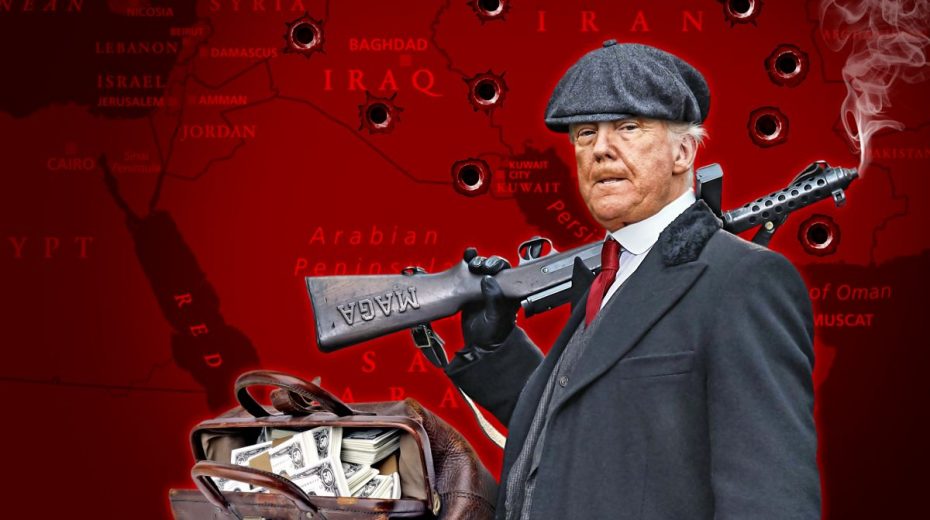
Late Friday night, despite an earlier green light for a “Gates of Hell massive attack” on Iran, Trump instructed the U.S. military not to proceed with additional strikes against the country.
The United States has now sought a fresh temporary ceasefire with Iran and aims to revive the collapsed and suspended MoU. These talks are expected to include Yemen, with Trump attempting to bring AnsarAllah into the negotiation process.
Trump’s frustration is apparent, and he fears that the conflict is eroding his Presidency and legacy. Iran has categorically rejected all negotiations over the past week, making clear it refuses to engage under any conditions. Simply put, why would Iran agree to give the U.S. time to regroup and rearm when it already has the upper hand?
The prospect of returning to the MoU—which Trump has repeatedly discredited—seems remote.
Will Schryver observes circulating rumours that Pentagon officials are urging Trump to end the war with Iran due to depleted supplies of air-defense interceptors and stand-off strike missiles. Senior aides are also concerned about the risk of the conflict expanding across the Middle East, alienating key Gulf allies vulnerable to further Iranian attacks, and triggering an impending energy crisis. The New York Times reports that, “Few if any in Mr. Trump’s inner circle believed the plan to escalate was wise,” according to two sources briefed on the situation.
It appears that uncertainty over the actual U.S. fuel supply has influenced Trump’s sudden reversal. Larry Johnson explains that –
“[A] brief prepared by Karl Miller investigates how the U.S. military’s covert fuel procurement and export operations are depleting the nation’s diesel and jet fuel reserves, particularly during a period when domestic stocks are already critically low”.
Miller summarizes –
“much of this (covert) fuel export is routed through opaque channels, such as the Rotterdam trans-shipment hub, where the final military or foreign allocation is not publicly reconciled, leaving the American economy exposed to shortage risks – whilst military and foreign operations – “notably Israel” – receive priority access”.
This analysis seems linked to the U.S. government’s transparent manipulation of oil benchmarks aimed at reassuring markets that emergency releases from the Strategic Petroleum Reserves (SPR) — 172 million barrels to offset supply disturbances caused by the Iran conflict — will prevent fuel shortages.
Although the statutory safety minimum is 250 million barrels (compared to the current approximate 300 million), the narrative suggests the SPR drawdown could extend further (down to 70 million barrels per day). But is this feasible? The SPR isn’t a single reservoir with a fixed volume; it consists of multiple caverns containing varying crude oil types, drained at different paces. Some caverns risk collapse if depleted excessively. In short, the safe minimum level remains unknown and speculative.
With Trump’s military campaign faltering, the only way back to negotiations would require genuine upfront concessions. Yet even if Trump offered these, would they be trusted? Could his mental resilience endure the implied concession?
The primary barrier to negotiations with Iran lies in Trump and his advisers’ misunderstanding of Iran.
They seem convinced they are confronting a rigid, uncompromising leadership, while they believe the Iranian populace desires an end to conflict.
This interpretation is flawed; in fact, it’s the leadership that holds a pragmatic position, whereas the general population tends to be more hard-line, demanding retribution and questioning the very premise of negotiations.
Meanwhile, Team Trump and its Fox News supporters have shifted away from the earlier American self-image as a redeemer nation, adopting instead a fierce Manichaean worldview, as Professor Michael Vlahos writes:
“American ‘good news’ has been replaced by the ever-present spectre of Evil and the threat of force. The holy words, Freedom and Democracy, while still chanted, have become a hollow mantra. The American ‘gospel’ no longer preaches about bringing redemption and expiation: it is now concerned with enforcement and punishment. The volte-face came in an instant, on 9/11 and with Guantanamo.”
The fundamental issue is attitude: How can one negotiate with the “embodiment of evil” (Trump’s characterization of Iranians)? Naturally, dialogue becomes impossible. This demonization was intentional, blocking any genuine mediation or solutions that don’t portray “one of the most evil people in history” leading a “gang of bloodthirsty thugs”. Policy reduces to asserting dominance over the perceived “other.”
The West embraces a particular mindset it claims illustrates the core of humanity. This approach (often called Apollonian) aligns with patriarchy, legalism, and a vertical, rational, mechanistic worldview allowing little middle ground: something is either “A” or “not A.”
Conversely, another dimension (often referred to as Dionysian) captures dualities found in nature and humans—male and female; order and wildness; virtue and vice. These opposing forces coexist within consciousness and nourish each other. Dionysian logic can be seen as the shadow, or even a rebellion against Apollo.
There is also Persephone (seen as the Dionysian shadow’s underside), representing the earthly, feminine principle connected with reproduction, growth, care, and underworld knowledge (intuition). She symbolizes Aphrodite’s cyclical cycle of life, decay, death, and renewal.
Human consciousness typically expresses qualities from a singular focus, yet all civilizations utilize the broad spectrum of these elements in various forms responding to their unique contexts.
Thinking framed by one culture is distinct; belonging to a different culture, ethnicity, or religion results in different patterns of thought. Still, all remain human.
Trump’s imperial arrogance now confronts the reality that resolving the Middle East conflict may be unattainable. Viewing the world strictly through an Apollonian lens is male-centered and exclusionary, failing to appreciate “otherness” and relying instead on exceptional privilege. It cannot accommodate a diversity of perspectives.
The U.S. has lost the war. Through its uncompromising Manichaean rhetoric, Trump has cut off any chance for diplomatic solutions. Expanding the conflict to Lebanon, Yemen, Syria, and Iraq has complicated diplomatic options. Although interconnected, these arenas also have distinct agendas. Thus, resolving this crisis requires addressing a complex array of issues rather than a simple bilateral dispute. Ultimately, the U.S. will have to surrender, paving the way for Iran to rise as a regional power (thus bolstering Russia and China), while the region gradually accepts this emerging reality in West Asia.
About the Author