The best Trump can do is to stop the conflicts agglutinating into one global war.
The lack of public reaction following Netanyahu’s recent Oval Office meeting speaks volumes. No U.S. officials awaited his arrival at the airport, nor was there any ceremonial welcome. His visit was a failure. Israel finds itself directionless, its ‘Greater Israel’ agenda faltering due to shortages in both manpower and strategic clarity.
Ex-IDF Ombudsman Maj. Gen. Yitzak Brik warns (Ma’ariv, 26 July) that the crisis affecting Israel’s interception arsenal “is merely the beginning of the looming disaster” –
“Future conflicts with Iran will amplify the threat tenfold, culminating in a total failure to intercept Iranian ballistic missiles. These strikes are anticipated to target population hubs, vital strategic installations, economic infrastructure, research and educational institutions, hospitals, essential industries, leaving us utterly devastated.”
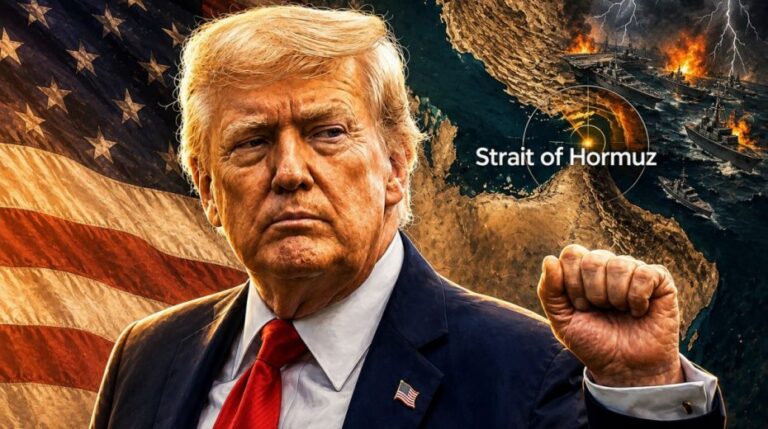
It appears Trump now realizes that the war he initiated to suppress Iran is backfiring, threatening his own position. There seems to be no military recourse other than halting further deterioration of the situation.
Meanwhile, Iran actively disrupts Trump’s cycle of launching kinetic operations (purportedly to pressure Iran) followed by announcements of ‘imminent deals’ aimed at manipulating oil prices and market movements. Just last Monday, a market sell-off pushed Brent crude down by 7.7%.
Moreover, Iran seeks to influence the pace of hostilities, which are predisposed to intensify due to U.S. attempts to tighten containment strategies intended to coerce Iran into accepting a dictated ‘peace’ arrangement.
Contrary to merely increasing pressure on Iran, Trump’s approach is inflaming the region and heightening the chances of uncontrolled escalation.
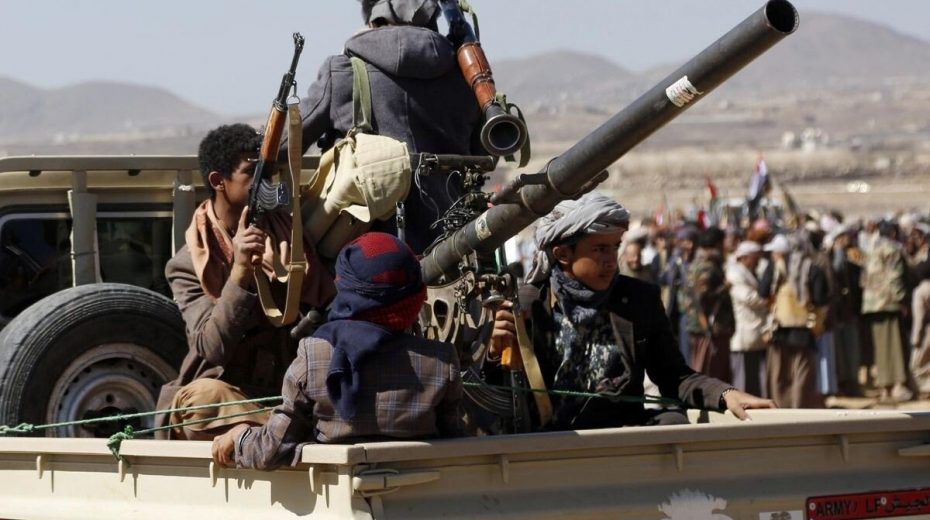
Recent developments such as Yemen’s declaration of ‘siege for siege’ against Saudi ports and the strikes disabling two major Aramco refineries — effectively halting the Saudi oil pipeline to the Red Sea — have drawn Saudi Arabia into conflict not only with Yemen but also, aligning with CENTCOM, against Popular Mobilisation Unit (PMU) militias in Iraq. Riyadh accuses these militias of the refinery attacks, claims denied firmly by Hash’d al-Shaabi. These incidents expose how the ‘Trump war’ is further destabilizing an already fragile region.
Yesterday, Saudi Arabia and the U.S. launched significant airstrikes targeting at least six Iraqi cities, resulting in more than 20 deaths and numerous injuries among PMU members.
Why target the Hash’d rather than Yemen? Likely because a direct attack on AnsarAllah could trigger retaliatory missile strikes that would devastate remaining Saudi oil infrastructure.
Following the U.S. assault on Hash’d installations, Iran reciprocated by launching ballistic missiles at American bases in Jordan, embodying the principle that attacking one member of the Axis is equivalent to attacking all.
This has added two fresh theaters of conflict: the Hash’d al-Shaabi-Iraq front and the Yemen-Saudi front, amidst other potential flashpoints simmering in the background. In Lebanon, the Israeli Defence Minister boasts that –
“twenty-four Lebanese villages, hundreds of years old–were destroyed. All buildings, not house by house, but entire villages [were levelled]. Their destruction has been completed. You need to understand: 15,000 to 20,000 homes across all 24 villages have been destroyed – and today 70% of Gaza has been destroyed”.
More crucially, Israeli National Security Minister Ben Gvir has vowed to provoke a settler conflict targeting Palestinians in the West Bank, aiming to compel a ‘voluntary’ departure. Ben Gvir believes the pre-election period in Israel offers the best chance to spark this crisis, potentially forcing entire Palestinian villages to evacuate.
Exacerbating the turmoil, on 25 July, U.S. missiles targeted a Revolutionary Guards Navy base in the Ziba Kenar area along the Caspian Sea in Gilan Province.
Commentator MK Bhadrakumar explains –
“The Caspian Sea serves as a crucial strategic supply corridor between Russia and Iran. Bandar Anzali plays for Tehran a role similar to Odessa Port for Kyiv, facilitating Western arms deliveries. Consequently, Ukraine’s attack on an Iranian commercial ship in Russian Caspian waters on Saturday—the first incident of its kind since the start of the Russia-Ukraine conflict—was far from accidental. Kyiv’s admission signals that one of Eurasia’s most stable security zones is now vulnerable to direct spillover from the Ukraine war.”
Both the New York Times and the Wall Street Journal observe that this Ukrainian strike marks a convergence of the Russian-Ukrainian war with the Israeli-U.S. conflict against Iran. This suggests Washington might have orchestrated the move, using Ukraine in tandem with U.S. bombings in Iran’s Gilan province.
Kremlin spokesperson Dmitry Peskov declared this week that Ukraine’s assault on the Iranian vessel effectively constitutes an attack on Iran itself, emphasizing the urgent need to neutralize what Moscow refers to as a Kyiv threat. He accused Ukraine of extending the scale of what he calls “terrorist attacks.”
So what is truly happening? It remains uncertain whether the attack on the Iranian ship—which killed an Iranian sailor and which Kyiv falsely claims carried weapons—was a desperate bid by Zelensky to grab Trump’s attention (“Daddy’s”) or something more strategic. Zelensky has frequently lamented that the Iran conflict diverts Western focus away from ‘his’ war in Ukraine. Was this meant to redirect Trump’s attention back to Ukraine?
All these threads intersected in Washington amid Lindsay Graham’s lying-in-state and as Laura Loomer—a waning but Trump-favored MAGA figure—made a dramatic reversal, emerging as one of Ukraine’s staunchest advocates, potentially filling the void left by the late Lindsay Graham.
Online speculation suggests Loomer’s highly publicized ‘Pauline conversion’ may signal a pivotal political shift in the U.S. However, it might prove fleeting. While she wields little sway among younger MAGA supporters, she still resonates with the 65+ demographic that follows Fox News.
Currently, there is a theory that Loomer’s sudden change of heart is the start of an extensive psyop aimed at convincing Americans that ‘interventionist America’ aligns with ‘America First,’ thus justifying military engagement with Russia. The Loomer narrative seems designed to counter Pat Buchanan’s MAGA faction, which adheres to his philosophy, as outlined in A Republic – Not an Empire: Reclaiming America’s Destiny.
(Naturally, any U.S. public mood swinging toward interventionism is welcomed in Israel.)
Will this influence Trump to act more decisively on Ukraine? It’s unclear. Loomer has pledged to thoroughly brief Trump about her Ukraine visit and meeting with Zelensky. Whether Trump pays heed or dismisses her is uncertain.
What matters is that the coordinated PR efforts rebranding Ukraine as ‘winning’—despite contrary evidence—are gaining traction within segments of American opinion. Michael Wolff, a longtime Trump observer and biographer, notes –
“Loomer’s turnaround on Ukraine is clearly gaining momentum. Zelensky is now visiting … He will meet Trump. And Trump surely realizes that Ukraine holds a significant advantage right now.”
“Broadly speaking, this Administration’s foreign policy has been disastrous … The Iran situation is a total failure. Aligning with Russia was an error … Zelensky, once seen as a loser, is now perceived as a winner – and everything else viewed as ‘bad calls’ [by Trump]. In this context, Trump needs a victory badly. Ukraine seems poised to provide that, riding the publicity wave from Lindsay Graham’s funeral to pivot toward a stronger Ukrainian strategy. Death can indeed yield great PR opportunities. Bingo. Russia faces serious trouble.”
It is striking how Western elites can be swayed by relentless propaganda. However, Wolff’s remarks go beyond gossip—they reveal a collective psychosis fueled by vested interests and powerful networks pursuing their own agendas.
Consider the pattern: Zelensky aims to portray himself as triumphant to both Europe and Trump. Europe presses him to launch deep strikes into Russia to compel a ceasefire. Trump endorses these attacks at the G7 summit. This intensifies drone strikes on Russian refineries. Buoyed by Trump’s approval, escalation continues with assaults targeting Russian civilian areas, like the Wildberries consumer internet hub and attacks on holiday camps using longer-range missiles with larger warheads.
Simultaneously, Ukraine targets an Iranian vessel in the Caspian. The IRGC threatens retaliation and warns the UK (and Cyprus) as their involvement in the Iran conflict grows incrementally.
Europe continues to dismiss Russian threats as bluffs and escalates missile strikes deeper into Russia. Russia, however, cannot permit ongoing and intensifying attacks. Meanwhile, the Middle East quietly edges closer to conflagration. Iran refuses to yield under Trump’s pressure; likewise, China resists U.S. sanctions.
With no viable military options left, Trump’s best bet remains to prevent the multiple conflicts from merging into a singular, global war.
About the Author