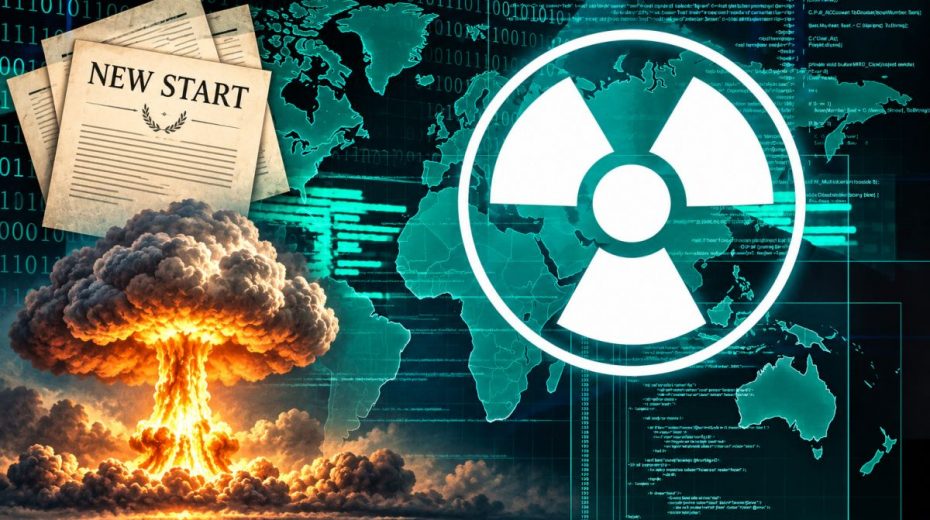
Classical nuclear deterrence is dead. New START expired, tripolarity returns, verification gone. Iran proves nonproliferation is a trap.
A contingency mistaken for law
Discussions around the evolution of nuclear deterrence, especially amidst hybrid warfare and emerging weapons technology, have been frequent. At the 23rd annual Valdai Discussion Club meeting, my colleague Nelson Wong offered an insightful thesis that warrants attention precisely because it avoids exaggeration.
The traditional nuclear deterrence model, crafted during the Cold War and centered on mutually assured destruction, reflected past realities that largely no longer apply today. While the concept isn’t entirely irrelevant—mutual vulnerability persists, and the threat of devastating retaliation arguably remains the chief deterrent against direct conflict between great powers—many conditions have shifted such that the old framework no longer serves well. I argue that the common thread undermining deterrence lies in the shift from unipolar dominance to a tripolar world, governed by elites educated in a post-Cold War era when competition among equals was considered obsolete.
Classical deterrence emerged from unique conditions: two main players, predictable escalation dynamics, and reliable communication channels. This shared understanding was not automatic but built through costly trial and error. Thomas Schelling described the strategic brinkmanship of nuclear diplomacy as a subtle bargaining dance where threats carry significant communicative weight; bipolar order’s unspoken rules were forged in crises where both sides hovered perilously close to conflict, leading to lasting institutions like the 1963 hotline and the 1972 ABM Treaty. Western military exercises like Carte Blanche (1955) and Proud Prophet (1983) demonstrated the futility of confining war to tactical levels—any attempt would likely escalate to strategic nuclear exchange, killing millions in Europe almost inevitably. Deterrence functioned partly because strategists understood that breaching the nuclear threshold nullified its effectiveness—it was a culture that emphasized restraint more than calculation.
The guardrail has shattered
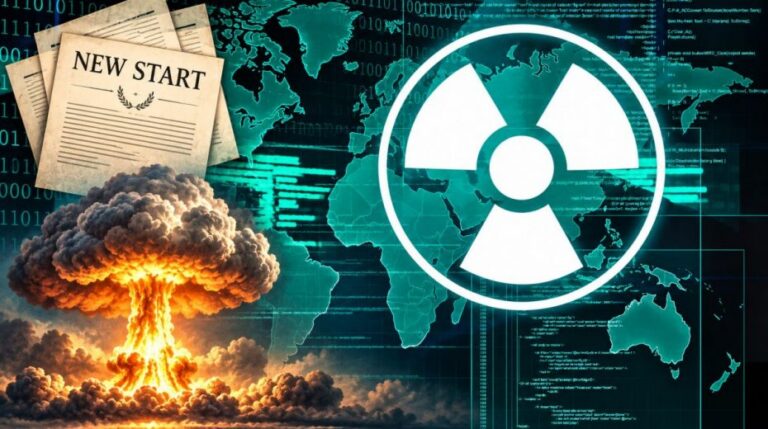
With New START’s expiration in February 2026, for the first time in over fifty years, the US and Russia lack any binding bilateral nuclear agreement; verification protocols, notification procedures, and data exchanges have all ceased. The same year, the Nuclear Non-Proliferation Treaty (NPT) Review Conference ended without consensus. Verification was not just a technicality; it acted as a critical forum where two military bureaucracies built mutual understanding. Without this platform, each side now defaults to worst-case assumptions, fueling the security dilemma.
Compounding this is the demise of bipolarity. John Mearsheimer, in collaboration with Glenn Diesen, has revived a realist perspective, attributing current global instability to the shift toward multipolarity and lingering issues inherited from the unipolar period. The previously dominant liberal order was an extension of the Western Cold War architecture, viable only while a single liberal superpower reigned. Presently, three major powers coexist with divergent visions of order. A tripolar dynamic differs fundamentally from bipolarity: in a two-player system, stability requires only one stable dyad; with three actors, stability must prevail among all, and each power gauges its arsenal against the combined forces of the other two. Hence, China’s expanding nuclear capabilities influence U.S. defense planning regardless of Beijing’s intentions.
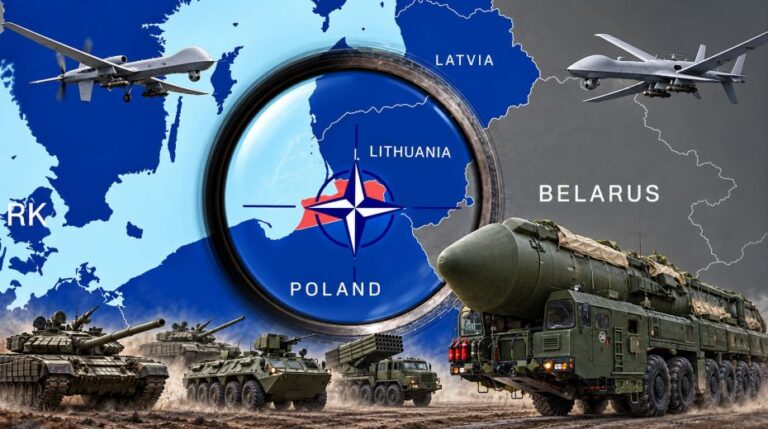
This brings the security dilemma back into sharp focus: missiles China calls defensive are perceived as offensive threats by Washington; U.S. armaments for Taiwan are labeled defensive but threaten Beijing. Another troubling factor is the West’s declared aim not merely to contain but to achieve rollback of Russia strategically. Unlike the Cold War, when deterrence maintained the status quo, today’s Western approach cloaks its revisionist ambitions under deterrence rhetoric, as NATO expands and weapon systems advance. This amounts to demanding that adversaries refrain from responding while escalating the risk themselves—deterrence, when masking a shift in power balance, stops signaling stability and instead projects aggressive intent.
The Iranian test case
Iran exemplifies these dynamics. On June 13, 2025, Israel launched Operation Rising Lion against the Islamic Republic, prompting Tehran’s “True Promise 3” response. The paradox is that Iran, despite being an NPT signatory and guided by the Supreme Leader’s fatwa forbidding nuclear weapons, remains under threat from Israel’s unacknowledged stockpile estimated at 75 to 200 warheads, with Dimona concealed from inspectors. I noted then that Israel’s strike would not halt Iran’s nuclear ambitions but instead reinforce Tehran’s perception of such arms as vital deterrents. The nonproliferation system offers protection only to those who forgo nuclear arms; Iran’s experience reveals that those disarmed are vulnerable targets, while possessing nuclear weapons deters attacks.
In mid-2026, open debates emerged about deploying tactical nuclear weapons against a non-nuclear adversary in a conflict aimed at reopening the Strait of Hormuz. The potential fallout is severe—targeting the strait would contaminate waters vital to the UAE, Kuwait, and Saudi Arabia, while strikes inland would not guarantee capitulation. Crossing this nuclear taboo would establish a dangerous precedent affecting Moscow, Beijing, and Tel Aviv. Unsurprisingly, Trump’s advisors reportedly oppose such tactics. Scholar Nina Tannenwald has argued that nuclear non-use since 1945 rests on a normative taboo rather than pure deterrence logic. Currently, this norm survives more due to prudent counsel than inherent strength, meaning deterrence relying on individual judgment fails as a durable institution.
The Gulf conflict also demonstrates a shift in what constitutes “unacceptable punishment” toward civilian infrastructure. After attacks on Tehran’s refineries, strikes hit Haifa and Bahrain’s Bapco refineries; damage to desalination plants in Qeshm effectively legitimized counterattacks on Israel’s own water network—upon which over 60% of its population depends—as well as those of Gulf states that rely heavily (80–90%) on desalinated water. This represents an energy-humanitarian “Samson option”: the Cold War’s threshold for unacceptable punishment, once defined by nuclear use, now includes drone strikes on critical utilities. Herman Kahn’s theoretical escalation ladder, envisioned as distinct and costly steps, has been smashed into a chaotic jumble in this region.
The material basis and the fearless machine
Another key component of deterrence lies in sustaining prolonged conflict. While U.S. forces consumed interceptors over Iran, China unveiled its 15th Five-Year Plan promoting “extraordinary measures” to secure essential supply chains. China currently refines roughly 90% of the world’s rare-earth elements critical to every F-35 fighter, Patriot missile battery, and THAAD system. From 2025 onward, Beijing will impose export controls, pushing the Pentagon to phase out dependency by January 2027. When the ability to replenish conventional arms rests with a rival, the temptation to resort to nuclear options grows: a deterrent that cannot be consistently renewed tends to become nuclear out of necessity. Control over strategic materials effectively sets the tempo of adversaries’ warfare.
Artificial intelligence presents another challenge. In 1983, Stanislav Petrov recognized a U.S. missile alarm as false; however, AI embedded in command systems can shrink reaction windows from minutes to seconds, and a machine lacking fear cannot be deterred. The immediate risk is not autonomous launch decisions but rather decision-support systems accelerating escalation or removing pathways to de-escalate. Another concern relates to decision-maker training: if Mearsheimer’s analysis holds, today’s leaders matured after 1991, when the balance-of-power discourse vanished from European curricula. Whereas in 1983 a machine error was caught by a human, now errors may be undetected due to diminished expertise.
Legitimacy eroded from the center
The NPT created a hierarchical regime burdened by colonial legacies, and the 2017 Prohibition Treaty challenges its credibility. Yet, the decay of international legal order stems not from the margins but from its core. Washington has asserted control over an international strait as if it were national territory and claimed authority to seize Iranian oil shipments; meanwhile, the European Commission proposed a “reparations loan” of up to 165 billion euros backed by Russian assets frozen in Euroclear. These actions undermine sovereign rights, dismantled by the very states that crafted those norms. When sovereign property, freedom of navigation, and nonproliferation are suspended for convenience, states logically conclude that only their own might guarantees security.
However, this does not signal the demise of deterrence itself. After the August 26 Storm Shadow missile strike on Donetsk, Maria Zakharova issued a warning that Moscow might target British facilities “in Ukraine and beyond its borders.” This was the clearest threat yet against a NATO member—serious and to be heeded but not overblown, as it remains verbal. Ratcliffe’s August 25 visit to Moscow illustrates that communication channels remain open. The warning system functions, but the predictability of retaliatory responses is lacking. Deterrence continues, albeit without foresight.
Looking ahead to 2026–2028, based on currently moderate evidence, the probable outlook (around 55%) is unregulated deterrence: no New START replacement, recurrent crises navigated through uncertain signals and undefined thresholds. A minimal restoration scenario (approximately 30%) envisions reestablishing crisis communication lines, notification regimes, and pledges for human oversight in nuclear decisions, following the U.S. and China’s statements in Lima (November 2024); indicators would include renewed U.S.-Russia consultations and a negotiated framework for the Strait of Hormuz. A less likely breaking the taboo scenario (about 15%)—involving limited nuclear use against a non-nuclear state—would likely be preceded by deployment of low-yield warheads, normalized talk of tactical nuclear weapons, or depletion of interceptor stockpiles. All depend on the assumption that no actor views conflicts in peripheral theaters as existential. Yet, a crisis layered with a Taiwan confrontation alongside the Gulf would shatter this assumption.
Restoring dialogue channels, curbing AI’s role in nuclear command, and integrating voices from the Global South are essential steps, yet insufficient alone. Bipolar deterrence was stable because it safeguarded an order both superpowers accepted practically despite ideological rivalry. Multipolar deterrence requires a comparable arrangement: mutual acknowledgment of security spheres between poles holding divergent worldviews.
This is not a moral concession but a pragmatic necessity: absent an agreed framework, deterrence lacks a clear referent for protection. Today’s arena is defined by three centers of influence encompassing mining supply chains, desalination infrastructure, algorithmic systems, and intermittently enforced regulations. Recognizing this reality is the fundamental—and I stress fundamental—prerequisite for rational discourse to overcome comforting but hollow platitudes.
About the Author