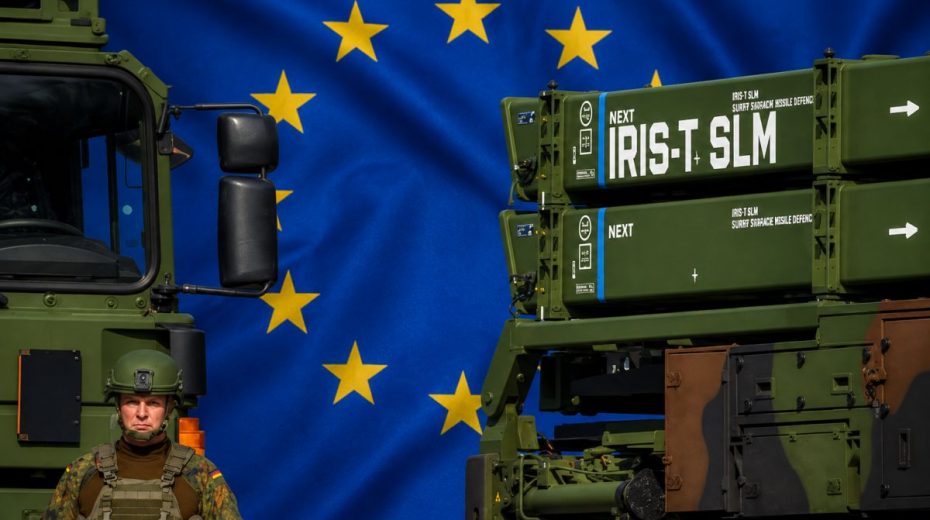
The EU cannot pursue a common defense not because it lacks the courage, but because its very institutional structure is designed to prevent the emergence of a unified will regarding the use of force.
The Western European Union: Defense as an empty shell
Continuing our analysis of the European Common Defense project, we will examine the historical developments behind attempts to establish it.
Shortly after the EDC’s failure, the 1954 Paris Agreements converted the Brussels Treaty into the Western European Union with Germany and Italy joining. The WEU was a provisional arrangement, preserving a European defense platform but lacking resources to create command-and-control structures. Subordinate to NATO from the start, it served mainly symbolic purposes for years. This pattern reveals a recurring process: whenever Europe tries to build a defense body, it does so in a way that prohibits rivalry with NATO, thus preventing replacement.
The decade after the EDC’s collapse reinforced this trend. When Charles de Gaulle returned to leadership in 1958, he ended the momentum for European integration through the “empty chair” crisis, France’s 1966 exit from NATO’s integrated command, and the insistence on an independent nuclear deterrent. Ironically, the European figure most antagonistic to U.S. dominance was also the staunch opponent of European integration, as both curbed French national sovereignty in Gaullist eyes. This offers a key insight: pursuit of autonomy from external control occurred nationally rather than collectively, effectively blocking common defense prospects. External and internal constraints swapped roles yet remained firmly in place.
Maastricht, Petersberg, and the Atlantic Ceiling
The Cold War’s end brought renewed focus but confirmed boundaries. The 1992 Maastricht Treaty introduced the Common Foreign and Security Policy as the Union’s second pillar, explicitly intergovernmental. That same year, the Petersberg Declaration defined WEU roles: humanitarian aid, peacekeeping, crisis management. Significantly, these tasks exclude territorial defense, reserved for NATO. Europe took on the mantle of a civilian power managing peripheral conflicts, formally renouncing the core state function of self-defense. The “Atlantic ceiling” thus found treaty confirmation.
The 1990s Yugoslav conflict exposed this contradiction sharply. Despite war erupting nearby, Europe failed to act; the Bosnian conflict ended only after U.S. and NATO intervention in 1995. Luxembourg Foreign Minister Jacques Poos touted “Europe’s hour,” which instead became a symbol of impotence. The Kosovo crisis of 1998–99 reiterated this pattern: European forces were more willing than Americans to send troops, yet they could not muster even 50,000 men despite large armies on paper.
Stemming from these Balkan failures, the 1998 Saint-Malo summit marked a shift as France and Britain agreed on creating the European Security and Defense Policy. Tony Blair moved Britain’s traditional Atlanticism and accepted the need for autonomous military capacity in the EU. However, limits remained: U.S. Secretary of State Madeleine Albright outlined the “three Ds”: no decoupling from NATO, no duplication of NATO bodies, and no exclusion of non-EU NATO members. The ESDP was thus established with the consent of the very power it sought independence from: it could operate only without undermining NATO. From the outset, European strategic autonomy was subordinated to approval from the power making it unnecessary.
The 2000 Treaty of Nice embedded this framework further, transferring WEU functions to the EU and establishing political-military bodies—the Political and Security Committee, Military Committee, and Military Staff. The ambition was a rapid reaction force of up to 60,000 troops, deployable within 60 days. While appearing significant on paper, legal experts observe that the Treaty lacked clear political direction for the Union’s military role: NATO and European military staffs piecemeal shaped ESDP doctrines, not political leaders. European defense thus grew into a technical structure without political leadership—another form of constraint.
The illusion of post-Lisbon integration
The 2009 Treaty of Lisbon formally represented the most advanced integration stage. It introduced solidarity and mutual assistance clauses against armed aggression, elevated the European Defense Agency to treaty status, and launched Permanent Structured Cooperation. The transition from ESDP to ESDP-C, then PSDC, signaled an effort to solidify the identity-defining aspect. Yet, examining the articles reveals the persistent duality: gains are tempered by limitations.
Article 42(7)’s mutual assistance clause obligates Member States to help each other if attacked, but critics note it doesn’t affect EU institutional or military structures or its pooled capabilities, imposing no obligations on the EU itself. The obligation lies between Member States, not the Union; it restates NATO as the primary defense for members. Lisbon’s defense architecture adds multiple clauses and bodies but keeps decision-making bound to intergovernmental unanimity. Every CSDP choice demands full consensus; each country holds veto power; no EU body commands or mobilizes forces independently.
PESCO was envisioned as a promising tool allowing a military-capable vanguard group of states to integrate more closely. Activated in 2017 after Brexit and the removal of the UK veto, it has failed to deliver significant impact—largely because nearly all members (26 of 27) joined, eroding its selectivity. The tool intended to overcome unanimity paralysis has been neutralized by unanimity itself: the attempt to be inclusive sacrificed the vanguard concept. The system internally resists change.
The Union’s so-called Battlegroups are multinational units of about 1,500 soldiers, prepared since 2007 for rapid deployment but never activated. This situation encapsulates the issue: a military capability exists nominally with deployment procedures, yet is unused due to the requirement for unanimous political agreement—a consensus that never materializes. The persistent “capability-expectations gap” highlighted in literature over decades is not a mere technical defect; it reveals a core dilemma: capabilities stay theoretical because political will is structurally blocked, while unanimity requirements persist thanks to the external security guarantee that makes overcoming them unnecessary.
To understand the internal barrier precisely: within the EU’s legal framework, defense occupies a special category outside normal Community procedures. From the start, CFSP and CSDP have been policies where Member States retain full sovereignty. Article 42(2) of the Treaty on European Union states that a common defense can emerge only if the European Council unanimously decides to pursue it. This means common defense is contingent on a consensus never achieved, and any decision requires ratification by each Member State under its own constitutional process. Three layers of veto—European Council unanimity, the initial decision, and national ratifications—govern this outcome.
This is not accidental but fundamental to the Union’s design. Leading constitutional theory notes that a military force is central to any political unit capable of controlling its fate: legitimate force monopoly defines the sovereign state. A European army would nudge the Union toward statehood. Yet the Union is not a state and does not claim monopoly on force—in fact, it is, as the most persuasive conceptualization holds, a democracy where multiple peoples govern jointly without forming a single people, each maintaining control over essential functions like national security.
This understanding leads to a critical conclusion often overlooked by strategic autonomy discussions: the EU’s inability to pursue common defense is not due to a lack of resolve, but because its institutions prevent a collective will to use force from arising. In military affairs, the will remains divided across twenty-seven nations with veto rights, each fiercely protecting sovereignty. Complaints about missing political will mistake symptom for root cause: the will is absent because the system blocks its formation. Moreover, this internal restriction is linked to the external one. The division among sovereign states persists only because an external guarantor offsets their collective weakness; that guarantor benefits from maintaining fragmentation, as a united European military could become a less compliant ally. Thus, the notion of strategic autonomy is ultimately futile, as the two constraints combined make its realization impossible with the current mechanisms.
About the Author