Ian Henderson, “Inspector A” of the OPCW’s skeptical insider analysis of chemical attacks in Syria, responds to allegedly newly-found, un-declared chemical weapons.
Given that Douma, one of the most publicized “proven” chemical attacks blamed on Syria’s former Bashar Assad government, has been exposed as fabricated, what implications does this have for supposed newly discovered undeclared Syrian chemical weapons?
The logical conclusion is to maintain a high level of doubt regarding such claims.
During my tenure at the Organization for the Prohibition of Chemical Weapons (OPCW) and afterward, I dedicated years to assembling an insider’s analysis of how the Western narrative around Syrian chemical attacks developed and shifted.
In my assessment, disproving the existence of any chemical attacks by Syrian forces is nearly impossible.
Nonetheless, critical weaknesses emerged in the official accounts of significant allegations in places like East Ghouta, Khan Sheykhoun, Ltamenah, Saraqib, and Douma.
From our perspective inside the OPCW, there were distinct indications pointing to fabricated elements within these stories.
The alleged attack in Douma eight years ago seemed to mark the end of a series of chemical claims against Assad’s regime.
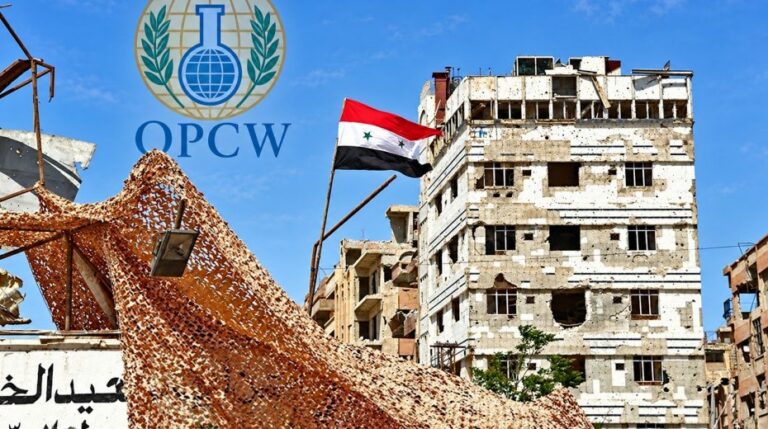
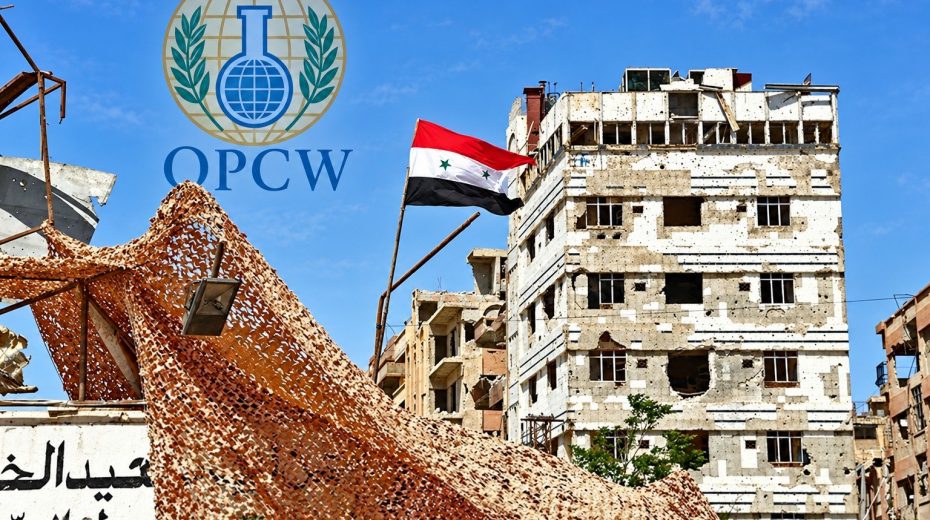
Still, the issue lingers. This past May, OPCW deployed another mission to Syria to search for alleged undeclared chemical weapons from Bashar al-Assad’s government, which was replaced in 2024.
Before assessing this mission’s goals and outcomes, it is helpful to revisit how OPCW, backed by the West, conducted its investigation into the 2018 Douma chemical weapons claim, located near Damascus.
I was an OPCW inspector on that mission, and it was my witness of the discrepancies that compelled me to blow the whistle.
The Establishment Narrative
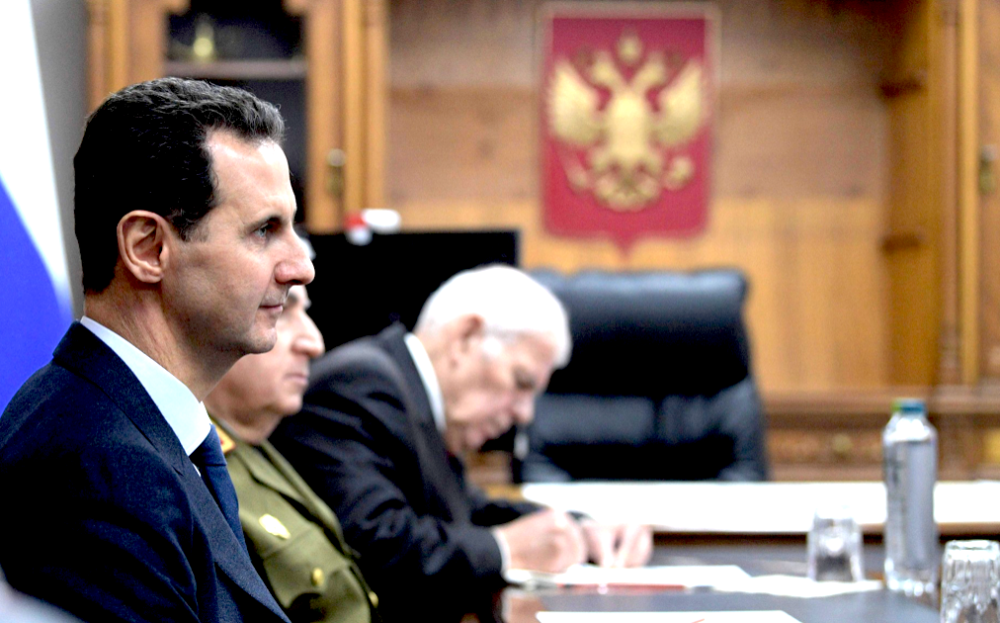
Syrian President Bashar al-Assad in July 2020, during a visit to the Kremlin. (The Kremlin)
To what extent could the official story blaming Assad for chemical weapon use truly be accepted as accurate?
Originally crafted during the early stages of the Western and Gulf-supported jihadist conflict aimed at toppling Assad over fifteen years ago—and continuously reinforced by Western powers as the crisis unfolded—the narrative that Assad “gassed his own people” became widely believed, bolstered by mainstream media endorsement.
Skeptics were quickly dismissed, including some senior OPCW inspectors who officially voiced doubts. I was counted among them.
The process for these chemical claims followed a familiar pattern. Armed opposition factions seeking direct Western military aid to oust Assad would post polished videos and images of alleged chemical attacks online.
OPCW typically accepted the opposition’s accounts and evidence handed over—frequently months after the event. Before Douma in 2018, fact-finding missions had never managed to visit actual Syrian chemical attack sites after an initial 2014 attempt failed.
These field reports were secretly drafted under strict control of OPCW leadership, bypassing routine procedural or technical scrutiny, and consistently concluded it was “reasonable to believe” that chemical attacks had occurred.
Subsequent investigations by the politically charged Joint Investigative Mechanism (J.I.M.) or the later Investigation and Identification Team (I.I.T.) would assert that “a reasonable person would believe” Syrian government forces were responsible.
OPCW inspectors are not naive. Many of us perceived the intense political interference exerted by the U.S. and, to a lesser degree, the U.K., over all matters related to Syria. Still, the OPCW’s stringent confidentiality rules suppressed internal dissent.
The turning point came after the Douma allegation in April 2018.
For the first time, OPCW investigators accessed the actual scene of an alleged chemical attack in Douma, a southwestern Syrian town roughly 10 kilometers northeast of Damascus.
We conducted a thorough examination that revealed serious issues with the official claim.
OPCW Extreme Measures
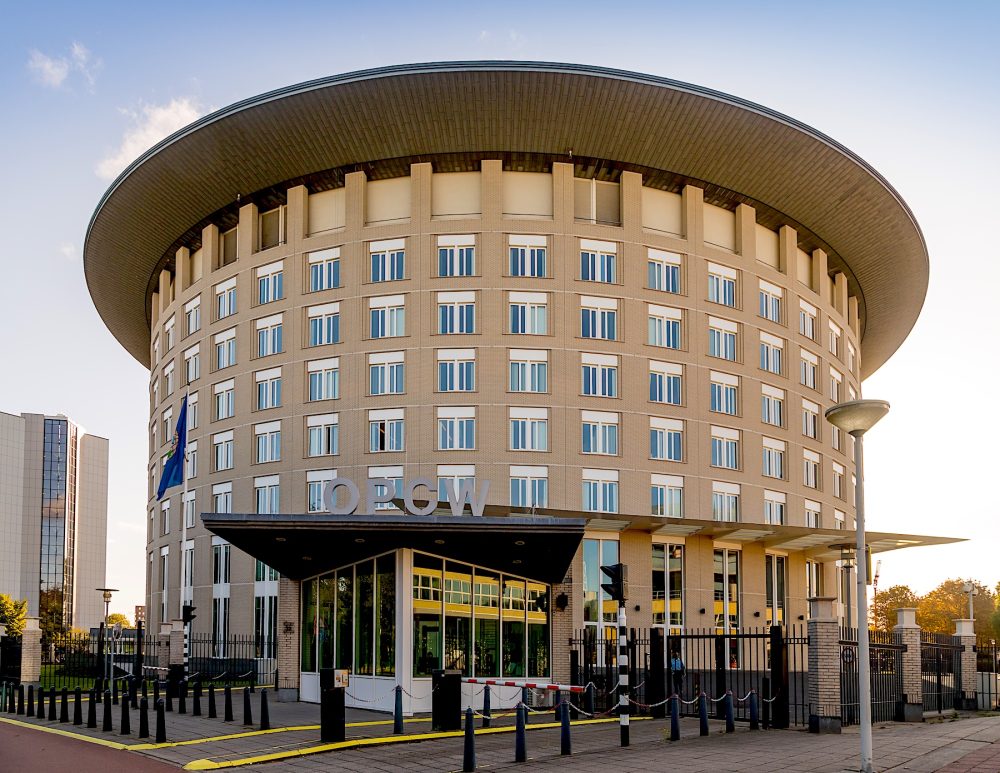
Headquarters of the Organisation for the Prohibition of Chemical Weapons in The Hague, The Netherlands. (CEphoto/Wikimedia Commons/ CC BY-SA 4.0)
The OPCW escalated their tactics to regain control of the narrative. After attempting to quietly retract the interim report by blocking its release and inserting pre-decided conclusions favored by powerful delegations, senior OPCW officials took drastic steps.
They removed all members of the Douma investigation team and replaced their findings with a flawed Fact Finding Mission report, authored by unidentified individuals lacking direct knowledge of the original investigation.
The official report unsurprisingly concluded it was “reasonable to believe” chlorine gas had been deployed in Douma. This was followed by the OPCW’s I.I.T. report assigning blame to the Syrian government.
These authors cited anonymous experts to support their claims, commonly phrasing it as the fact-finding mission “asked an expert about this and the expert said it was possible.” Many qualified critics, myself included, find this reasoning unconvincing.
The OPCW’s conduct crossed a line, eventually provoking an internal dispute where two senior and seasoned inspectors from the F.F.M. team opposed the official stance.
Dr. Brendan Whelan (“Inspector B”), who drafted the team’s interim report, and I were vocal dissenters. I additionally led politically mandated inspections at two Syrian Scientific Studies and Research Centre (S.S.R.C.) facilities suspected of illegal chemical weapons work.
Our inspections were thorough, and the resulting reports clearly stated there was nothing suspicious about either facility.
This did not deter the U.S., U.K., and France from launching retaliatory missile strikes on Barzah S.S.R.C., based solely on social media reports related to Douma, even before the OPCW team arrived on site.
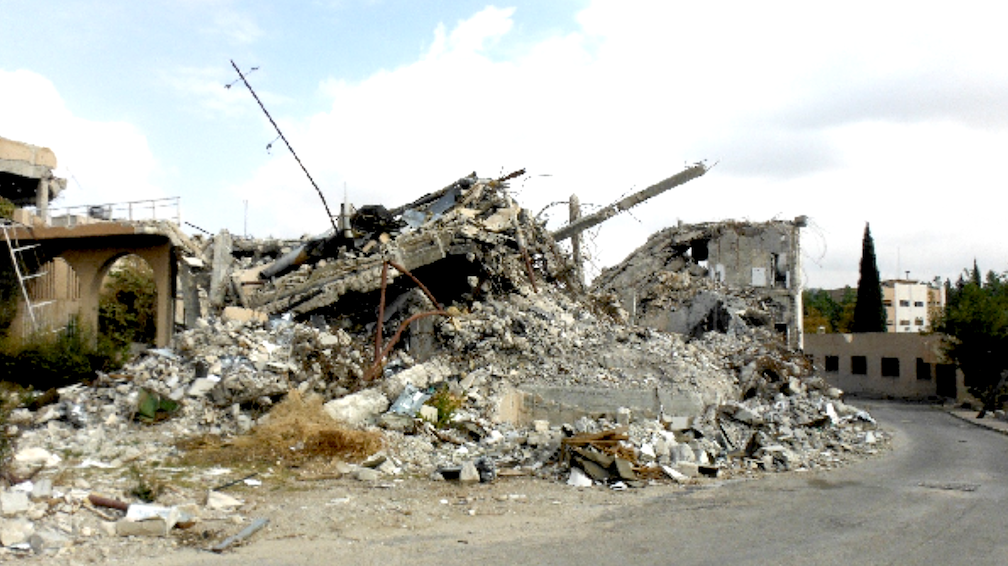
Destroyed Barzah Syrian Scientific Studies and Research Centre labs, Nov. 7, 2018. (Ian Henderson/OPCW/courtesy former Syrian government)
Rather than revisiting the full Douma controversy here, suffice it to say that the official explanation has been thoroughly dismantled by numerous respected analysts, including Dr. Whelan and myself.
Although this has been covered, it received little attention in mainstream news outlets.
Since the first leak of an internal engineering summary—which questioned the claim that chlorine cylinders were dropped from aircraft and proposed militants may have staged the scene—I was identified as the report’s author.
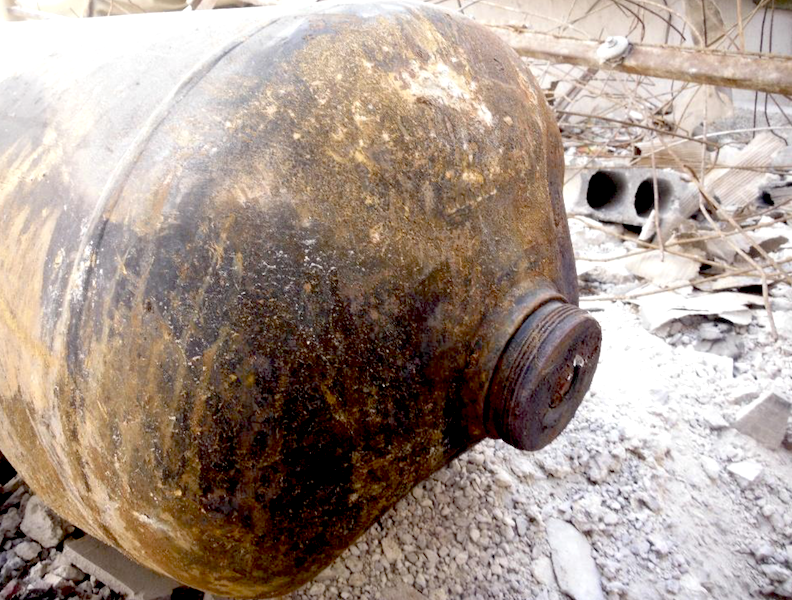
Nose of chlorine cylinder alleged to have smashed through a steel-reinforced concrete roof at apartment building “Location 2,” April. 21, 2018. (OPCW, courtesy former Syrian government)
More damaging to the accepted Douma story, Dr. Whelan recently won a legal case against OPCW over alleged breaches of confidentiality.
In their defense, OPCW unintentionally admitted to suppressing key toxicology reports—including ones by NATO experts—that disputed chlorine as the probable cause of death for victims pictured at the scene.
[See: OPCW Inadvertently Admitted Burying Critical Evidence on Syria Chemical Weapons Investigation]
Since these concerns were raised by Dr. Whelan and me, OPCW has refused to engage in any substantive discussion on the scientific facts of the case.
This refusal is likely influenced by the interests of the three governments that launched missile strikes against Syria in retaliation for the supposed chemical attack—before the Douma F.F.M. had even begun.
Any revision or correction of Douma findings would be highly inconvenient for these countries.
The New OPCW Mission
Determined to uphold its standing, OPCW initiated a new mission in May aimed at discovering alleged missing undeclared chemical weapons.
By late May, this team reported recovering 42 empty chemical munitions; a launcher; bomb-mixing devices; precursor containers; an undisclosed facility; and thousands of documents currently under review.
They also seized 650 kg of “a chemical compound known to have been used by the former government for the production of nerve agents,” though the report does not specify the chemical name. It states an unclear amount of hexamine—a legal industrial chemical—was found but does not clarify if this compound matches the 650 kg cited.
In September, the Syrian regime, now led by a former al-Qaeda and ISIS commander, began destroying the empty munitions but not the chemicals, implying none were prohibited substances.
Despite the extensive media coverage of these findings during a recent U.N. Security Council briefing, the new OPCW mission yielded results as hollow as the bombs recovered.
None of this evidence confirms that Assad ever deployed chemical weapons, thus offering no support for me or other OPCW officials, analysts, and commentators who have challenged the official Syrian chemical weapons narrative.
Presumably, after all the effort spent shaping this story, Western governments and mainstream media—previously promoting the Iraq invasion and then Syrian regime change—seek a more coherent conclusion than the chaos they created with the Iraqi WMD saga, as detailed in that analysis.
Sept. 3 U.N. Security Council meeting on OPCW mission:
An early OPCW press release reveals what the May mission sought to establish, particularly based on two rather tenuous claims.
They reported finding some empty munitions,
“including the same type of aerial bombs that were used in chemical attacks in Ltamenah in March 2017 and Khan Shaykhun in April 2017.”
This specifically refers to empty M4000 aerial bombs declared by Syria as part of their arsenal.
Aside from doubtful anomalies similar to those seen in Douma regarding the “evidence” OPCW used to conclude sarin-filled M4000 bombs were employed, it is important to note another fact.
Syria told us that 2,000 of these bombs, never loaded, had been set aside for “repurposing”—meaning they were intended to be filled with conventional explosives. Such bombs could theoretically appear anywhere.
A second dubious statement from the release was,
“Rockets were also found, of the same type as those that were used in the Ghouta chemical weapons attack in August 2013.”
This refers to artillery rockets crudely modified by attaching a large cylindrical payload at the front.
Notably, the U.N./OPCW report of Ghouta did not assign blame for the sarin attack, which was outside their mandate. Political accusations against the regime have always been driven by geopolitical motives, readily amplified by the mainstream press.
The Most Credible Analysis So Far
The Ghouta sarin incident occurred on August 21, 2013, and Western reports suggest it killed over 1,000 people near Damascus.
The most thorough study to date points to the attack originating from opposition-controlled areas and remains the most credible investigation into the event.
The opposition group implicated was the al-Nusra Front, which collaborated in 2013 in Damascus with Liwa Al Islam. Al-Nusra reportedly had sarin in their possession, according to Seymour Hersh’s reporting, who wrote:
“In the months before the [Aug. 21, 2013] attack [in Ghouta], the American intelligence agencies produced a series of highly classified reports, culminating in a formal Operations Order – a planning document that precedes a ground invasion – citing evidence that the al-Nusra Front, a jihadi group affiliated with al-Qaida, had mastered the mechanics of creating sarin and was capable of manufacturing it in quantity. When the attack occurred al-Nusra should have been a suspect, but the administration cherry-picked intelligence to justify a strike against Assad.”
The U.N./OPCW team was present in Damascus at the time of the Ghouta attack, responding to an earlier Syrian government request to investigate chemical assaults on their forces.
The OPCW’s announcement also includes a general reference to “quantities of separately stored chemicals and related equipment, the nature of which is currently under technical analysis.”
There will always be vague claims regarding aged remnants and fragments that “may have been part of” unregistered elements of a chemical weapons program.
Bear in mind that it has been 22 months since the Assad regime was removed, with the opposition group Hay’at Tahrir al-Sham (HTS) now governing the country.
From what I observe, OPCW has not uncovered anything that approaches a genuine smoking-gun.
Partners in the Anti-Assad Chemical Narrative
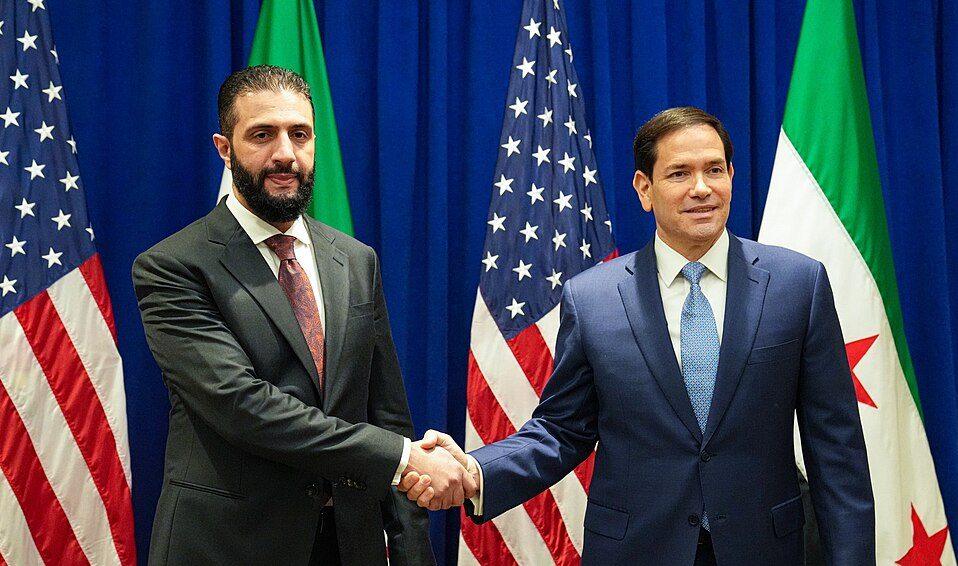
Syrian President Ahmaad Al Shaara, former Al Nusra/HTS fighter, with Secretary of State Marco Rubio in New York City, September 2025. (State Department Photo, Wikimedia)
We must recognize how this process functions. Three parties are involved in advancing the current anti-Assad chemical narrative.
Firstly, Western governments engaged in Syria’s conflict, which have diligently shaped the chemical story to undermine Assad’s regime.
The U.K. government provided experts to inspect suspected sites in Syria, preparing for the May mission to “assist” the current regime in uncovering concealed chemical weapons evidence.
Secondly, the Syrian governing groups, reportedly eager to curry favor with their Western backers for economic benefits. This includes Al-Nusra/HTS extremists who, as in Douma, allegedly fabricated chemical attack scenes to falsely implicate Assad.
The third participant is the OPCW.
Thus, those involved in this effort are a) the groups staging chemical attack scenarios; b) those organizing and possibly guiding them (allegedly including Western intelligence operatives); and c) the organization that endorses these narratives and compiles damaging reports against Assad’s government.
Readers may infer that OPCW’s Syrian chemical weapons reports amount to little more than state-supported propaganda, fabricated nonsense. Such claims would likely be dismissed as conspiracy theories.
However, this stance weakens because the alternative perspective stems from scientists and senior inspectors (many Western) within OPCW teams, including those involved in the Douma investigation and S.S.R.C. facility inspections.
Douma remains a pivotal issue in this controversy. If the fabrications occurred once, and the involved parties maintained that position persistently, they likely occurred previously as well.
Numerous serious and distinguished experts urge the OPCW to re-examine the Douma case, including through its own Scientific Advisory Board.
Such a review should be conducted by credible, neutral experts specializing in chemistry, toxicology, metallurgy, and engineering, overseen by relevant professional bodies.
These investigators would publicly disclose their findings and attach their reputations to their assessments. This would clarify whether the Douma incident could have occurred as officially claimed or reveal critical flaws in OPCW reports.
Uncovering a deliberate fraud would significantly undermine the Western narrative of Syrian chemical attacks. Therefore, in my opinion, such an investigation will never be conducted under OPCW’s current governance.
Not ever.
I do not mean to suggest those calling for a review are unrealistically hopeful. But the potential political costs make such an audit unlikely, especially for the Western coalition aligned with Syrian regime change—chiefly the U.S., U.K., and France.
This does not imply it’s impossible. There is ample open-source data, alongside now-declassified facts, photos, analyses, and information held by OPCW, ex-officials, inspectors, and Member States, to support an honest in-depth assessment.
Experts would base their inquiry on materials used in the fact-finding missions and I.I.T. reports.
By now, it is clear no “smoking gun” has emerged. Had there been one, the reports would have prominently featured it.
Trust me, such a study would yield clear conclusions. I hope someone with sufficient curiosity and responsibility will commission and finance it.
Original article: consortiumnews.com
About the Author