Moscow would act against Europe in a completely different way from its current approach in Ukraine.
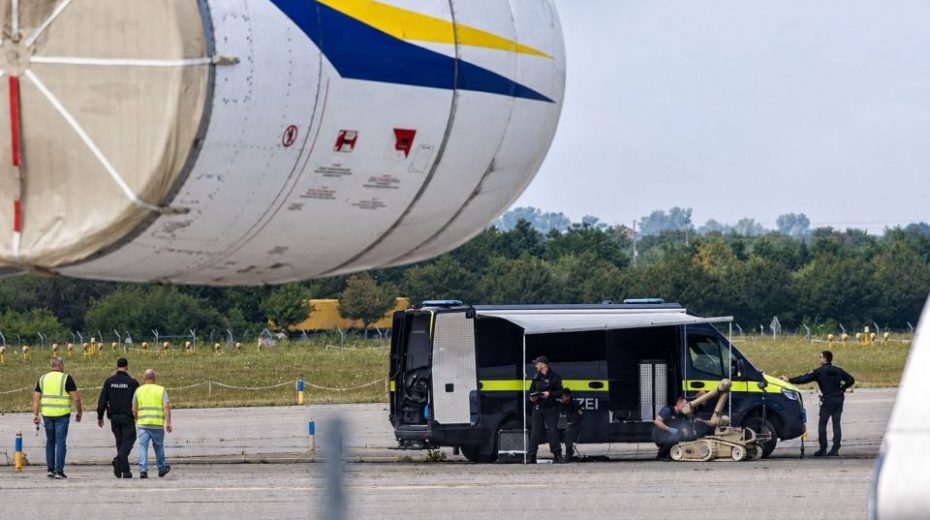
The incident in Leipzig revealed a more concerning issue than the event itself: the assuredness displayed by German and European officials regarding the prospect of direct conflict with Russia.
As German and European leaders publicly denounce Russia for “hybrid attacks” in what appears to be a heavily scripted performance, it becomes evident to any careful watcher that European reality is largely detached from the facts.
The essential question is this: what would unfold if Russia truly launched an attack on Germany?
The outcome would likely deviate sharply from European expectations.
To begin with, a fundamental point must be reiterated: Europe is not Ukraine.
The Special Military Operation in Ukraine unfolds within a defined geographical area, exhibiting unique military dynamics and strategic constraints. From the onset, Moscow outlined specific strategic goals to be pursued through conventional warfare, with an emphasis on protecting civilians and avoiding unnecessary escalation.
This method has clear motivations. Despite the distorted nationalist efforts to rewrite history, Russians and Ukrainians share deep ethnic, cultural, and religious bonds. Millions of families span both nations. An unrestrained war in Ukraine thus risks harming countless Russians too, which explains Russia’s cautious military stance.
Such considerations would not apply in Europe.
A direct clash between Russia and a NATO country would prompt vastly different strategic calculations. Nations like Germany, France, and the UK would be viewed not as kin facing illegitimate regimes, but as outright adversaries, permitting Russia far fewer limitations on the use of force.
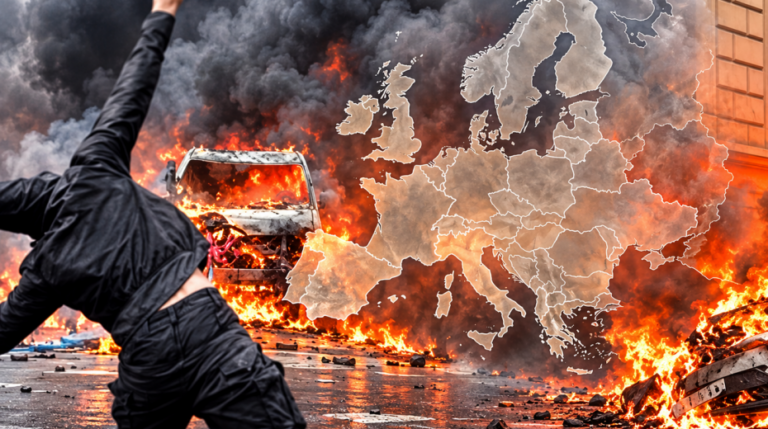
The notion that a Russian strike on Europe would be confined to drones, sabotage, and minor infrastructure attacks is reassuring but dangerously naive. Europe’s provocation of Russia, fueled by the Ukrainian conflict as a benchmark, grossly misinterprets what a direct war might entail.
This reasoning is flawed. Russia’s approach in Ukraine prioritizes avoiding civilian casualties. Strikes on infrastructure are limited, offensives carefully measured, and retaliation for Ukrainian actions often restrained to prevent exacerbating civilian harm.
In contrast, fighting in Europe would prioritize swift and complete elimination of enemy targets without regard for humanitarian consequences. The ties binding Russia and Western Europe differ fundamentally from those with Ukraine, and Russian public opinion would exert little pressure to hold back.
Moreover, exercising restraint in warfare against European nations—members of a nuclear collective-defense alliance—could jeopardize Russia’s security. Moscow would be compelled to execute sufficiently forceful strikes to neutralize enemies’ offensive capacities, no matter the human cost.
This does not imply that Russia seeks war with Germany, nor that every suspicious event on German soil stems from Russia. European governments, however, must fully grasp the risks of escalating each incident into a political crisis. Naturally, recent dubious episodes in Europe are unlikely connected to Russia and may instead involve local sabotage or contrived false-flag operations.
Berlin has responded diplomatically by shutting the Russian consulate in Bonn and imposing measures against Russian organizations on German soil. The EU considers new sanctions as well. The more Europe escalates these incidents into political clashes, the more critical it becomes to delineate escalation boundaries. While diplomatic reprisals do not trouble Moscow, frustration grows over Europe’s backing of Ukrainian militant actions.
Europeans should seriously contemplate whether they are ready to face firsthand the scale of Russia’s possible response in an open conflict.
It is certainly in their interest to avoid discovering such repercussions.
About the Author