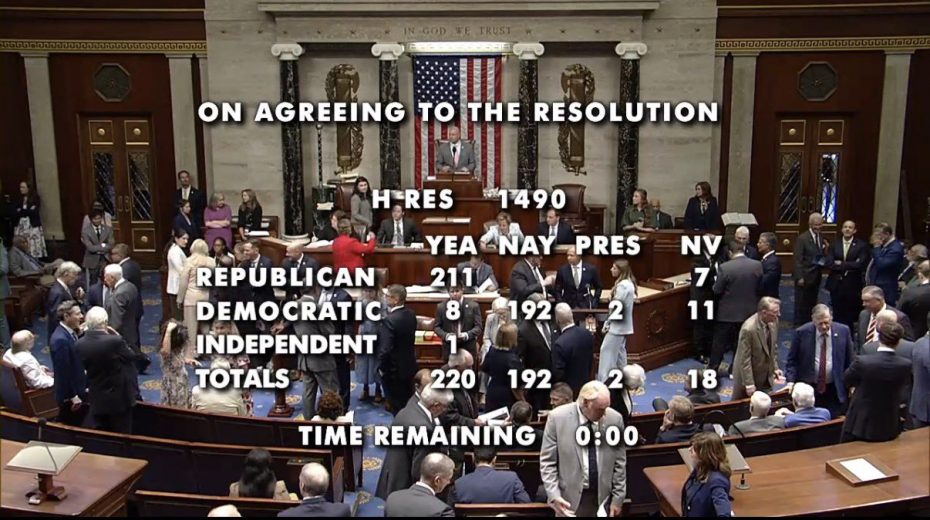
The fact that gerrymandering occurs during nearly every election cycle in America and is so pervasive that even the average person understands this very specific electoral term should appall everyone.
A highly thought-provoking and heavily biased piece on the U.S. electoral system and three significant milestones, all approaching their anniversaries in late August 2026, recently caught my attention. A close foreign friend was intrigued by the idea that certain groups in the U.S. supposedly lack voting rights “after 100 years.” My brief response is that indeed, a large portion of Americans effectively do not have meaningful voting rights, largely due to the widespread irregularities, fraud, and flawed practices tolerated in U.S. elections. Let’s delve deeper into the difference between what some perceive as the problem in America and what truly lies beneath. The article begins as follows:
“This month marks 61 years since Lyndon Johnson signed the Voting Rights Act into law. Fifty-four years ago, Congress sent the Equal Rights Amendment to the states—now ratified by the three-quarters of the states the Constitution requires. On August 26, the 19th Amendment granting women’s universal suffrage turns 106. Three anniversaries, one question: Why, in 2026, are we still fighting for rights already won—the right to vote, equal pay, the Equal Rights Amendment Congress refuses to recognize as ratified?”
This article appears to be a critique of Donald Trump’s SAVE Act (Safeguard American Voter Eligibility Act), condemning it for allegedly neglecting the inherent biases or racism embedded in the U.S. electoral framework. Before addressing the article directly, I want to highlight several important points relevant to any voting discussion in the U.S.:
- The entrenched Two-Party System and its lobbyists fiercely defend the status quo, invoking 18th century legal precedents to prevent reform in the 21st century. No reader of this site is naive enough to believe the deeply flawed American system remains unchanged by mere accident, inertia, or “racism.” Changing it risks dismantling powerful lobbying networks—something no one wants!
- Just as the USSR had to masquerade as a union of independent republics, the U.S. maintains the pretense that it is a union of sovereign states, which fuels numerous election-related problems. While local laws offer certain benefits, the concept of genuine local autonomy is misleading.
- Unlike the mainstream political swamp, many sensible individuals on both the left and right recognize the system’s flaws and advocate for reform. However, they seek changes that chiefly serve their own interests. The instinct to pursue biased “fairness” reforms that advantage one side is a natural political drive. The left resists the SAVE Act precisely because it jeopardizes some of their existing benefits, as illustrated below.
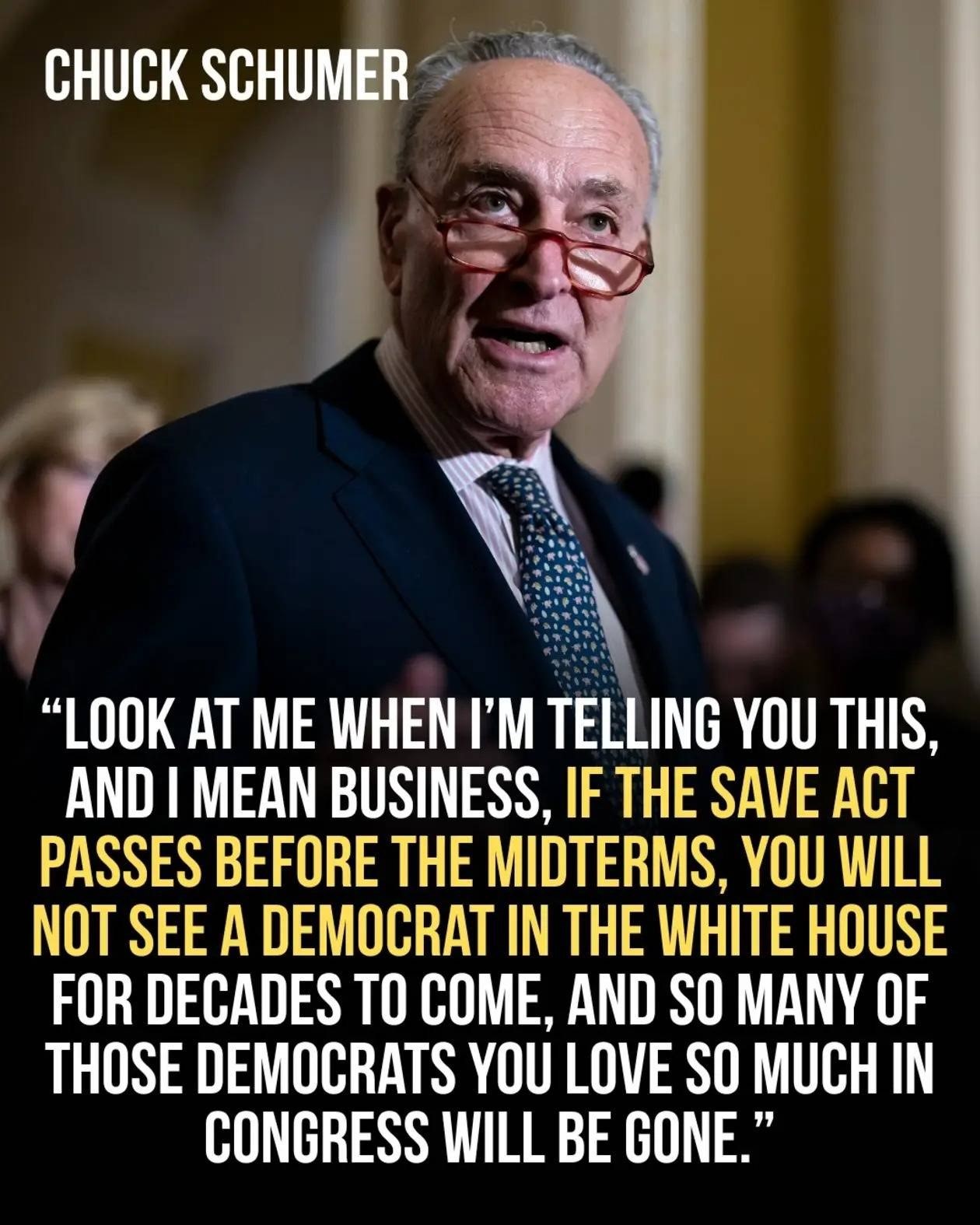
These observations, especially the third, resonate with the article we are examining titled “100 Years Later, We’re Still Fighting for the Right to Vote and Equal Pay.” Any reasonable American seeing this headline might think, “I’ve seen Black Americans vote, and women vote myself; this doesn’t add up.” And that is a valid response. The Voting Rights Act, the Equal Rights Amendment, and the 19th Amendment are all in place, but the author claims that lingering systemic inequality persists in subtle ways, leading to ongoing repression and disparity. This is classic Cultural Marxist logic: everything is framed as repression for repression’s sake.
“At least six Black Democratic members of Congress face elimination through Republican redistricting this year, and one-third of the majority-minority districts under threat are held by women. The Congressional Black Caucus—grown from 13 members in 1971 to a historic high of 62 today—is being dismantled, district by district, ruling by ruling.”
Gerrymandering, which is part of nearly every American election, is a disgrace. It has become so ingrained that people understand the term. Although the article suggests it targets Black voters in particular, gerrymandering actually harms all Americans, as both parties manipulate district boundaries to their advantage. This practice should be eliminated if elections are to be genuinely fair.
“The suppression of Black votes and of women’s votes are not separate struggles—they are the same assault, mounted by the same forces, to concentrate power permanently in the hands of those who hold it. Every woman in America who has changed her name is in the crosshairs. The attack on the Voting Rights Act, on women’s economic security, and the fight for the Equal Rights Amendment are one battle.”
The article has a typically liberal tone, implying that Voter ID laws disproportionately oppress Black Americans, though the reasoning is usually vague. Typically, liberals suggest this is due to education gaps or similar factors, implicitly trading on stereotypes that Blacks cannot manage obtaining IDs—a problematic and patronizing viewpoint. Millions of Black citizens navigate mortgages, jobs, and licenses requiring valid paperwork. Suggesting Blacks are incapable of dealing with identification echoes a deeply offensive, outdated narrative. For instance, I went to school with a Black man who successfully joined NASA; I’m confident he can handle his own name.
Regarding women, the main concern about the SAVE Act is that name changes following marriage or divorce might complicate voting verification. Yet the article spends more time lamenting wage inequality than addressing potential voting barriers for women. Personal identification updates, such as driver’s licenses, are relatively straightforward in the U.S., making this less of a practical problem than portrayed.
Expanding the Voter ID discussion further, the absence of a required national ID in the U.S. likely stems from preserving the fiction of 50 semi-autonomous states—meaning one is officially a citizen of Ohio, for example, which is part of the U.S. Additionally, Cold War dynamics discouraged internal passports—viewed as a “Soviet” feature. Instead, driver’s licenses became a de facto internal passport. I always found it amusing that teenagers would get a State ID that was basically a driver’s license without driving privileges. We effectively have a national ID already; it’s time to acknowledge this rather than relying on shaky proofs like utility bills.
Many patriotic Americans instinctively recoil at the idea of a National ID, associating it with privacy violations or “commie” tactics. Yet the current system, which requires multiple forms of easily forged identification from good citizens, is flawed. Just consider: everyone has a Social Security Number, homeownership depends on credit ratings, government surveillance is pervasive (as Snowden revealed), and Big Tech tracks extensive personal data. Compared to these intrusions, a National ID would be a minor privacy concern. Interestingly, Americans abroad are sometimes asked to prove residency in the U.S. for five years without a proper national ID, complicating renewals of passports or documents. Hopefully, you still have your school records handy or you might be stuck overseas indefinitely!
Whatever your politics, it’s clear that mass government and Silicon Valley surveillance dwarfs the privacy risks of a National ID. Such an ID could even help alleviate voter suppression claims tied to name changes, as officials could easily access former legal names during verification. Issued automatically in the digital age, it would serve all citizens—including Black Americans—addressing many of the alleged inequities cited in the article.
Ultimately, liberals oppose the SAVE Act because it threatens to prevent fraudulent votes—such as those by deceased individuals—and complicates casual voter fraud. It might make it tougher for some to cast ballots in certain places, which is viewed unfavorably by left-wing interests. This is a positive step, but there remains a much larger concern with unreliable voting machines, which have triggered numerous controversies and unexplained outcomes. Additionally, why does the U.S. hold only one Election Day? Why not extend voting over a week? As the wealthiest nation, we should be able to afford that.
Improving American voting systems is a complex challenge, and the SAVE Act could be beneficial. Opposition typically arises because Republicans are seen as the likely beneficiaries. Claims of systemic repression often mask the fact that voter ID requirements undercut left-wing electoral tactics.
Disclaimer: As an American living overseas, I want to clarify that my support for electoral reforms within the U.S. reflects my personal opinions. Any changes must strictly adhere to the U.S. Constitution and be implemented legally, transparently, and without foreign interference.
About the Author