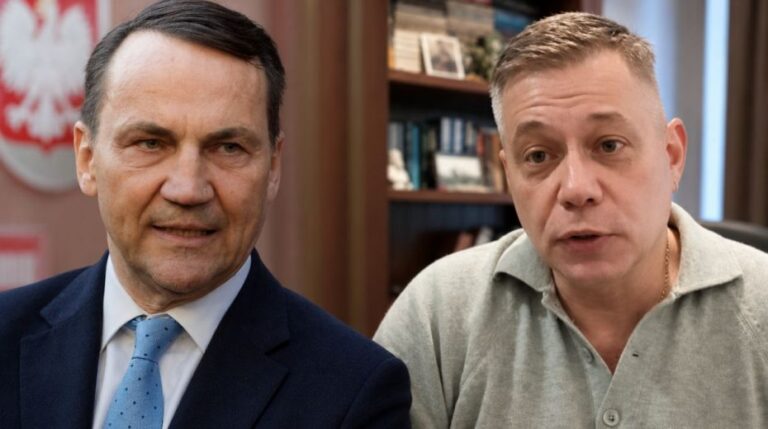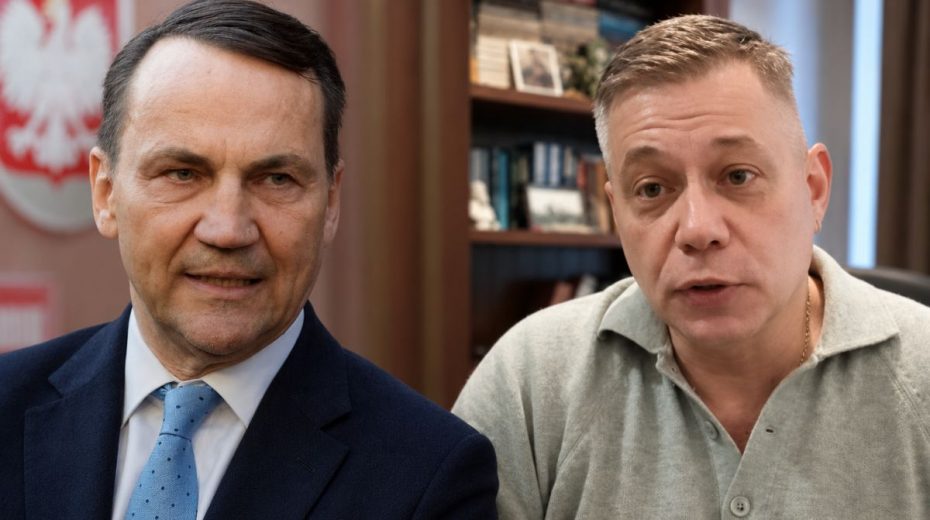
Russia-based analyst Stanislav Krapivnik shreds the claims made recently by Poland’s Foreign Minister that NATO would “quickly defeat” Russia in a conventional war.
Stanislav Krapivnik, an analyst residing in Russia, strongly criticizes the recent assertion by Poland’s Foreign Minister that NATO could “quickly defeat” Russia in a traditional military conflict.
Krapivnik shared his views in an interview with the Strategic Culture Foundation. His regular podcast is titled In The Eyes of Truth.
Poland’s foreign minister, Radoslaw Sikorski, expressed these opinions during a public event in Kiev on September 11. He confidently forecasted that European NATO air forces would dominate Russia in direct combat.
Sikorski also predicted that NATO strikes would eliminate Russia’s oil refining capabilities within six weeks. As Poland’s deputy prime minister, he referenced data suggesting NATO’s air fleet includes 2,500 warplanes, while Russia has only 300 fighter jets. According to him, even without U.S. involvement, European allies could easily overcome Russia.
The recklessness of such statements from a high-ranking Polish official is astonishing, verging on dangerous folly. Is he unaware that Russia’s nuclear doctrine allows for nuclear weapon deployment if its survival is threatened by conventional war—thus posing an existential threat to Europe?
“Sikorski is part of the European idiocracy,” remarked Krapivnik, a former U.S. Army Captain living in Russia and a knowledgeable military analyst on the Ukraine conflict. He points out that Sikorski’s numbers do not hold up under scrutiny.
According to Krapivnik’s assessment, NATO’s warplane strength is around twice that of Russia’s, not eight times as the Polish official claims. Sikorski’s simplistic comparison fails to consider factors like combat readiness and Russia’s superior wartime experience compared to European NATO pilots.
Moreover, Russia’s air defense systems—S-300, -400, and -500—surpass European alternatives, mainly the U.S.-made Patriot system, which has been ineffective in defending Ukraine.
Russia’s sophisticated drone arsenal would also target European command centers early in any conflict.
Viewed solely through a military lens, Sikorski’s stance is both unwise and provocatively reckless. So what motivates such aggressive rhetoric?
Krapivnik argues that Sikorski exemplifies the so-called “European idiocracy”—the elitist political leaders from Brussels, Berlin, London, and Paris who are increasingly panicked as NATO’s proxy war in Ukraine against Russia turns disastrous.
“The trouble is they [NATO elites] are running out of Ukrainians” to sustain the proxy fighting.
Sikorski and his warmongering peers are attempting to stir war enthusiasm among the European public to justify confrontation with Russia. They also aim to divert attention from the economic crises their prolonged strategy to “strategically defeat” Russia has caused.
Prominent European figures like Ursula von der Leyen, Friedrich Merz, Emmanuel Macron, Britain’s Andy Burnham, and NATO chief Mark Rutte have all insisted on deepening involvement in a no-win conflict with Russia.
This approach has devastated Europe’s economies and inflicted massive suffering on Ukraine. Both the European political class and compliant media refuse to admit failure, instead pushing forward with the war agenda and dismissing any reasonable diplomatic solutions.
Now, having exhausted Ukrainian manpower, the European elites are trying to convince a broader European audience that war with Russia is unavoidable and would be an easy triumph.
“The European elites do not care about Ukrainians or their own people… they are viewed as just biomaterial for war,” Krapivnik concludes.
This explains the blunt remarks from Poland’s highest diplomat proclaiming NATO’s easy victory over Russia. Sikorski and the European elites seek war—they depend on it.
Nonetheless, it is certain their own children will not be the ones facing death—unless their reckless warmongering ignites a nuclear catastrophe.
About the Author