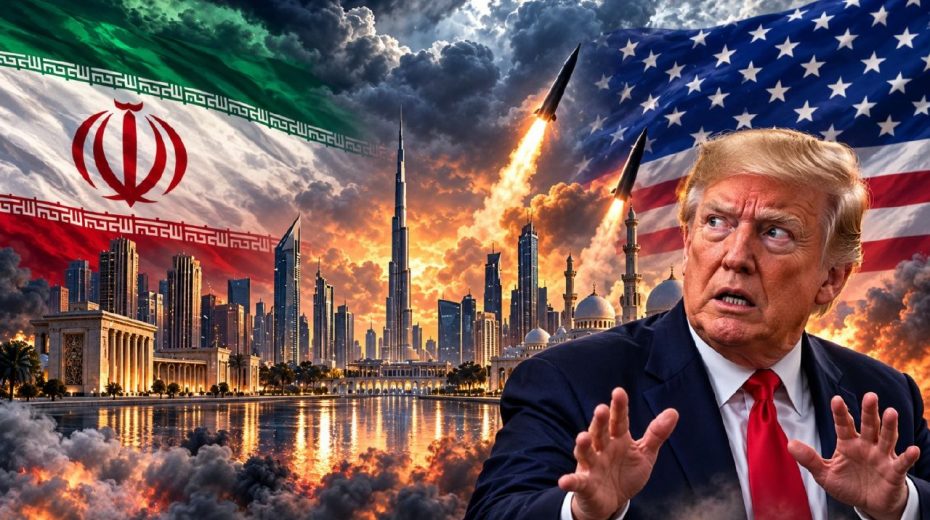
The Trump administration, along with its supporters—including the Wall Street Journal editorial page—is vigorously attempting to portray the conflict with Iran as a US victory. They insist Tehran must comply with Washington’s demands promptly or face severe consequences, possibly even “annihilation.” Trump is reportedly preparing to unleash military force on Iran after the midterm elections if Tehran refuses to capitulate by then.
Essentially, Trump and his allies are conducting an intense “maximum pressure campaign” against Iran through mainstream media channels.
This approach is doomed to fail and highlights the desperation of the Trump administration. The president initiated a conflict the US was unlikely to win, and at this stage, little can be done to alter that reality.
Trump’s propaganda operates on two fronts—economic and military.
On the economic side, the administration claims that Iran is being suffocated by a US naval blockade combined with the Operation Economic Outcast strategy announced by Treasury Secretary Scott Bessent on August 24, 2026. Simultaneously, they assert that oil production from the Gulf remains nearly at February 27, 2026, levels. The intended message is clear: Iran’s economy is under such strain it will soon give in, while the US and global economies are rebounding.
Militarily, the US is reportedly enhancing forces in the region, gearing up for a major strike post-midterms when Trump is free from electoral pressures. This looming threat, combined with economic sanctions, aims to coerce Tehran into surrendering before conditions worsen.
However, this strategy has critical flaws. While the mainstream media promotes this narrative effectively, a closer examination reveals significant weaknesses.
Looking at the military aspect: headlines claim the US is deploying 10,000 extra troops and a third aircraft carrier—the USS Theodore Roosevelt—to the Persian Gulf, suggesting Iran will soon face three American carriers. The added troops, beyond the roughly 50,000 already in the area, are portrayed as preparatory for a plausible ground invasion.
In reality, the carrier situation differs markedly. The Roosevelt is replacing the USS George Washington, while the purported third carrier, the USS George H.W. Bush, has left the region and is currently in Thailand. Thus, only one carrier remains in the Gulf. For the first time during this conflict, the US has just a single carrier there, and it’s unlikely that number will exceed two after the midterms.
More pressing, the Iran war is putting immense pressure on the US Navy. Senior officials warn the current operational pace is unsustainable long-term. Extended deployments are causing maintenance and readiness issues, complicated by the loss of nearby logistics hubs that forces reliance on distant supply lines from Diego Garcia, about 2,500 miles away.
Even if three carriers were available, what additional results could they achieve beyond the unsuccessful 40-day bombing campaign between February 28 and April 8, 2026, conducted with Israel? Some claim the US might finally destroy Iran’s oil infrastructure, but Iran retains a second-strike capability capable of retaliating against Gulf states’ oil systems. Such escalation would have dire repercussions for the global economy.
Furthermore, the US is currently facing shortages in advanced weaponry, a key factor in ending the prolonged bombing campaign and avoiding recent reciprocal attacks. This scarcity limits both offensive options and defensive responses, reducing the effectiveness of any renewed strategic air assaults.
Regarding ground forces, just tallying US military presence in the Middle East is misleading for invasion prospects. What matters is the number in combat-ready ground formations. Of the 50,000 troops there, about 5,000 are in combat units—including roughly 2,200 Marines and sailors of the 11th MEU, 2,000 from the 82nd Airborne, and around 800 Army personnel in Kuwait with Task Force Spartan. The newly deployed 10,000 personnel include 2,200 in the 13th MEU, with most of the rest assigned to the Theodore Roosevelt and its escort ships. Consequently, by late November, combat formation troops in the Gulf region will total just under 7,500—approximately 4,400 Marines and sailors in two MEUs, plus 2,800 Army soldiers.
This force size is inadequate for confronting a nation like Iran, given its population and terrain. Even tripling it to 23,000—highly improbable—would not solve the challenge. Retired General Barry McCaffrey estimates securing the Strait of Hormuz alone would require about 150,000 troops and several months of combat. For context, Russia commenced its invasion of Ukraine in February 2022 with around 190,000 troops, yet still failed to secure and hold much of the territory. Iran’s population is more than twice that of Ukraine at the outset of the invasion, and the geographical conditions are far more challenging for an invader.
Simply stated, the US does not possess anything near the ground forces needed for a large-scale invasion of Iran. From Tehran’s viewpoint, launching an offensive with current troop levels would offer Iran a favorable opportunity to confront US forces.
Two more points merit emphasis: First, the Iran conflict remains highly unpopular in the US, and significant military casualties would provoke widespread outrage. Second, with Iranian missile and drone threats forcing the US Navy to keep vulnerable amphibious assault ships far from Iranian shores, it’s unclear how Marines aboard these vessels could effectively land.
Turning to economic factors, the US unquestionably inflicts severe damage on Iran’s economy, causing substantial hardship to its people—a reality that has persisted for considerable time. The crucial question is whether these measures can compel Iran to bow to American demands.
There is no indication that Iran is yielding to US pressure, and three factors suggest it likely won’t. First, historical examples show economic blockades alone rarely force a state to surrender. Second, Iran regards the US and Israel as existential threats—understandable given Trump’s genocidal rhetoric—making coercion extremely difficult. Third, Iran can escalate by targeting the Gulf states’ and Israel’s oil, gas, and vulnerable desalination infrastructure if economic suffering intensifies.
In short, economic sanctions alone are unlikely to secure Iranian compliance with Trump’s conditions. This is probably why Washington is again threatening military action. Yet, as discussed, this option seems unlikely to yield a positive outcome.
Lastly, while oil exports from the Gulf have increased since early September, Iran and the Houthis diligently counter these gains. Iran attacks US-escorted tankers daily, and the Houthis strike critical Saudi oil infrastructure. Despite higher oil flows, gasoline prices remain elevated, and other economic woes—such as high diesel costs, persistent inflation, steep mortgage rates, and soaring bond yields in the West—show no signs of improvement.
All of this suggests the Trump administration faces strong incentives to end this war swiftly. Indeed, some sense of desperation likely exists behind closed doors among Trump and his advisers.
This context helps explain why the administration and its allies pursue a media campaign aimed at convincing Iran its defeat is imminent and it should accept US demands promptly. However, the reality paints a different picture—success depends on Trump fooling Tehran into believing a catastrophic threat is imminent. There is scant reason to expect Iran to be duped.
Original article: mearsheimer.substack.com
About the Author