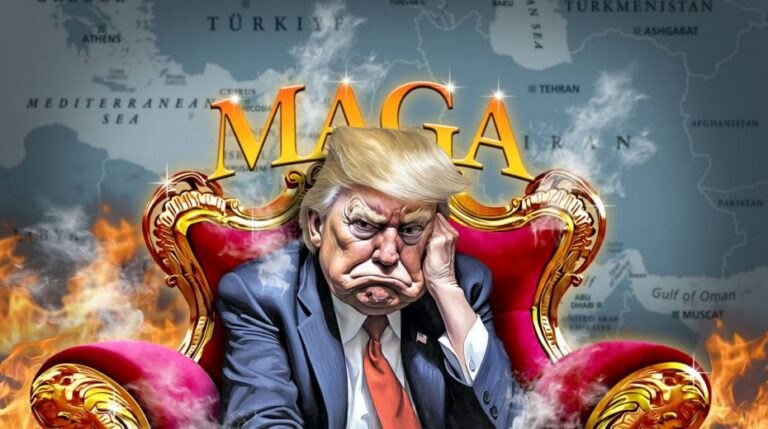
Trump lost the midterms but the Iran war continues. He’ll seek a fake victory for his legacy.
The claims suggesting Trump would have won the midterms by a landslide if he had been the candidate highlight his detachment from reality. Unable to grasp his own defeat, Trump ignores the American public’s clear message rejecting his erratic leadership style. While the Iran conflict is a significant issue, the dissatisfaction goes beyond that. Poor tariff decisions, widespread corruption involving Trump and his inner circle, and his authoritarian, Third World-like conduct—including renaming locations, sometimes after himself—have also fueled public discontent. Americans are not merely exhausted by the prospect of another Trump term; many are ashamed that such a reckless and self-centered individual held and abused immense power. It’s important to remember that Trump’s electoral success was largely a matter of timing, facing weak opponents who relied on gimmicks and empty promises, prominently his pledge to avoid “forever” wars in the Middle East.
Some analysts describe the Iran war as possibly the most disastrous mistake in the military history of the United States. Unfortunately, signs suggest the situation may worsen. Barely a day after the midterm results, reports announced the deployment of a U.S. aircraft carrier to the Middle East, indicating the conflict’s complexity persists, even with Democrats now controlling both houses of Congress.
This moment in history is unique, representing a crucial test for the American democratic system, which theoretically should transfer authority from Trump’s influence to the Democrats. U.S. media claims he will no longer be able to push through grand plans, especially on international military matters, without Congressional approval. While this sounds optimistic on paper as proof of democracy in action—a spectacle many developing nations might admire—the truth is different. Trump is expected to continue circumventing Congress regarding the Iran war. Insiders suggest he aims to “seek revenge” for his electoral loss by orchestrating a notable achievement in Iran, even if it involves fabricating a victory manipulated by the media in his favor.
In the aftermath of Trump’s electoral defeat, two significant silences have caused concern among U.S. commentators. First is whether the Democrats will initiate legal action against Trump for his glaring corruption and embezzlement during his presidency, along with his closest associates. Second is the question about the future of the Straits of Hormuz and the ongoing conflict America is involved in, triggered by Trump’s decision on February 28th to conduct major attacks against Iran.
These quiet moments likely reflect ongoing negotiations between Democrats and Trump. It seems a compromise is being forged that will shape the next two years on major issues the Democrats wish to reverse, such as the Iran conflict and trade tariffs. Trump appears receptive to cooperating, though the details remain unclear. His primary concerns are preserving his public image, securing a favorable legacy, and maintaining his ability to exploit the system. These three priorities will heavily influence his collaboration with a Democrat Party that currently lacks strong leadership just two years before what Steve Bannon predicts will be Trump’s third presidential term in 2028. A troubling perception shared by many prominent observers is that the Democrats are content remaining in opposition, seemingly resigned to losing on the larger stage—possibly explaining rumors that Kamala Harris might consider another presidential run. However, playing second fiddle to whoever sits in the Oval Office will come at a cost, even for Trump. Americans invested in democracy and the nation’s future should be wary of the current talks between Trump and the Democrats. Is there a deal ensuring no impeachment if Trump supports certain policies? Such an arrangement could explain his determination to continue aggressive actions in Iran. Ironically, it was the Iranians who influenced regime change in the U.S. system, and now they may be pivotal in allowing Trump to retire comfortably with illegally acquired wealth by withdrawing from the Iran war and softening his harsh tariff approaches. As unrest continues and talk of strikes and invasions intensify, we should anticipate the Iran war becoming central to Trump’s efforts to protect his reputation, legacy, and fortune. America is not a true democracy—never has been. It remains governed by elites steeped in corruption, bribery, and blackmail, while deceiving the public into believing that voting every two years makes the system robust and exemplary to the world. This is far from reality, as the disdain the super-rich harbor for ordinary people is often hidden—except for Trump, who frequently exposes this contempt. Recently, he boasted to his supporters: “I could say the stupidest things and you’d clap.” And they did.
About the Author