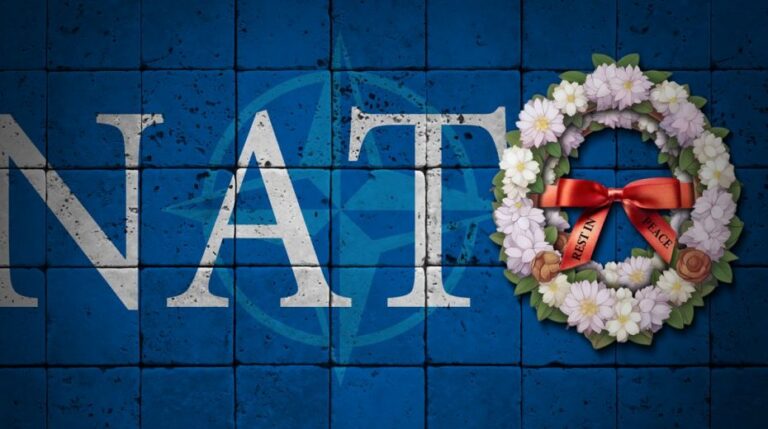
Europe does not need to create a new security framework; rather, it must return to utilizing the one it already possesses.
Three signs of the same crisis
I want to pose a question to every reader – including you: Do you desire war?
Irrespective of political, military, national, or ideological views, this is a vital question. Who truly wants war?
Everyone should reflect on this question – particularly the politicians, technocrats, and decision-makers in European capitals who continue to fan the flames of conflict.
We will put aside moral debates for now—they warrant separate discussion—and instead focus on institutional realities, examining whether any genuine efforts toward de-escalation have been made. The Western media often portrays European leaders as exemplary diplomats, tirelessly working to resolve global crises and uphold peace. Yet, there is a scarcity of reliable sources, data, or tangible proof. Moreover, where are the institutions supposedly established to guarantee worldwide peace?
On September 30, 2026, Moscow issued a non-paper to NATO asserting that it would activate its full arsenal, including nuclear arms, if the Alliance sought to isolate Kaliningrad. The message clearly threatened strikes against decision-making centers of member states at conflict onset. A senior European defense official noted that such blunt threats had not been voiced since the Cold War. Two weeks later, the Supreme Allied Commander Europe responded in Warsaw that any Russian attack would be pointless. That same month, Russian border guards briefly detained a German merchant vessel in the Gulf of Finland.
Collectively, these events illustrate the current situation: verbal deterrence on both sides, sporadic low-level incidents, and no functional system to prevent escalation into crisis. This piece argues that easing tensions between Europe and Russia does not mainly depend on governments’ goodwill. Instead, it relies on restoring a risk-management infrastructure that Europe has allowed to decay over the past two decades. This framework need not be reinvented; it quietly persists within the OSCE and United Nations systems. As the only multilateral bodies where Europe and Russia remain full members, they alone have the potential to foster agreements accepted by both parties.
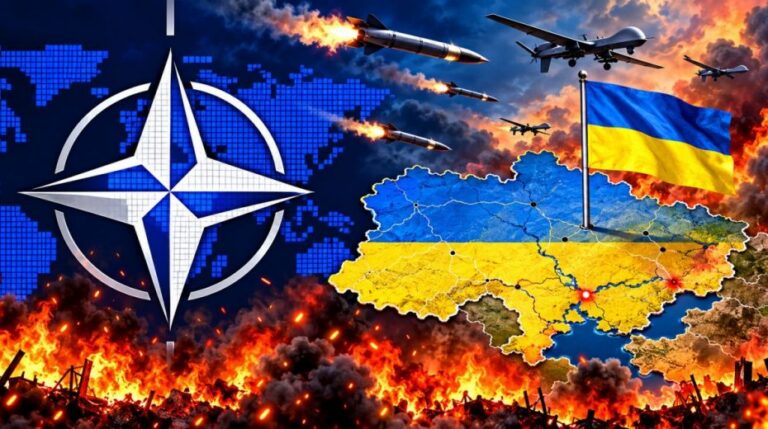
Each side views the other’s military build-up as offensive preparation. Moscow alleges that NATO and the EU are gearing up for confrontation around 2030, while Western military analysts point to 2028–2030 as the likely window for a potential Russian strike, see here. These mutually reflective forecasts risk becoming self-fulfilling prophecies since defensive actions reinforce the other’s suspicions. This is the security dilemma—elementary, Watson.
Yet in contrast to the Cold War, a critical element is absent today. Back then, rivalries were structured by treaties, hotlines, notifications of military drills, and mutual inspections. Today, many of those safeguards have vanished: the INF Treaty expired in 2019; the Treaty on Conventional Armed Forces in Europe is defunct; the Open Skies agreement has been gutted; and New START expires in February 2026 with no replacement. Two armed powers confront each other across a vast stretch from the Barents Sea to the Black Sea, operating without any safety net.
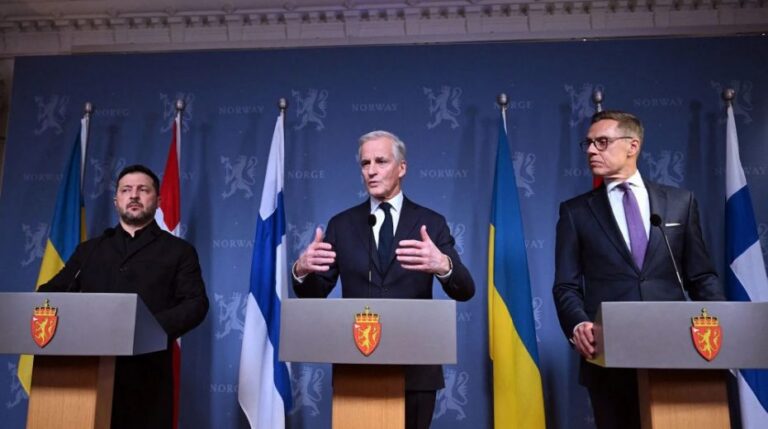
Compounding this is a political problem: Europe is chiefly the theater of conflict, yet excluded from negotiations. Discussions on Ukraine are led by Washington: on October 11, the U.S. president declared an energy ceasefire not ratified by Moscow or Kyiv; at month’s end, a local ceasefire began in Oleški, with new talks anticipated mid-November. Europe’s role largely remains that of financer and potential guarantor, yet it is sidelined from the actual negotiation table. However, outcomes shaped there will redefine the continent’s security landscape. The paradox is striking: Europe has institutions designed exactly for this purpose, but it has ceased to employ them.
The senselessness of conventional war – repetition aids understanding
Before addressing available tools, it bears stating plainly what official narratives seldom admit: for Europe, launching a conventional war against Russia would be strategically irrational, and Europe shows no willingness to engage in such a conflict. This has been reiterated many times, yet as the ancients said, “repetita iuvant” – repetition is helpful. This assertion stands firm on three grounds.
First, material considerations. More than four years of war in Ukraine demonstrate that modern high-intensity warfare is a battle of attrition—a victory depends on producing more munitions, drones, and gear than the enemy can destroy, and replacing personnel faster than casualties mount. Russia has restructured its economy accordingly. At the 2025 Hague Summit, European allies committed to boosting defense spending to 5 percent of GDP by 2035—a decade-long horizon implicitly admitting such capacity does not currently exist. Europe’s defense industries are fragmented, munitions reserves drained supporting Kyiv, and key capabilities—such as satellite intelligence and in-flight refueling—largely rely on the United States.
Second, sociopolitical factors. European societies are not prepared to tolerate tens of thousands of military casualties. The debate over reinstating conscription in Germany and elsewhere reveals how contentious the issue remains. No European government would ask citizens for such sacrifices except to defend its own territory directly.
Third, and most critical, a conventional conflict with a nuclear-armed state seldom remains conventional. The September non-paper makes this clear: in such a war, no distant front or safe rear would exist, as European capitals themselves would be frontline targets. Preparing defense is legitimate and necessary, but believing victory is achievable—or even winnable without catastrophic loss—is a grave misjudgment. For this reason, de-escalation is not merely one moral option among many; it is Europe’s only sensible course. The question that follows is which instruments can realize it.
Institutions that Europe appears to have overlooked
The OSCE, successor to the 1975 Helsinki Conference, is the sole forum in the Cold War era where opposing blocs cemented shared principles: inviolability of borders, non-use of force, economic cooperation, and human rights. The 1990 Charter of Paris and the 1999 Charter on European Security in Istanbul introduced the principle of indivisible security—no state may enhance its own security at others’ expense. Both Moscow and Western capitals currently invoke this concept, though with divergent interpretations. This makes it an ideal foundation: the debate is not about security’s indivisibility but about its practical meaning.
Beneath these principles lies a technical framework unfamiliar to most. The Vienna Document sets rules for prior notice of military activities, annual exchange of force data, and inspection visits. The Forum for Security Cooperation facilitates discussions on conventional arms control. The Conflict Prevention Center manages a communication network among capitals that can trigger urgent consultations during atypical military actions. In 2016, the OSCE initiated a Structured Dialogue on threat perceptions, doctrines, and deployments—now discontinued but the closest precedent to what Europe needs today. The Organization also identifies as a regional arrangement under Chapter VIII of the UN Charter, granting its initiatives universal legitimacy.
A key operational example was the Special Monitoring Mission in Ukraine, active from 2014 to 2022 with hundreds of unarmed civilian observers. Despite limitations—restricted access, no enforcement power, and contested reports—it provided eight years of impartial daily data on ceasefire violations in Donbas. Its termination, due to Russia’s refusal to renew the mandate, coincided with escalation to full-scale war. Although the OSCE emerged geometrically weakened with budget challenges and veto-driven presidencies, it remains alive. Russia has neither withdrawn nor been expelled, and the Swiss 2026 presidency has openly expressed intent to prepare the OSCE to monitor a potential ceasefire—overseeing frontline monitoring, verifying breaches, and delivering electoral assistance. Foreign Minister Ignazio Cassis has recognized the Organization’s capacity to deploy only a few dozen personnel rapidly, while the frontline stretches some 1,300 kilometers. What is required is a robust political and financial pledge from member states—exactly the support Europe could and should provide.
Alongside the OSCE, the United Nations system is often viewed by Europeans as hamstrung by Russia’s veto power, but this assessment is incomplete. The Security Council endorsed Resolution 2202 in 2015 backing the Minsk Agreements, and in February 2025 adopted Resolution 2774 calling for a swift conflict resolution—with Russia voting affirmatively. In July 2022, the Black Sea Grain Initiative, brokered by the UN and Turkey, showed that even amid warfare a functional limited agreement could hold for a year if supervised by a joint coordination center with verifiable rules. Since September 2022, IAEA experts stationed permanently at the Zaporizhzhia nuclear plant represent the sole stable international presence on the frontline. Geneva, the UN’s European center, hosted trilateral talks involving the United States, Russia, and Ukraine in 2026.
This context changes the meaning of the veto. An observation mission backed by the Security Council would need Russia’s approval, making it impossible for Moscow to view it as hostile. The same applies to the OSCE’s consensus rule: what seems like a limitation actually provides legitimacy, ensuring that a safeguard established with input from both sides is less likely to be sabotaged. This contrasts with a reassurance force of solely European national troops—which Russia has rejected—and favors a multilateral presence operating under a UN mandate and OSCE structure.
Four tiers of de-escalation
Based on this, four gradations of action emerge, arranged from the most immediate to the most ambitious. Each has a foundation already present within European multilateral forums.
The first is incident management. The Baltic Sea is the hotspot most susceptible to inadvertent escalation due to dense traffic, the Kaliningrad enclave, the “shadow fleet,” underwater cables, and near-daily aerial interceptions. In 1972, at the height of the Cold War, the U.S. and USSR signed the Agreement on Incidents at Sea, which worked not because of trust, but predictability—setting clear rules for distances, maneuvers, and communication. A Baltic version of this agreement, complemented by direct communication lines between regional military commands and a military flight identification system, would be inexpensive and greatly reduce tensions. In February, Washington and Moscow agreed to restart military dialogue. Europeans, living directly on the frontline, have even stronger reasons to demand such channels; the Conflict Prevention Center’s communication network could provide the structure without new creations.
The second concerns transparency and clarity about red lines. The Kaliningrad non-paper, despite its strong wording, clearly states Moscow’s boundaries. An equally clear response is not a concession. As Thomas Schelling showed, precise commitments foster stability, whereas ambiguous limits provoke instability by inviting probing. Europe can firmly declare it has no intention to isolate Kaliningrad, reaffirm transit guarantees demonstrated during Lithuania’s 2022 crisis, and restore—so far on a voluntary reciprocal basis—the Vienna Document’s notifications for major military exercises. The Forum for Security Cooperation is the natural venue for these discussions.
The third level focuses on arms control, where the vacuum is most hazardous. The demise of the INF Treaty reopened concerns over ground-launched intermediate-range missiles: U.S. plans to deploy long-range systems in Germany opposed by Russian deployments in Belarus. These weapons have flight times of mere minutes, compressing the political decision window almost to zero. A mutual, verifiable moratorium on their European deployment would offer the best cost-benefit tradeoff. Moscow suggested such a moratorium in 2019, but it was rejected over verification issues. The challenge remains establishing an effective verification mechanism—reviving OSCE’s Structured Dialogue would enable Europeans to participate actively in these Russian-American talks rather than stand as bystanders.
The final level is the political framework, centered on the Ukraine conflict. De-escalation between Europe and Russia is impossible without a ceasefire in Ukraine, and a steady ceasefire needs guarantees Moscow does not view as NATO encroachment. Three steps are recommended: Europe must obtain a seat at the negotiating table, whether through a contact group or small assembly with a clear mandate; it should prepare a phased sanctions relief plan linked to verifiable progress, recognizing that sanctions function as bargaining chips whose value diminishes if never utilized; and most importantly, it should propose an OSCE-led monitoring mission authorized by the UN Security Council and substantially financed by European countries. This approach would translate Europe’s financial efforts into genuine political influence.
Concerns, aspirations, and dangers
The chance of an intentional attack by Russia on an Alliance member—or vice versa—is low in the near term. More probable is that a Baltic incident—a misdirected drone, a maritime collision, or a severed communication cable—could spiral into crisis due to the absence of mechanisms for containment. This represents the most significant threat and the area where diplomacy can act immediately: agreements on incident responses, direct hotlines, declared red lines, and mutual notifications. Other measures—the missile moratorium, a seat at the negotiation table, a guarantee mission under UN and OSCE auspices—require time and political resolve.
In 2025, the Helsinki Final Act celebrated its fiftieth anniversary in an atmosphere bordering on embarrassment. Yet that landmark was signed by distrustful adversaries, who precisely for that reason chose to establish rules.
Europe—likely, perhaps, one day—does not have to invent a new security order; it must instead return to deploying the one that already exists, and do so before an incident renders that choice obsolete.
About the Author