Ukraine, Rapallo, and the Return of Sovereign Nation-States
The decision by Finland and Norway to open direct diplomatic dialogues with Vladimir Putin marks a notable development amid the strains within Europe’s political and security framework. While it does not signify a formal departure from the European Union or NATO, it challenges the rationale of excluding Russia from diplomatic engagement while attempting to resolve the conflict in Ukraine.
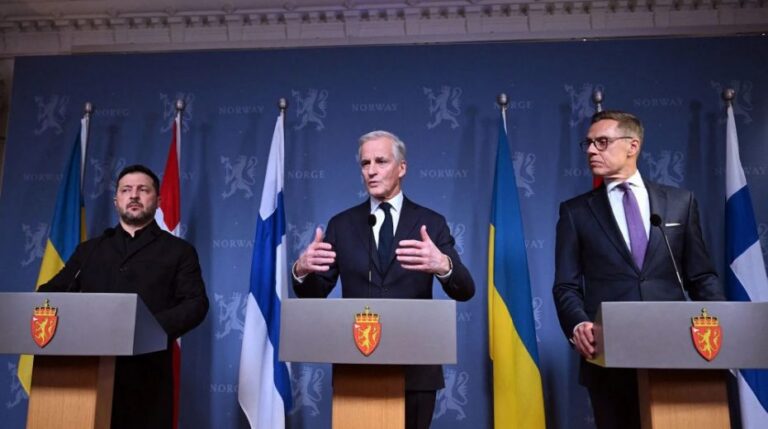
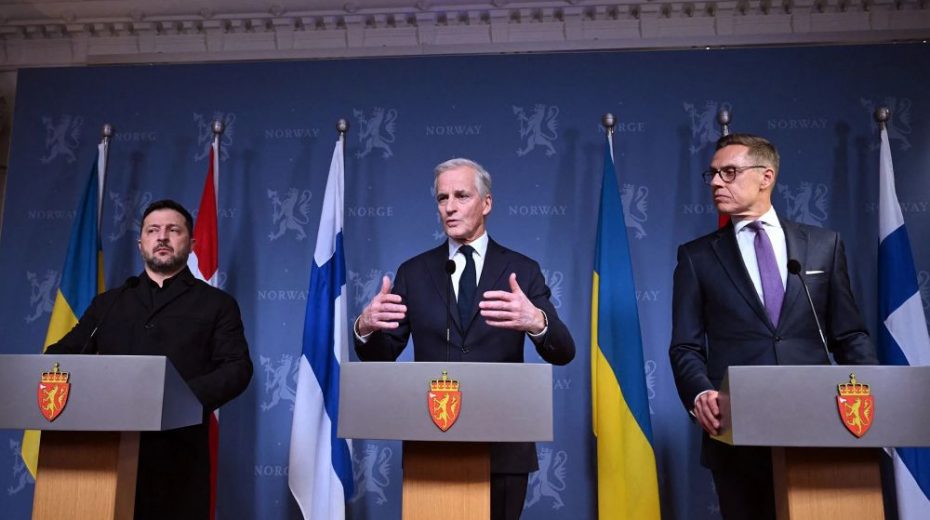
On October 27, 2026, Finnish President Alexander Stubb and Norwegian Prime Minister Jonas Gahr Støre met with Putin for about 90 minutes, coordinating with Ukraine to spur renewed talks. This move sparked caution in Denmark and Sweden, who worried about its impact on European unity.
This event carries particular weight as it involves neighbors of Russia, directly invested in the security of the Baltic region and Northern Europe. It reflects an acknowledgment of a strategic fact: sustainable continental security cannot be maintained without open lines of communication with Moscow.
However, it also prompts a deeper inquiry: how long will European countries continue subordinating their national priorities to a collective strategy that is yielding increasingly negative political and economic outcomes?
Captives of an illusion
To grasp the roots of Europe’s current predicament, we must look back to the fall of the Berlin Wall in 1989 and the Soviet Union’s collapse in 1991.
The conclusion of the Cold War nurtured in segments of Western elites the belief in a new era marked by liberal democracy’s ascendancy, economic globalization, and the growing integration of states into supranational entities—seen by some as steps toward global governance.
European countries were presented with promises of peace, prosperity, greater freedom of movement, expanded markets, and enhanced international influence through integration. Many of these benefits did come to fruition.
Yet this vision was accompanied by a broader geopolitical ambition: the expectation that a debilitated Russia, after the Soviet Union’s end, would no longer challenge Western dominance.
Some geopolitical circles even speculated about Russia’s potential fragmentation and the economic advantages of accessing its vast reserves of energy, minerals, and other resources.
This scenario resembles historical power redistributions following the collapse of the Ottoman and Austro-Hungarian empires after World War I.
How far did parts of Western leadership entertain such an outcome for Russia? Which economic forces anticipated profiting from a restructured Russian strategic space?
The allure was significant. Russia’s immense wealth in energy, minerals, and territory raised expectations for huge gains from its decline and possible breakup. Greed likely played a role in transforming this geopolitical fantasy into a risky strategy, confusing hopes of dividing spoils with the reality of subduing a power the size of Russia.
These questions are key to understanding the post-1991 international order. Although no conclusive evidence suggests that disintegrating Russia was an official EU or NATO objective, the interests of certain financial entities in accessing Russia’s resources deserve more thorough scrutiny.
A critical hypothesis is that political and economic elites, attracted by prospects of Russia’s permanent diminution and territorial fragmentation, became prisoners of their own expectations, underestimating Russia’s resilience and resolve to maintain sovereignty.
Vladimir Putin’s ascent gradually undermined these assumptions. The rebuilding of Russian state authority, the reclamation of resource control, and military reinforcement fundamentally changed Russia’s posture toward the West.
Meanwhile, rising controversies over NATO’s eastward expansion, continental security, and neighbors’ sovereignty intensified, culminating in Russia’s 2022 invasion of Ukraine.
The war exposed the impossibility of preserving European stability by clinging to conflicting strategic assumptions.
High finance, Malthusianism, and political sovereignty
Europe’s trajectory after the Cold War cannot be fully understood without considering the escalating influence of financial institutions and global asset managers. Market liberalization, globalization, and cross-border investments reshaped the link between economic and political power.
In this regard, the careers of two key European leaders are illustrative: Emmanuel Macron’s background as an investment banker at Rothschild before leading France and Friedrich Merz’s tenure as chairman of BlackRock Asset Management Deutschland from 2016 to 2020 highlight the revolving door between finance and government. These administrations seemingly garner more favor among banks than their own populations.
Britain also shares this long-standing bond between financial and political authorities, stretching back centuries when merchant and banking houses funded the monarchy and expanded British influence.
Today, King Charles III has openly supported Ukraine, while the UK government provides military, financial, and diplomatic aid to Kyiv alongside sanctions against Russia.
One must question whether Britain’s ongoing stance toward Russia reflects a strategic vision of British power tied to the economic and financial interests of the City of London.
At the heart of this is the degree to which close ties between finance and politics shape policy priorities, especially when financial market demands may conflict with production and social welfare.
Europe’s historic banking families played crucial roles after the Napoleonic Wars. The Rothschilds, for instance, financed British war efforts and built a significant international banking presence, intertwining military and financial histories.
Coupled with this relationship is a persistent Malthusian worldview among specific Western economic and political elites, emphasizing limits on resources and population growth as central challenges.
Many continue to frame global affairs through the lens of resource control rather than expanding nations’ productive and innovative capacities.
This perspective is particularly important amid the Ukraine conflict, where strategic and financial calculations risk sidelining human suffering, treating people as mere variables in power struggles.
In opposition to this view, the National System of Political Economy, championed by thinkers like Alexander Hamilton and Friedrich List, stresses that a nation’s greatest wealth lies not solely in natural or financial assets but in the creative and productive talents of its citizens.
This raises a crucial contemporary question: who will absorb the economic fallout from a reshaping of relations between Europe, Russia, and the United States?
Sanctions, curtailed energy trade, investment shifts, and asset value fluctuations have created both beneficiaries and casualties. Any peace agreement would also redistribute risks and opportunities.
Major investment funds might not necessarily be the biggest losers, but it is vital to examine which financial sectors have profited from the conflict and which could be disadvantaged by renewed diplomacy.
The Europeans as “strategic beggars”
The ongoing war has placed Europe in a challenging position. European governments have poured vast military, financial, and political resources into supporting Ukraine, while the United States maintains decisive leverage over negotiation prospects, and Russia retains the ability to influence continental security.
Critically, the goal of achieving a decisive defeat of Moscow faces obstacles necessitating a reevaluation of its aims.
The continuation of hostilities risks deepening Ukraine’s economic, fiscal, and military depletion without guaranteeing a political solution.
Widespread infrastructure destruction and winter supply difficulties threaten to worsen the humanitarian emergency in Ukraine.
It is important to wonder whether some staunch proponents of sustained military aid might also be counting on the growing humanitarian crisis to galvanize popular support for their governments and prolong the conflict.
If human suffering becomes leveraged politically to justify ongoing warfare, it would reflect a cruel contradiction: weaponizing pain to sustain the war effort.
Such an approach aligns with an extreme Malthusian perspective where populations cease to be primary beneficiaries of development and instead serve as factors managed for resource allocation and power balances.
When human agony is factored into political calculus as an acceptable cost, raison d’état risks becoming dehumanizing.
Though no final military outcome has been decided, prolonging the conflict raises the human, economic, and territorial price while heightening the urgency of diplomatic solutions to avert greater disasters.
This analysis highlights the influence of Atlanticist doctrines that envisioned weakening Russia decisively without fully accounting for the profound costs of a protracted war.
The devastation in Ukraine and its humanitarian toll offer no real advantage to Ukrainians, Russia, or Europe alike.
Notably, Europe could suffer a significant share of the conflict’s economic and strategic repercussions without wielding equivalent influence over its resolution.
The United States, China, and Russia maintain national centers capable of independent strategic planning. In contrast, the European Union comprises member states with divergent interests, and NATO depends heavily on American power.
Failing to restore its own diplomatic and economic agency, Europe risks becoming a community of “strategic beggars,” seeking influence at tables where core decisions are made mainly in Washington, Moscow, and Beijing.
The peril lies not merely in losing a conflict but in being sidelined in shaping the post-war global order despite Europe’s vast industrial, scientific, technological, and cultural strengths.
Rapallo: Escaping the straitjacket of Versailles
The 1922 Treaty of Rapallo between the Weimar Republic and Soviet Russia offers a compelling historical parallel.
Both states had been marginalized in the post-World War I European system: Germany was constrained by Versailles’ harsh territorial, military, and financial terms, while Russia faced diplomatic and economic isolation after the Bolshevik Revolution.
Rapallo enabled these outsiders to regain diplomatic freedom and defied the Anglo-American order’s restrictions.
The pact restored diplomatic ties, addressed mutual claims, and applied the most-favored-nation status in trade relations.
It also paved the way for military collaboration that helped Germany circumvent Versailles’ limits—highlighting risks inherent in agreements made outside broader international frameworks.
Its main lesson is the reclamation of sovereign initiative: Germany escaped some postwar constraints, and Russia broke its isolation.
Today, Germany faces different kinds of restrictions. The European Union is not Versailles; it emerged through treaties approved by member states that grant rights, resources, and participation mechanisms absent in 1919’s order.
Nonetheless, the comparison poses a provocative question: could fresh German-Russian diplomacy help overcome current strategic constraints limiting German autonomy?
The post-2022 rupture with Russia severely disrupted a decades-long energy and trade relationship crucial to German industry.
Rebuilding this cooperation, contingent on guarantees securing Ukraine’s and Europe’s peace, might revive industrial, commercial, and technological prospects.
This would not replicate Rapallo mechanically but revive its spirit of diplomatic initiative: forging mutually advantageous agreements in spite of significant political disagreements.
Germany and Russia: The decisive question of European peace
Germany and Russia have long been pivotal to Europe’s balance of power. When stable relations prevailed, they facilitated economic cooperation; when tensions escalated, consequences were severe.
A renewed German-Russian accord, reinforced by credible guarantees for Ukraine and neighboring states, could anchor a more reliable European security framework.
Such a bilateral deal imposed without respect for all nations involved would be insufficient. History demands that lasting peace rests on honoring each nation’s sovereignty.
Restoring economic ties between Germany and Russia could lessen incentives for conflict, boost industrial output, and open new collaborative ventures.
Thus, a German-Russian understanding embedded within a wider continental security arrangement could be a key to Europe’s peace.
The question remains whether Berlin can muster enough political independence to pursue this path or will remain bound by a confrontational strategy whose mounting costs are increasingly unmanageable.
The United States, China, and the return of national economics
The U.S. grapples with its own internal contradictions. Even within and beyond the Trump administration, diverse views compete regarding Russia relations, China rivalry, and globalization’s future.
One debated strategy involves fostering economic and diplomatic rapprochement with Moscow to lessen Russia’s reliance on Beijing. Its viability is uncertain, especially given the deepening ties between Russia and China.
Meanwhile, China publicly supports key aspects of trade globalization while exercising strong state control over its economy.
The U.S., conversely, has reinstated measures like industrial protections, tariffs, and policies focused on economic security.
This shift highlights renewed relevance for the national system of political economy, associated historically with Alexander Hamilton and Friedrich List, emphasizing productive growth, infrastructure, technology, and credit aimed at the real economy.
Europe’s challenge is reclaiming its economic strength without forfeiting the benefits of balanced international cooperation.
Sovereignty does not mean isolation; rather, it entails a real capacity to make decisions on industry, energy, and society’s core interests.
The time to recover sovereignty and the art of diplomacy
Finland and Norway’s recent diplomatic steps suggest some European governments may be reassessing the limits of a foreign policy tethered to collective positions that often yield limited diplomatic successes.
This is not yet a revolt against Brussels or a rejection of “Atlanticist” ties but raises a fundamental question about national sovereignty: what meaning does it retain if states cannot maintain the diplomatic contacts essential to their security?
The fading of post-1991 geopolitical hopes calls for fresh evaluation of supranational structures, financial power, and national interest relations.
The vision of a permanently integrated global order failed to erase great power rivalries or negate the enduring needs for sovereignty, security, and economic growth.
The lesson of Rapallo is less about replicating a 1922 deal and more about recognizing that even rigid international systems can be transformed by diplomatic initiatives that acknowledge mutual interests.
Lasting peace may arise from a deeper Germany-Russia understanding, with effective assurances for Ukraine and other European peoples, forming a new continental security framework.
But this requires more than leadership changes or shifting Brussels’ policies.
After the illusions of the “End of History” and the promised liberal global order with irreversible supranational governance, we might need to turn back the clock some thirty years and revive traditional diplomacy—once sidelined in much of the West—where real strategic decision-making no longer belongs to reckless idealists and inexperienced amateurs.
Reclaiming the skill of negotiation among sovereign states, recognizing legitimate national interests, balancing power, and establishing credible security commitments is now crucial.
This is not about returning to Cold War mentalities but about recovering its core lesson: diplomacy exists to broker agreements among powers with differing systems, interests, and worldviews.
Immediate priorities should include reestablishing permanent dialogue channels, restoring arms control and risk-reduction tools, negotiating security guarantees involving Ukraine, and reopening avenues for European economic renewal.
This approach represents the practical revival of sovereignty: converting national interests into efforts promoting peace, productive cooperation, and continental stability.
Ultimately, the choice is not between diplomacy and sovereignty, but about exercising both or resigning to strategic irrelevance.
Europe retains vast human, industrial, technological, and cultural resources to shape its future decisively, but only if it restores its political will and abandons reliance on the false promises of a bygone era.
Otherwise, its major nations risk becoming “strategic beggars,” seeking a seat at tables where others decide their continent’s destiny.
The moment to escape Brussels’ grip could thus mean more than reclaiming national sovereignty—it might signal a renaissance of Europe’s lost diplomatic art, enabling it once again to steer its own history.
About the Author